Breaking
Prioritise scholarships over student loans, ex-NANS president urges FG

Graduates shouldn’t be saddled with debt amid limited employment opportunities
__________________________________________________________________
From Fred Ezeh, Abuja
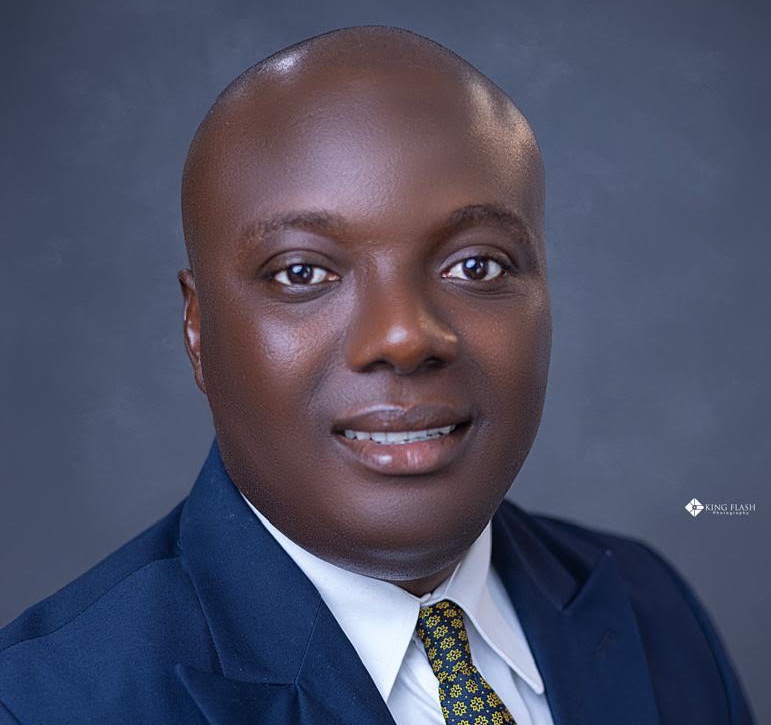
Former President of the National Association of Nigerian Students (NANS), Chinonso Obasi, has questioned the Federal Government’s growing reliance on student loans as a means of financing higher education, insisting that education should remain a public investment rather than a financial burden on young Nigerians.
Obasi, who expressed concern over the implications of the Nigerian Education Loan Fund (NELFUND) for the economic future of graduates, urged President Bola Tinubu’s administration to strengthen public investment in education, expand scholarship opportunities and create an economy capable of providing employment for graduates.
He said that although the establishment of NELFUND was commendable in providing financial assistance to students from disadvantaged backgrounds, the government must address the fundamental question of why young Nigerians should increasingly borrow to acquire an education that previous generations accessed through government-funded scholarship programmes.
In a statement on the state of education, student loans and youth economic prospects in Nigeria, Obasi recalled that during the 1976/1977 academic session, the Federal Government awarded 9,458 scholarships to Nigerians for undergraduate, technical and postgraduate studies.
He said the intervention reflected an understanding that education was not merely a private investment but a national development responsibility.
According to him, many beneficiaries of such opportunities subsequently became teachers, engineers, doctors, administrators, academics and other professionals who contributed significantly to national development.
He, however, expressed concern that the country’s approach to educational financing appeared to be changing, with students increasingly expected to assume financial responsibility for acquiring higher education.
Obasi asked whether access to university education should become a financial obligation that follows young Nigerians from the classroom into adulthood.
He particularly raised concerns about the economic realities confronting graduates who might obtain loans to finance their education but encounter difficulties securing meaningful employment after graduation and the mandatory National Youth Service Corps (NYSC) programme.
He noted that such graduates would be expected to compete for limited employment opportunities, navigate a difficult business environment and eventually meet the repayment obligations attached to their educational loans.
On NELFUND’s repayment arrangement, the former NANS president observed that the published terms provide for a 10 per cent deduction from the monthly salary of employed beneficiaries, with repayment commencing two years after the completion of NYSC for those who participate in the programme.
Although the law provides protection for unemployed beneficiaries without income, he maintained that the broader concern should be the economic environment into which graduates are released.
Obasi argued that education without corresponding employment opportunities, entrepreneurship support, industrial expansion and a functional economy could undermine the country’s investment in human capital.
He also challenged the government to explain why a country endowed with enormous human and natural resources continued to struggle with adequate funding for public universities, technical institutions, research facilities, laboratories and scholarship programmes.
He stressed that the existence of NELFUND should not be interpreted as a substitute for the government’s broader responsibility to adequately finance the education sector.
“The issue is not whether student loans should exist. They may serve as an additional financing option for students who need them. The issue is whether loans should become an increasingly important response to a problem that fundamentally requires stronger public investment, institutional accountability and economic planning,” he said.
He called for an educational financing framework that prioritises adequately funded public institutions, accessible scholarships, bursaries, research grants and affordable education, while allowing student loans to complement rather than replace such interventions.
Obasi further urged the Federal Government to connect educational policies with national industrial development, noting that Nigeria needed an economy capable of absorbing graduates and supporting innovation, manufacturing, agriculture, technology and entrepreneurship.
He suggested that young Nigerians should graduate with the confidence that their education had opened doors to opportunities rather than the anxiety of unemployment and financial obligations.
“The country must avoid creating a generation that sees higher education primarily as a financial liability instead of an investment in personal development and national progress,” he said.
He maintained that the future of Nigeria could not be secured by transferring the cost of national development to young people who were yet to establish their economic independence.
“Our young people deserve an educational system that gives them not just certificates, but opportunity, dignity, economic independence and a genuine chance to contribute to national development,” he said.
Obasi urged the Tinubu administration to rethink its educational financing priorities, invest more in universities and other institutions, expand scholarship opportunities and build an economy that rewards knowledge, skills and innovation.