World
Palestinian journalist says prison starvation, medical neglect led to brain hemorrhage after release from Israeli prison

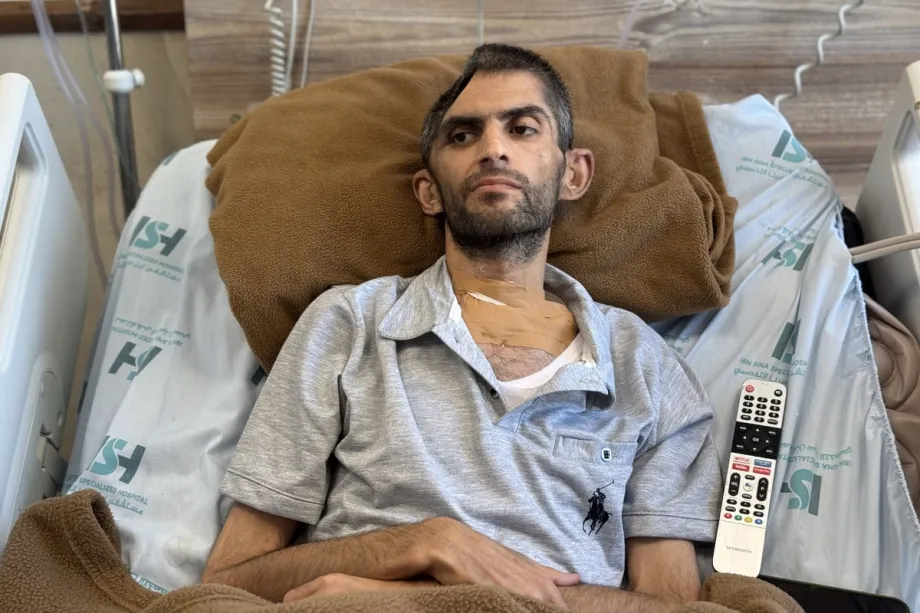
Palestinian journalist Mujahid Bani Mufleh is still undergoing intensive treatment six months after his release from Israeli prison, where he says he lost nearly 20 kilograms due to starvation and medical neglect before suffering a severe brain hemorrhage days after being freed, Anadolu reports.
Bani Mufleh is currently being treated at Ibn Sina Specialized Hospital in Jenin in the northern occupied West Bank. After falling into a coma, he underwent multiple surgeries, including a procedure in which part of his skull was removed. He now requires assistance with movement, swallowing and speech.
The journalist said prison conditions, including starvation and lack of medical care, severely worsened his health, particularly as he suffers from diabetes.
Speaking to Anadolu from his hospital bed, he recalled how his condition deteriorated during detention.
“I lost a large part of it because of hunger. We slept hungry, and the food they gave us was not enough,” he added.
He said his condition worsened further due to lack of access to diabetes treatment.
“Since the beginning of my detention, I did not receive the proper medication, I did not undergo any medical test, and I did not know my blood sugar level. The food was very little,” he said.
Diabetes is a chronic disease in which the body either does not produce enough insulin or cannot use it effectively, leading to elevated blood glucose levels that can damage organs over time if untreated.
Israel arrested Bani Mufleh in the town of Beita, south of Nablus, in June 2025 and released him in January 2026, according to the Palestinian Prisoner’s Society.
READ: ‘Shocking’ photo of freed Palestinian journalist shows ‘tragic’ conditions in Israeli prisons: Rights group
Released into collapse
Bani Mufleh said his release came unexpectedly after his detention had been extended. He said prison authorities informed him he would be transferred, and he was not given a chance to say goodbye to other detainees.
“I was surprised that they released me. I did not even know I was going to get out,” he said.
“They took me out at midnight, and four hours later I found myself in the open, in the bitter cold of the Negev desert. I was shaking badly,” he added.