World
Once the city of peace, Geneva sees the United Nations' presence fade

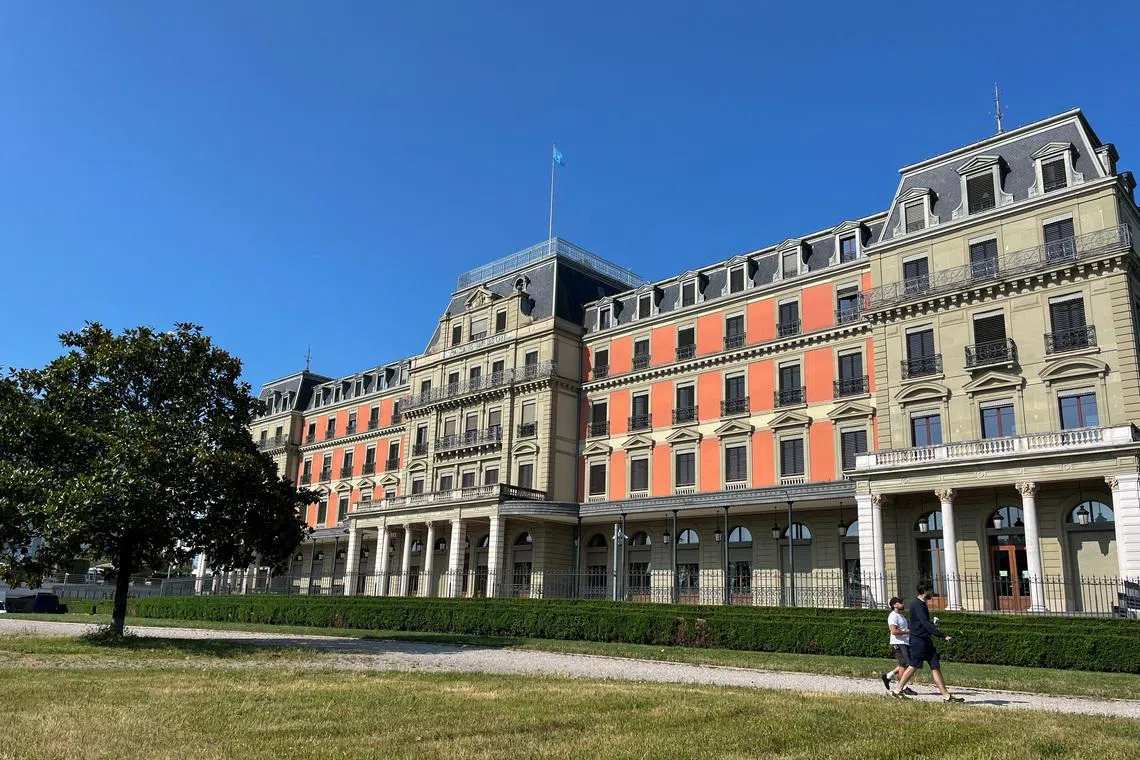
GENEVA, May 7 – When in 1937 the League of Nations vacated the 225-room Palais Wilson in Geneva, the global intergovernmental body created to preserve peace after World War One was on its last legs. It died soon afterwards with World War Two.
This summer the League’s successor, the United Nations, is set to abandon the same building as it and other global bodies in the Swiss city are increasingly sidelined by funding cuts and a U.S. government that is turning its back on multilateralism.
Since 2025, over 3,000 Geneva-based jobs at the U.N. and international organisations have been cut or are transferring to cheaper locations, including about a fifth of U.N. posts, a Reuters survey of a dozen agencies and local authorities showed.
The U.N. human rights arm, the Office of the High Commissioner for Human Rights, is moving from the Palais Wilson to a wing of Geneva’s U.N. headquarters at the nearby Palais des Nations, amid what it calls a “financial crisis”.
The International Labour Organization recently exited two of the 11 floors at its Geneva base. UNICEF, the U.N. agency for children’s welfare, is transferring some 70% of its 400 staff from Geneva.
Some Geneva-based agencies, such as UNAIDS, dedicated to tackling HIV/AIDS, are facing possible closure; many more are downsizing.
These include the International Organization for Migration, which has reduced its Geneva staff to about 600 from 1,000, shifting jobs to Thessaloniki in Greece, Nairobi, Bangkok, and Panama as it cut its global headcount to 16,000 from 23,000.
“I don’t think we need a huge footprint in Geneva to do the job well,” said IOM director general Amy Pope.
COST PRESSURES
Switzerland has pledged 269 million Swiss francs ($340 million) to support multilateral institutions in the city, while a body established by the canton of Geneva and a foundation named after the founder of Rolex, Hans Wilsdorf, have jointly promised at least 50 million francs.
Geneva’s mayor, Green Party politician Alfonso Gomez, said that, while the city’s overall economy was still faring well, the cuts were putting its reputation as “the capital of multilateralism” in jeopardy.
“We remain deeply concerned. It’s quite clear that… the abandonment of multilateralism is a cause for concern not only for the city itself but for the world at large,” he told Reuters.
Though the U.N. Security Council and the General Assembly are based in New York, the global body’s European headquarters, Geneva, has more U.N. workers than any other location.
It is home to dozens of U.N. agencies including the World Health Organization, which U.S. President Donald Trump pulled out of on his first day back in power.
The cutbacks are the severest in the U.N.’s 80-year history and it is unclear if the Trump administration will pay the more than $2 billion owed by the U.S. in core budget fees.
A U.S. State Department official told Reuters that Geneva was a sensible place for U.N. workers to meet with member states, but not necessarily to do back-office functions.
‘UNLEARNING THE LESSONS’ OF 20TH CENTURY
Other state donors have made cuts to spend more on defence, increasing the pain in Geneva, where U.N. offices cover an area the size of Vatican City centering on the Palais des Nations, a colossal complex originally built for the League of Nations.
Many see belt-tightening as an overdue correction to a bloated bureaucracy.
U.N. international staff, who do not pay Swiss tax, get an extra 89.4% on top of baseline salary due to high living costs, U.N. data show. Many also get spouse and education allowances.
But diplomats, serving and former U.N. officials warn that hollowing out Geneva, where the International Committee of the Red Cross and the World Trade Organization are also facing cuts, is dismantling the most tangible symbol of the international order built by the U.S. to uphold peace after World War Two.
“Geneva is the illustration of a world that’s not a zero-sum game, where people and nations see value in cooperating and one person’s gain is not another’s loss,” said Jean-Marie Guehenno, an ex-U.N. Under-Secretary-General for Peacekeeping Operations.
“We’re unlearning the lessons we thought we’d learned from the terrible 20th century,” he told Reuters.
Geneva in February did host talks over the Ukraine war and the U.S. stand-off with Iran, though American envoys squeezed both into a single day. Conflict with Iran broke out soon after.
Switzerland’s government, which owns the Palais Wilson, plans to renovate the building named for former U.S. President Woodrow Wilson. Gomez said Geneva, to which the land belongs, had yet to decide what to do with it.
Robert Curzon Price, CEO of real estate firm Barnes, who is helping multilateral bodies to manage the upheaval, said the impact on the roughly 10% of Geneva’s commercial property market they occupy was unprecedented.
But properties are not on the market yet because authorities that own them are waiting to see if U.S. policy becomes more multilateralist again, he said.
In any case, Norway’s Foreign Minister Espen Barth Eide said, it makes little sense to base so many U.N. jobs in expensive cities such as Geneva and New York. Instead, the U.N. should streamline, prioritize and boost resources in the field, he said.
Internal documents show the U.N. is moving to a slimmer but more fragmented model, with Kazakhstan, Qatar and Rwanda among the countries angling to host offices. REUTERS