World
Oil jumps as Iran’s attacks on Israel put ceasefire at risk

Follow our live coverage here.
Oil rebounded after Iran fired several rounds of missiles toward Israel, threatening a fragile ceasefire as talks to end the war falter.
Brent climbed as much as 3.6 per cent to US$96.47 a barrel, and West Texas Intermediate was near US$94.
The attacks were a warning to Israel to “cease their hostile actions” in Lebanon, an Iranian military adviser told the semi-official Iranian Students’ News Agency.
The Israeli military intercepted all the missiles.
US President Donald Trump urged Iran to return to talks after the attack, and criticised Israel for its strikes on Beirut on June 7.
He separately told Axios he would press Israeli Prime Minister Benjamin Netanyahu not to retaliate.
There has been flare up in hostilities over the past week across the Middle East that’s threatening to derail a fragile truce and complicate negotiations to end the war.
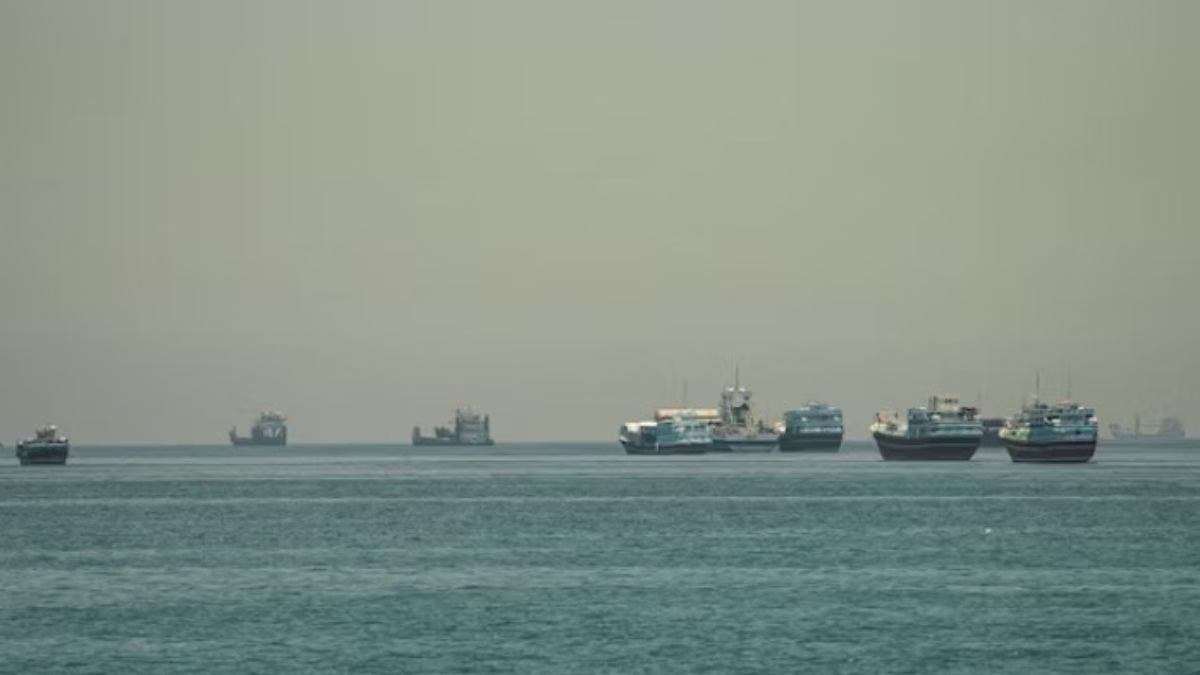
The conflict has led to the near-closure of the crucial Strait of Hormuz, choking off supplies of crude, fuels and natural gas to global customers.
US Central Command downed two Iranian drones that threatened international maritime traffic in the strait, it said on June 7, which followed six ballistic missiles fired at Bahrain and Kuwait on June 5. Those were intercepted, while the US struck Iranian coastal surveillance radar sites.
Several sticking points remain to progressing a peace deal, including a parallel ceasefire between Israel and Lebanon. Iran has demanded a truce there before an accord can be reached, and an adviser to Supreme Leader Ayatollah Mojtaba Khamenei told CNN that “the ball is in Trump’s court”.
Last week, Israel and Lebanon agreed to a truce, which hinged on Hezbollah halting hostilities, but the Iran-backed militia rejected the ceasefire. Fighting between Israeli troops and Hezbollah continued over the weekend.
Even if a US-Iran peace deal is agreed, multiple hurdles will impede normal resumption of oil flows. Among them, mines in the Strait of Hormuz must be removed, shut-in fields may take months to restart, and damage to energy infrastructure from drone and missile strikes needs to be repaired. BLOOMBERG