News
Oil climbs as Iran war uncertainty rattles global markets

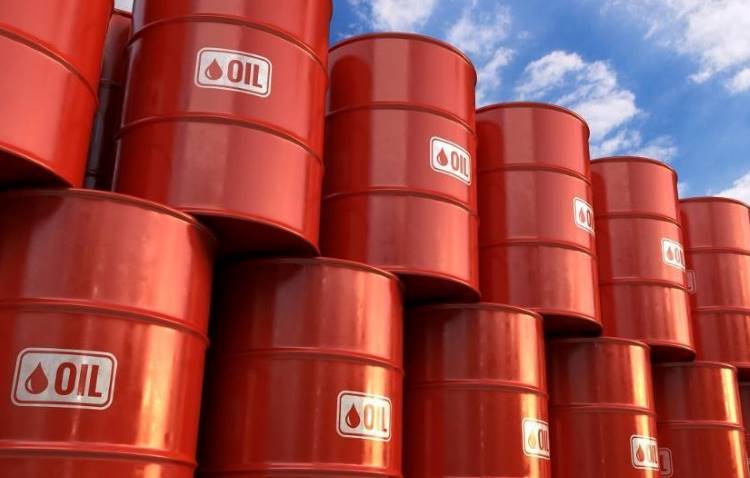
Global oil prices edged higher on Tuesday while stock markets posted mixed performances, as uncertainty surrounding the ongoing Middle East conflict weighed heavily on investor sentiment.
Brent crude, the international benchmark, rose modestly, with its June contract gaining 0.3 per cent to $107.72 per barrel. The May contract, due to expire the same day, climbed 2.1 per cent to $115.17 per barrel.
Market analysts warned that persistently high oil prices remain a major strain on economies. Susannah Streeter, chief investment strategist at Wealth Club, noted that oil “remains painfully high for economies to deal with”.
The surge in energy costs has already impacted inflation, particularly in Europe. Latest data showed that Eurozone inflation rose sharply to 2.5 per cent in March, up from 1.9 per cent in February, largely driven by escalating energy prices linked to the conflict.
In response, the European Commission urged member states to take “timely and coordinated preparations” to safeguard oil supplies amid growing concerns over energy security.
Meanwhile, Asia faces what experts describe as a looming energy crisis. Jean Maynier, president of Kpler, warned that the region could bear the brunt of the disruption due to insufficient domestic energy resources.
“We think Asia will, for now, be the ones suffering the most,” Maynier said, adding that major economies such as China, the Philippines and Indonesia may struggle to meet demand.
Equity markets across Asia closed on a mixed note as investors reacted to reports concerning Donald Trump’s stance on the conflict.
According to reports, the US president is considering ending the war even if the critical Strait of Hormuz remains shut, while also threatening strikes on Iran’s energy infrastructure if negotiations fail.
The Strait of Hormuz, a vital global oil transit route, typically handles about one-fifth of the world’s oil supply, making its closure a major concern for global markets.
In the United States, rising fuel costs are already being felt by consumers. Data from the American Automobile Association showed petrol prices have surpassed $4 per gallon for the first time since 2022, underscoring the broader economic impact of the crisis.
Analysts cautioned that any escalation, particularly a US ground offensiglobal ve or intensified Iranian retaliation, could drive oil prices to levels last seen in 2008, when Brent crude approached $150 per barrel.
“The question is no longer how high oil spikes, but how long elevated energy costs bleed into growth, margins, and consumption,” said Stephen Innes of SPI Asset Management.
At mid-morning trading, major indices reflected investor caution. London’s FTSE 100, Paris’ CAC 40 and Frankfurt’s DAX all posted gains, while Asian markets showed mixed results, with Tokyo’s Nikkei closing lower and Hong Kong’s Hang Seng edging higher.
Currency markets were relatively stable, with the euro and pound recording slight gains against the US dollar, while the yen remained flat.