Breaking
Nigeria moves to dismantle barriers to export competitiveness

CBN warns exporters against FX documentation breaches
________________________________________________________________________
From Adanna Nnamani
The Federal Government has said it is working to dismantle structural barriers limiting Nigeria’s export competitiveness, including infrastructure gaps, high transaction costs, limited access to trade finance and non-tariff barriers.
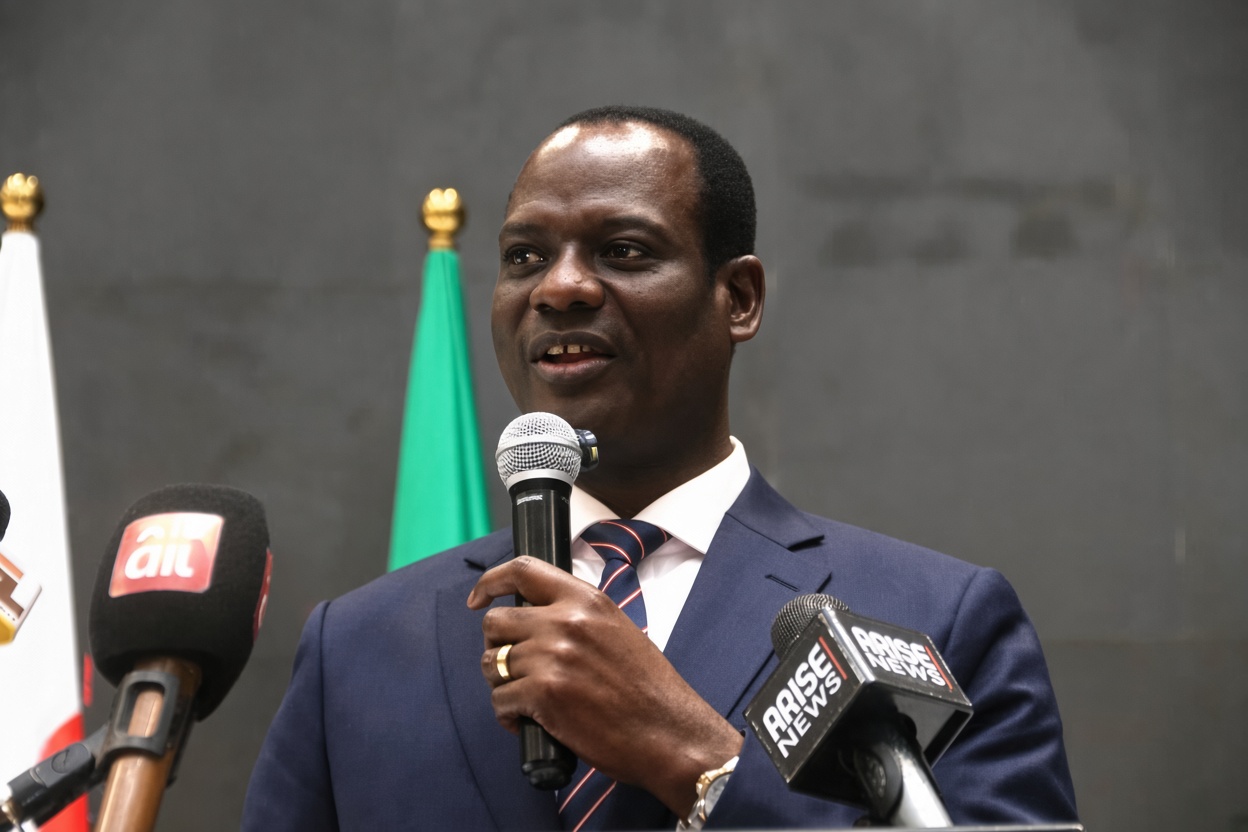
The Minister of Finance and Coordinating Minister of the Economy, Mr Taiwo Oyedele, said this in Abuja on Thursday at the Nigerian Export-Import Bank (NEXIM) stakeholder engagement forum on leveraging the African Continental Free Trade Area (AfCFTA) for enhanced export competitiveness and economic diversification.
Oyedele, who spoke virtually, said the government was working across institutions to strengthen trade facilitation, streamline documentation and customs processes, harmonise standards, support non-oil exports and widen access to finance for viable exporters.
He said the Federal Government’s objective was to move Nigeria away from dependence on a single commodity towards a diversified, production-driven economy capable of competing in international markets.
According to him, the removal of distortionary subsidies, the unification of exchange rates and ongoing tax and fiscal reforms were part of efforts to achieve the objective.
The Minister noted that the benefits of export growth went beyond foreign exchange earnings, as successful exporters created employment and generated economic activities across supply chains involving farmers, suppliers, transporters and professional service providers.
He said the AfCFTA, with a market of more than 1.4 billion people and a combined Gross Domestic Product of over $3tn, presented Nigeria with an opportunity to expand its manufacturing, agro-processing, solid minerals, creative industries and services sectors.
However, Oyedele stressed that access to the continental market would only translate into prosperity if Nigerian businesses could produce competitively, meet quality standards, deliver orders and secure repeat customers.
He identified inadequate financing, delayed certification and unpredictable transportation costs as some of the challenges preventing Nigerian businesses from securing export orders.
The Minister urged NEXIM Bank and participating financial institutions to deepen cooperation on structured financing, guarantees and insurance to support exporters, while ensuring sound lending standards.
He also called for better preparation of businesses through improved record-keeping, contract management, compliance with standards and access to market information.
Oyedele identified three priorities for the stakeholder engagement: developing a pipeline of export-ready businesses; identifying financing, standards, logistics and administrative constraints; and assigning responsibilities with clear timelines for implementation.
He said: “Market access creates an opportunity. Our competitiveness will determine how much of it we convert into prosperity. The government will provide credible policy and effective institutions. Financial institutions must assess opportunities carefully and innovate. Businesses must invest in quality and performance. Our partners can connect these efforts to technology and markets.”
Meanwhile, the Governor of the Central Bank of Nigeria (CBN), Mr Olayemi Cardoso, called on exporters to comply with applicable foreign exchange documentation requirements and repatriate export proceeds within prescribed regulatory timelines.
Cardoso, who was represented by the Deputy Governor, Financial System Stability Directorate, Mr Isa Yuguda, said the apex bank was working to strengthen transparency, price discovery, liquidity and efficiency in the foreign exchange market to give businesses greater confidence in accessing the market and planning cross-border transactions.
The CBN Governor said exporters must match the confidence created by the reforms with responsibility, particularly by complying with regulatory requirements governing international trade transactions.
He added that the apex bank was supporting the digitisation of trade processes, including import and export documentation, while greater integration with the National Single Window was expected to simplify legitimate trade, improve transparency, reduce processing times and lower transaction costs.
Cardoso said effective monitoring of export proceeds, price verification and proper trade documentation were necessary to guard against abuses, including over-invoicing of imports, under-invoicing of exports and illicit capital flows.
He also highlighted Nigeria’s participation in regional payment arrangements, including the Pan-African Payment and Settlement System, as an important platform for improving the efficiency of intra-African payments.
According to him, the CBN will continue to work with banks and relevant partners to support the safe, transparent and efficient settlement of legitimate cross-border transactions.
He said the success of the forum should be measured by the transactions and partnerships it facilitated, including whether orders were financed, goods delivered, payments received and buyers returned.
Cardoso said: “Exporters are expected to comply with applicable documentation requirements and repatriate export proceeds within prescribed regulatory timelines. A Nigerian exporter that has delivered goods or services should be able to receive payment safely, transparently and efficiently.”
For his part, the Managing Director and Chief Executive Officer of NEXIM Bank, Mr Abubakar Bello, said Nigeria’s non-oil exports to the world reached a record $6.1bn in 2025, while the country’s total trade with Africa, including oil, grew by 21 per cent to $9.02bn.
However, Bello, who spoke at the forum, said much of Nigeria’s regional trade still took place informally across land borders, adding that the actual volume could be three to four times the officially recorded figure.
He said Nigeria continued to export several commodities in raw form while importing finished products that could be manufactured locally, citing cocoa and chocolate, cotton and textiles, as well as solid minerals.
According to him, the country must move beyond increasing export volumes to adding value to its products and capturing a larger share of the wealth generated from its natural resources.
The NEXIM boss identified agro-processing, manufacturing and services as sectors with significant opportunities for expanding Nigeria’s presence in African markets.
He listed cocoa, sesame, cashew, cotton, ginger, shea and cassava as agricultural products with considerable potential for value addition, while pharmaceuticals, building materials, food and beverages, fintech, banking, music and film could also drive exports.
Bello said NEXIM had financed more than 1,300 non-oil exporters since 1991 and supported the creation and sustenance of about 110,000 industrial jobs.
He also disclosed that the bank, in collaboration with the Small and Medium Enterprises Development Agency of Nigeria (SMEDAN), had facilitated the equivalent of N42bn to support small businesses in the export value chain.
He said the bank was also working with the African Development Bank, Islamic Development Bank and other export credit agencies to mobilise financing for Nigerian businesses seeking to expand across the continent.
Bello further disclosed that NEXIM was developing inland waterways and coastal shipping networks to facilitate the movement of bulk cargo across West and Central Africa.
He said the bank was also expanding access to export financing through dedicated facilities for women and young entrepreneurs, as well as a non-interest banking window in collaboration with the Islamic Development Bank.
He said: “Our philosophy, therefore, is simple. We must produce. We must add value before we export. We call it the PEV philosophy.”
Bello added: “The AfCFTA will not deliver results on its own. Its benefits will go to the countries and enterprises that prepare for it. Let us measure our success by the industries we build, the value we add, the markets our businesses reach and the jobs we create.”