World
New IRGC chief ‘frequently overruled’ Iran’s leaders during talks with US — report

Ahmad Vahidi, the commander in chief of Iran’s Islamic Revolutionary Guard Corps, emerged as a key player during negotiations between the US and Iran, according to a Saturday profile in the Wall Street Journal, which found that the senior paramilitary leader pushed for a hard line in talks, advocating against any concessions to Washington.
According to the report, citing Iranian and Arab officials, the 67-year-old Vahidi advocated for Iran to launch last week’s ballistic missile barrage on Israel, which Tehran said came in response to an Israeli strike against Hezbollah headquarters in southern Beirut. Moderate voices within Tehran were hesitant, believing that direct attacks on Israel would jeopardize talks with the US, the report added.
In the end, Vahidi won out, with Iran launching 24 missiles at Israel in several attacks last Sunday night and Monday morning.
His gamble seemed to have paid off. Tehran and Washington quickly returned to the negotiating table after the brief exchange of fire, with the two sides poised to sign a memorandum of understanding on Sunday.
According to the report, Vahidi and the IRGC “stood as the biggest obstacle” to a deal with the US, pushing Iran’s negotiating team to hold out until its demands were met, believing that the country was in an advantageous position and did not need to offer concessions to Washington.
Vahidi has insisted that Iran “reestablish military deterrence,” the report said, in the wake of weeks of relentless US-Israeli bombing campaigns, and then months of protracted conflict and blockades in the Straight of Hormuz. He also reportedly advocated for more strikes on Arab countries in the Gulf, despite statements from Iran’s political leaders that such attacks would stop.
This approach has contrasted with the more moderate positions taken by much of Iran’s public-facing political leadership, a group that Vahidi has “tussled with” in recent months, the Journal added.
In each instance of disagreement, the enigmatic IRGC commander “has come out on top,” it said, adding that Vahidi has “frequently overruled” Iranian President Masoud Pezeshkian and Foreign Minister Abbas Araghchi.
According to the sources quoted in the report, political leaders consistently pushed for a quick agreement to end the war and reopen blockaded shipping lanes, in the hope of rehabilitating Iran’s crippled economy. The IRGC, which controls Iran’s presence in the Strait of Hormuz, disagreed.
Additionally, it was Vahidi who decided to link an end to the war in Iran with an end to Israel’s war against Hezbollah in Lebanon, successfully tying Israel’s hands in its fight against the Iran-backed terror group, causing the US fear that increased IDF action in Lebanon would collapse negotiations, the Journal said.
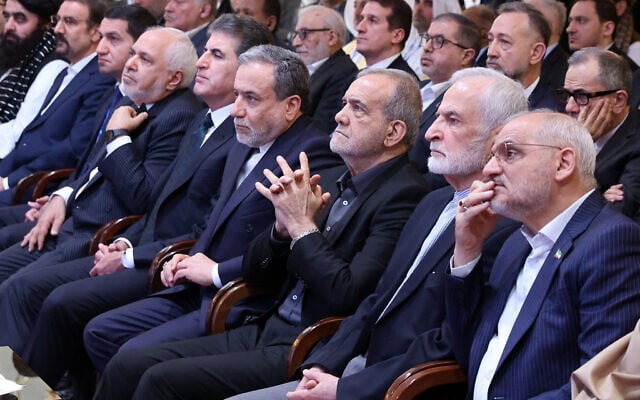
With Vahidi now wielding power that outweighs Iran’s president and top diplomats, he experienced an “almost unprecedented” rise to helm the vaunted IRGC, an expert told the Journal, lacking significant experience as a wartime commander.
His background is largely in intelligence, it said, though he also served as Iran’s defense and interior minister in the 2010s.
Vahidi was a founding member of the IRGC in 1979, taking charge of the militia’s intelligence forces only three years later, in his early twenties. From there, he helped found the IRGC’s elite Quds Force, the unit that trains foreign militias and terror groups and directs their operations.
As former head of the Quds Force, Vahidi was instrumental in building up Hezbollah as a military force in the 1990s, fashioning the terror group as the premier armed force in Lebanon over the past several decades with Iran’s strategic, economic, tactical and diplomatic support.
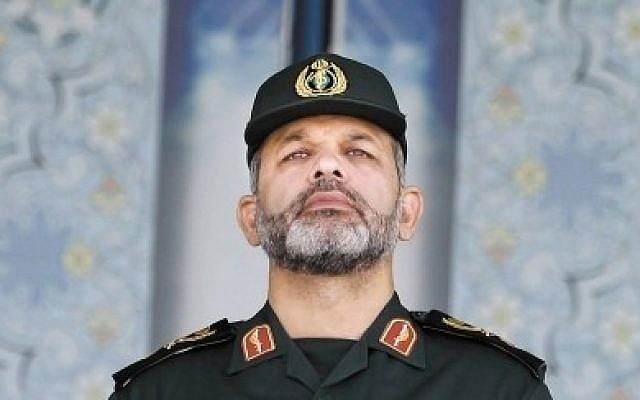
Vahidi is wanted by Interpol over the 1994 bombing of a Jewish community center in Argentina that killed 85 people, which Hezbollah was ruled as responsible for.
He is also under US sanctions for his role in the brutal regime crackdown on Iranian women’s rights protests in 2022, the report added.
Now, at the helm of the entire IRGC, Vahidi wields immense power, shaping his country’s positions in talks with the US, reportedly refusing to give an inch and insisting that Iran flex its muscles even after it was battered in the war.
However, the Journal noted that he now wears a “perilous crown,” a crown that his predecessor wore for less than a year before he was killed during the opening blows of the US-Israeli war on Iran.