World
Netanyahu recalculates his election strategy amid shattered regional dreams

Two events and statements over a period of 24 hours last week aptly reflect Prime Minister Benjamin Netanyahu’s current political situation, along with his shattered plans and hopes.
On Monday, US President Donald Trump rebuked Netanyahu, using harsh language over the prime minister’s intention to bomb southern Beirut and hinder the American negotiations with Iran.
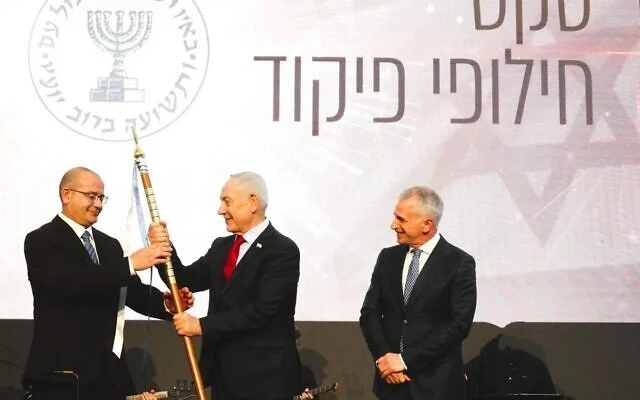
A few hours after that conversation, at a farewell ceremony for outgoing Mossad chief David Barnea, Netanyahu said that “the foundations of the terror regime in Iran have cracked. It will not go back to what it was, and it will ultimately fall.”
Netanyahu’s original plans were somewhat different, or at least tied to a very different timetable.
According to sources close to his office, who spoke to The Times of Israel on the condition of anonymity, the premier wanted to head into the general elections this fall with Iran’s ayatollah regime already collapsed and eradicated.
Such a historic change, Netanyahu believed — and still believes — would have overshadowed the events of the Hamas massacre of October 7, 2023, and carried him to a massive election victory, with 40 seats for his Likud party and a clear path to another governing coalition.
That change in Tehran did not happen, and it is unlikely to happen, at least not anytime soon, despite Netanyahu’s lofty promises at the Mossad handover ceremony. Instead, Israel has become deeply entangled in Lebanon, and Netanyahu is quarreling with Trump, hearing from him that everyone hates both him and Israel.
Delaying until October
Under these circumstances, Netanyahu wants to hold the elections at the latest possible date, preferably October 20, so that perhaps something positive will happen on the diplomatic and security fronts, and so that his grand speeches about Israel as a regional superpower and a new Middle East forged by peace agreements will actually have some backing on the ground.
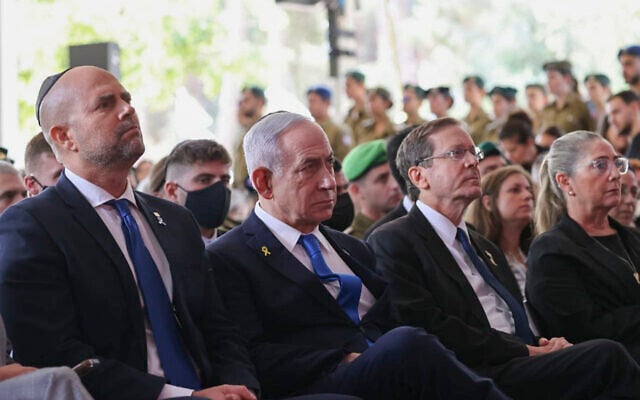
A later election date is crucial to Netanyahu, despite the heavy, traumatic connotations the month of October carries for Israelis. The prime minister believes that public narratives have long since been fixed, and that the memorial events planned for early October — marking three years since the massacre in Gaza border communities — will not sway voters from one political bloc to another.
The government itself is scheduled to mark the disaster on the national memorial day for the massacre on October 5. It is clear there will also be alternative, grassroots memorial ceremonies, just as there have been in the past two years.
Netanyahu may also orchestrate two major events in September that he hopes will leave a lasting impression on the Israeli public, including wavering right-wing voters.
One is the UN General Assembly, where Netanyahu wants to deliver an impressive, historic speech, as is his way. The second is a possible visit by Trump to Israel.
According to a source close to the prime minister, Trump had indeed planned to visit Israel this past May, but Netanyahu convinced him that a pre-election visit would be far more beneficial politically. And Trump truly wants to help Netanyahu, despite their recent friction and the harsh reprimand over the phone on Monday evening.
Deri’s push for a September vote
None of this guarantees that the elections will indeed be held in October. Early Tuesday morning, the Knesset approved a motion to dissolve itself, leaving the possible election dates ranging from September 8 to October 20.
Shas chairman Aryeh Deri is whispering in Netanyahu’s ear, urging him to hold the elections on September 15, right in the midst of the Ten Days of Repentance between Rosh Hashanah and Yom Kippur.
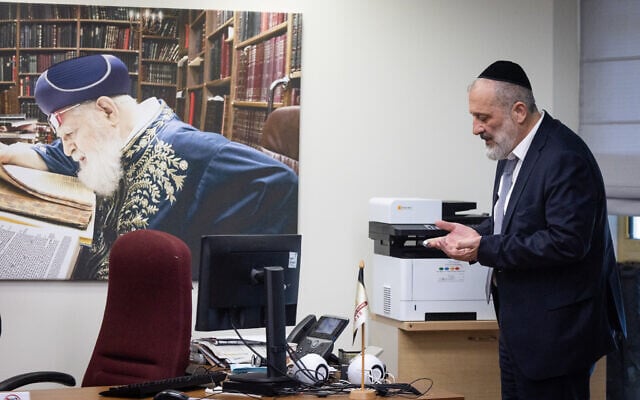
Deri, who is currently facing a severe leadership crisis of his own, is looking out for his ultra-Orthodox Shas party and his personal survival. He wants to hold the elections during the deeply religious atmosphere of the High Holidays and Selichot (penitential prayers), essentially turning a vote for Shas into an immediate religious commandment.
Deri is pitching this to Netanyahu as the best way to maximize turnout among voters loyal to the prime minister’s right-wing and religious bloc. However, a final decision has not yet been made.
Choosing the ideal rival
Whom does Netanyahu want to face head-to-head in the coming elections? Among his inner circle, the answer is clear: the most convenient rival is former prime minister Naftali Bennett, rather than former IDF chief of staff Gadi Eisenkot.
Bennett argues that he is a right-wing figure, and that Israel’s electorate –most of which leans right — will never choose Eisenkot, who is identified with the center and the left.
Netanyahu thinks the exact opposite: Bennett is especially hated precisely by right-wingers after he “betrayed” them and formed a historic unity government in 2021 with left-wing factions and the Arab Ra’am party.
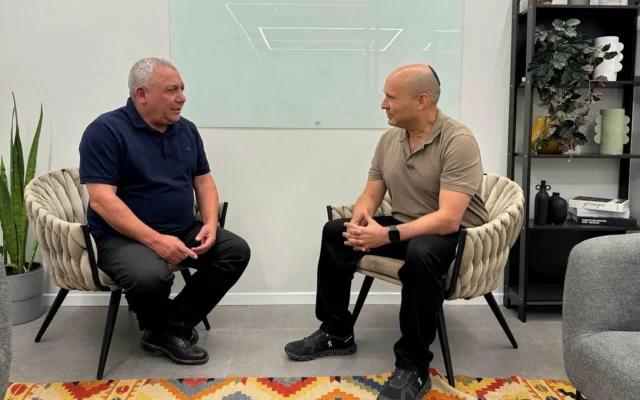
Netanyahu, according to those close to him, believes he can mobilize massive opposition on the right against Bennett’s candidacy. In his eyes, Bennett is a highly vulnerable political and emotional target.
Eisenkot, on the other hand, is not. The former military chief enjoys considerable support even among the right-wing public and could easily sway wavering voters.
Notably, Eisenkot personally outscored Netanyahu in a Channel 12 poll on Thursday night. Israel does not directly elect its prime ministers but, asked which of the two was better suited to the role, 38% said Eisenkot, compared to 35% who said Netanyahu — the first time the former chief of staff and Yashar party leader had bested the incumbent in such a poll.
On Saturday night in a TV interview, Eisenkot said he was certain that “Netanyahu will lose” the elections, adding that it was unthinkable that the prime minister who was in power on October 7, 2023, when Hamas invaded, would be returned to office. Netanyahu, he sniped, has now presided over two-and-a-half years of war, in which, amid significant achievements by the IDF, there has not been definitive success against Iran, Hezbollah or Hamas. He attributed this to Netanyahu’s leadership failings, including a lack of courage and contempt for strategy.
Incidentally, the prevailing assumption in Netanyahu’s office is that Yisrael Beytenu leader Avigdor Liberman will make life difficult for everyone, refusing to cede the prime ministerial candidacy to anyone else within the anti-Netanyahu “change bloc.”
Liberman has said as much explicitly on various occasions. “If he isn’t the candidate, no one else there will be either, even if it forces another round of elections,” says a Netanyahu associate.
Netanyahu’s bureau is also convinced that Liberman is behind the recent political moves of Brig. Gen. (res.) Ofer Winter, who is regarded as the right-wing military darling, hoping to use him to siphon lost votes from the ideological right.
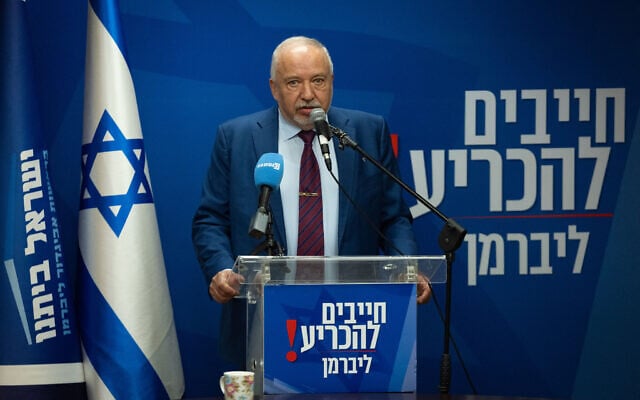
Winter served as Liberman’s military secretary during the latter’s tenure as defense minister in 2018, and the relationship between them remains excellent to this day.
Liberman is convinced that Winter was wronged when he was passed over for promotion in the IDF, arguing he should have remained in the army and received the rank of major general. However, Liberman’s camp vehemently denies the claim that he is currently operating Winter from behind the scenes.
The prodigal son returns
In any case, Netanyahu will head into these elections without passing the highly controversial bill to enshrine in law the broad exemption of ultra-Orthodox men from military service.
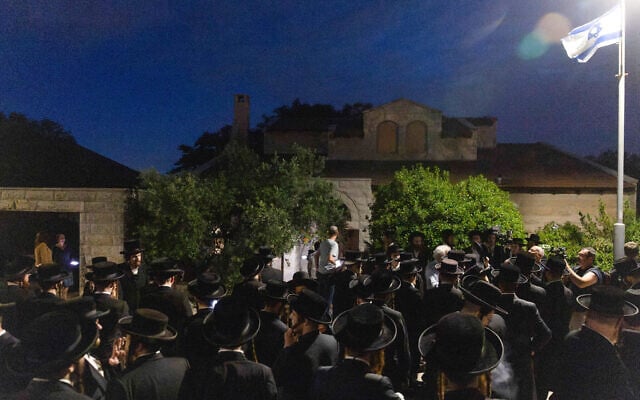
Over the past few days, the prime minister has not uttered a word regarding the ultra-Orthodox onslaught against the state and its law enforcement authorities, including the High Court of Justice, the police, the Tax Authority, and other governing institutions.
He is also ignoring calls by ultra-Orthodox politicians to disengage from the police and has seen no reason to condemn the violent ultra-Orthodox riots blocking highways and storming police stations across the country, acting as though this is all happening in a different nation.
He did condemn Wednesday night’s violent attack by Haredi extremists at the home of Deputy Supreme Court President Noam Sohlberg, calling for the perpetrators to be brought to justice, without mentioning their identity.
That is the depth of his anxiety over preserving his right-wing, ultra-Orthodox, and religious Zionist political base.
Within Netanyahu’s office, aides are debating whether the draft exemption law, had it passed, ultimately would have helped or hurt them at the polls.
Netanyahu desperately wanted the controversial legislation — which would have formally kept the ultra-Orthodox out of the IDF — simply to secure quiet on his political front. Cabinet Secretary Yossi Fuchs worked until the very last moment to finalize this exemption law for Netanyahu, until the prominent Lithuanian ultra-Orthodox leader Rabbi Dov Lando abruptly killed the compromise.
By contrast, the new chief of staff at the prime minister’s office, Ido Norden, has argued in private conversations that the exemption law would have caused severe electoral damage given the current public atmosphere, and that it is for the best that it ultimately failed.
Meanwhile, one figure who is returning and accumulating immense power in Netanyahu’s office is Yonatan Urich, who will run the prime minister’s election campaign, just as he did previous races.
Urich, a long-time top aide and media advisor to Netanyahu, recently made headlines over his expected indictment in the so-called Bild affair. Prosecutors plan to charge him with leaking highly classified military intelligence to the German newspaper Bild in a bid to shape public opinion around the Gaza hostage negotiations.
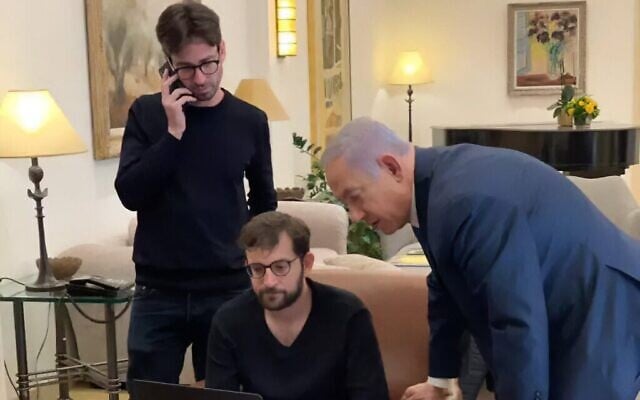
He is also a prime suspect in the “Qatargate” affair, in which he and other close Netanyahu associates are accused of secretly taking money from Doha to launder the Gulf emirate’s image in Israel during the war. In that case, Urich faces suspicions of contact with a foreign agent, bribery, fraud, breach of trust, and money laundering.
The televised embrace that Netanyahu gave Urich when he returned to work at the bureau after his arrest and subsequent house arrest last March was a mark of the prime minister’s considerable relief at his aide’s return, insiders say.
“An election campaign without Urich, Yisrael Einhorn, and Topaz Luk [Netanyahu’s core media advisers] could have been a severe blow,” they conclude.
Luk has remained at Netanyahu’s side. Einhorn, a suspect in a witness intimidation case, has refused to come home from Serbia. But Urich, who currently faces an indictment under Israel’s espionage act, is once again in place as the prime minister’s strongman.