Politics
NDC Reveals Peter Obi’s Plan For Fuel Subsidy Money

The Nigeria Democratic Congress (NDC) has said its presidential candidate, Peter Obi, would deploy funds saved from the removal of fuel subsidy directly to improve the welfare of Nigerians rather than transferring the resources to state governors.
Theo Abu Agada, the party’s Director of New Media and Strategic Communications, stated this while responding to renewed debate over the future of fuel subsidy ahead of the 2027 presidential election.
Agada said Obi had maintained a consistent position on subsidy removal and the deregulation of the downstream petroleum sector, arguing that the critical issue was how the resources generated from the policy were managed.
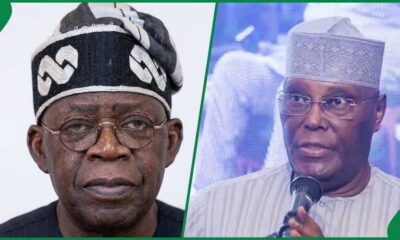
His comments came against the backdrop of a proposal by the African Democratic Congress (ADC) presidential candidate, Atiku Abubakar, for the restoration of fuel subsidy if elected in 2027.
President Bola Tinubu had announced the end of the petrol subsidy regime during his inauguration on May 29, 2023, triggering significant economic and political debate over the consequences of the policy.
According to Agada, Obi would neither return the subsidy regime nor allow the funds saved from it to be controlled by political office holders.
He said the NDC candidate would instead channel the resources into projects and programmes capable of directly improving living standards and stimulating economic opportunities.
“For Peter Obi and many of us who have, since 2012, advocated for the removal of the subsidy and the deregulation of the downstream sector, the policy position has always been the transparent management of the subsidy regime,” Agada said in a post on X.
He added that Obi would not “put the money in the pockets of the governors like Tinubu” or restore the influence of what he described as “oil cabals” that benefited from the former subsidy arrangement.
“We will put the money in the pockets of Nigerians and also channel the funds into building quality healthcare facilities, transport infrastructure, schools, and other programmes that will create jobs for Nigerians,” he said.
Agada also questioned the change in Atiku’s position on subsidy, recalling that the former vice president had previously supported its removal.
The debate over subsidy has become increasingly prominent ahead of the 2027 election as various presidential candidates offer competing prescriptions on how the government should address the economic hardship associated with the removal of the policy.
Meanwhile, the Director of the Abuja School of Social and Political Thought, Sam Amadi, has expressed confidence that Obi could defeat Tinubu and Atiku in the 2027 presidential election.
Amadi, speaking in an interview with Symfoni TV, argued that the existing political calculations surrounding Tinubu and Atiku did not guarantee either candidate victory.
He said Obi’s performance in the 2023 presidential election, particularly his support among younger Nigerians and his showing in several states, had demonstrated the potential for a major political realignment.
Amadi argued that the 2020 #EndSARS protests also contributed to a growing demand among young Nigerians for a different political direction, which he said had strengthened Obi’s appeal.
“There is this sense that Nigeria needs something new, and the restiveness and disruption during the 2020 EndSARS incident is a milestone for Obi,” he said.
He further claimed that Obi had secured significant support in the 2023 election, alleging that the former Anambra State governor won in Rivers, Plateau and some northern states but was not declared the winner by the Independent National Electoral Commission (INEC).
According to Amadi, Obi’s 2023 performance remains a major factor that could shape the 2027 contest, particularly if the electorate’s demand for political change continues to grow.