Politics
National Assembly Rejects Call to Reconvene Over Tinubu’s Absence

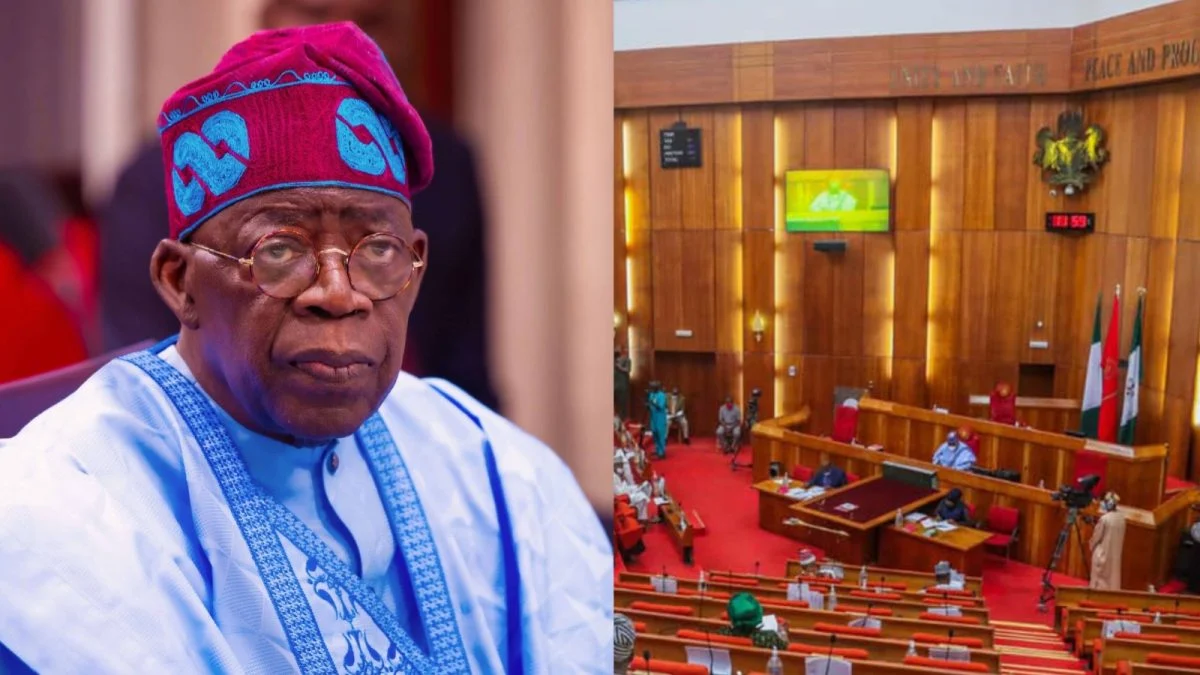
The Senate has rejected calls for the National Assembly to reconvene over President Bola Ahmed Tinubu’s prolonged stay outside Nigeria.
Senator Yemi Adaramodu, spokesperson of the Senate and Chairman of the Senate Committee on Media and Public Affairs, said there was no justification for an emergency sitting of the federal legislature over the President’s absence.
Adaramodu, who represents Ekiti South Senatorial District, said the National Assembly would not allow political arguments surrounding the President’s foreign trip to distract it from its legislative responsibilities.
“There is no reason for such a call,” Adaramodu said when asked whether the Senate should immediately reconvene over Tinubu’s absence.
His position followed a fresh demand by some serving federal lawmakers under the Save Democracy Group for the Senate and House of Representatives to reconvene.
The lawmakers want the National Assembly to determine whether Tinubu complied with the constitutional requirements governing a President’s absence from the country.
Their demand is centred on Section 145 of the 1999 Constitution, which deals with the procedure to be followed when the President proceeds on vacation or is otherwise unable to discharge the functions of his office.
The controversy began after Tinubu left Nigeria on August 30 for what the Presidency described as a three-week working vacation in Europe.
The Presidency later announced on September 21 that the President had extended his stay abroad by a few days and was expected to return to Nigeria at the weekend.
The development prompted some lawmakers to question whether the constitutional procedure relating to presidential absence had been followed.
Members of the Save Democracy Group asked the leadership of the National Assembly to clarify whether Tinubu transmitted the required written declaration to Senate President Godswill Akpabio and House Speaker Tajudeen Abbas.
The lawmakers argued that if the declaration had been transmitted, the leadership of both chambers should make the information public.
They further argued that if no declaration was transmitted within the period provided by the Constitution, the National Assembly should consider the provisions of Section 145(2).
The group’s demand came as the initially announced 21-day period of the President’s working vacation elapsed.
However, Adaramodu maintained that the issue did not warrant the National Assembly abandoning its recess to hold an emergency session.
He said the legislature should remain focused on lawmaking rather than responding to every political statement or demand made by politicians and civil society groups.
“Some of these civil society organisations, they are citing Section 145, where some people are playing politics. The National Assembly is not a political platform. It’s a lawmaking platform,” he said.
The senator also pointed to comments previously made by Senate President Godswill Akpabio on the matter.
Akpabio had spoken about Tinubu’s absence during an event in Akwa Ibom State where he inaugurated road projects executed by Governor Umo Eno.
The Senate President rejected suggestions that the country was operating without a President because Tinubu was outside Nigeria.
“I am not the acting president, because the president is still in power. The president is on a working leave. So, there’s no absence in Aso Rock,” Akpabio said.
Akpabio also maintained that the President could continue to direct the affairs of government while outside the country.
The Presidency has similarly maintained that Tinubu remained in contact with officials in Nigeria and continued to conduct government business during his working vacation. The official announcement of the extended stay said the President had travelled from London to Paris, where he held engagements before the extension of his trip.
But the Save Democracy Group has insisted that the central issue is not whether Tinubu can communicate with officials from outside Nigeria.
The lawmakers want the National Assembly to establish whether the constitutional procedure was followed.
Adaramodu, however, argued that the physical location of the President should not by itself be used to determine whether he was carrying out his duties.
“It is not geography; it is functionality,” he said. “It is your functionality that dictates whether you are performing your duties or you are not performing your duties. It’s not your GPS.”
The senator said political actors were free to raise issues they considered important, particularly with the country moving closer to another election cycle, but said the National Assembly would not turn every political argument into parliamentary business.
“It is the business of politicians to talk,” Adaramodu said.
He further stressed that the National Assembly was already preparing for its return to legislative activities.
According to him, the Senate would resume on September 29.
The October 1 Independence Day public holiday, he said, would not prevent lawmakers from returning to their legislative duties.
Adaramodu explained that the National Assembly routinely adjusts its schedule around public holidays and that lawmakers were expected to continue with their responsibilities.
He also took issue with the attention being given to the National Assembly’s recess, noting that other arms of government also have periods of vacation.
“They went on holidays in July, and they resumed in September. Nobody is talking about it. That is the judiciary,” he said.
The senator acknowledged that lawmakers would naturally come under public scrutiny because of their position as representatives of the people.
“We are representatives of the people,” he said. “They have the right to be interested in our affairs.”
He nevertheless maintained that the current debate over Tinubu’s absence would not alter the legislative calendar.
“We have a lot to do before us rather than listening to insinuations about operations and all these things from random politicians,” Adaramodu concluded.