World
Moscow, Kyiv fight over Black Sea

Russia and Ukraine stepped up their battle over the Black Sea and key trade routes yesterday, with Moscow killing three people in an attack on the Ukrainian port city of Odesa and Kyiv’s drone forces striking Russian shipping.
Odesa region Governor Oleh Kiper said that a “massive” Russian drone and missile attack on the southern region continued for a fifth day, with civilian, industrial and port infrastructure coming under attack.
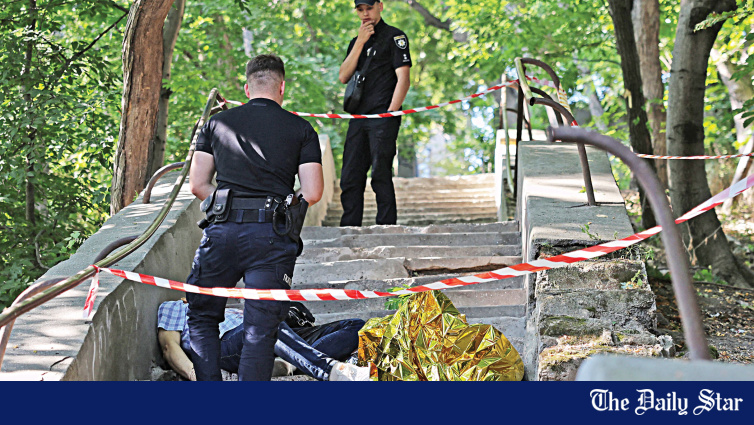
Three people were killed and at least three more injured after a Russian missile strike on a seven-storey residential building in Odesa, Ukrainian authorities said.
Ukrainian drones hit 20 Russian vessels in the Black Sea overnight, Kyiv’s top drone forces commander said yesterday.
“Now Black Sea,” Robert Brovdi, the commander of Ukraine’s Unmanned Systems Forces said on Telegram, adding that 116 vessels have been struck in the Sea of Azov this month.
The Ukrainian attacks have forced Russia, the world’s top grain exporter, to restrict shipping in the Sea of Azov — a route that handles about a quarter of its grain exports, sources told Reuters. Shipping remained restricted on Tuesday, they said.
Russia’s defence ministry said yesterday that Moscow’s forces continued overnight strikes on Ukrainian ports it said were handling cargoes for the Ukrainian military.
It said a number of targets in the ports of Odesa and nearby Chornomorsk port had been hit, as well as four vessels it said were delivering cargoes for Ukraine’s forces in the ports of Chornomorsk and Dnipro-Buh.
Kiper said on Tuesday that two people were killed in an evening drone attack on port infrastructure in the region. A civilian vessel under a Marshall Islands flag had been damaged in the attack, he said.
Ukraine’s top grain exporter Kernel halted operations at Chornomorsk port after Russian attacks, while another Russian strike damaged its vegetable oil terminal in the Odesa region, it said late on Tuesday.
Meanwhile, EU countries yesterday agreed to extend the right for Ukrainians fleeing the war to stay until 2028, but excluded military-age men arriving in the bloc, reports AFP.
The European Union triggered emergency protections for Ukrainians in the wake of Russia’s 2022 invasion, giving them the right to live, work and claim benefits in the 27-nation bloc.