Breaking
Minimum wage: Ajaero alleges plot to divide labour, derail negotiations

• Demands implementation of N70,000 transport allowance, Oct 27 agreement
From Adanna Nnamani and Francis Onyedikachukwu, Abuja
Barely five days after the Nigeria Labour Congress (NLC) and Trade Union Congress (TUC) resolved their bitter disagreement over the Federal Government’s N70,000 transportation allowance, NLC President, Joe Ajaero, has raised the alarm over an alleged fresh plot to divide organised labour and sabotage negotiations for a new national minimum wage.
Ajaero alleged that interests opposed to improved wages were exploiting differences among trade unions, spreading rumours and attempting to turn workers against one another ahead of the negotiations, warning that such activities could weaken labour’s bargaining position at a critical period.
His warning comes against the backdrop of the recent public confrontation between the leaderships of the NLC and TUC over the October 27 agreement with the Federal Government, which provided for a N70,000 monthly transportation allowance for workers over six months, beginning in November.
The disagreement, which degenerated into a war of words between Ajaero and TUC President-General Festus Osifo, was resolved on November 18 following the intervention of former leaders of both labour centres.
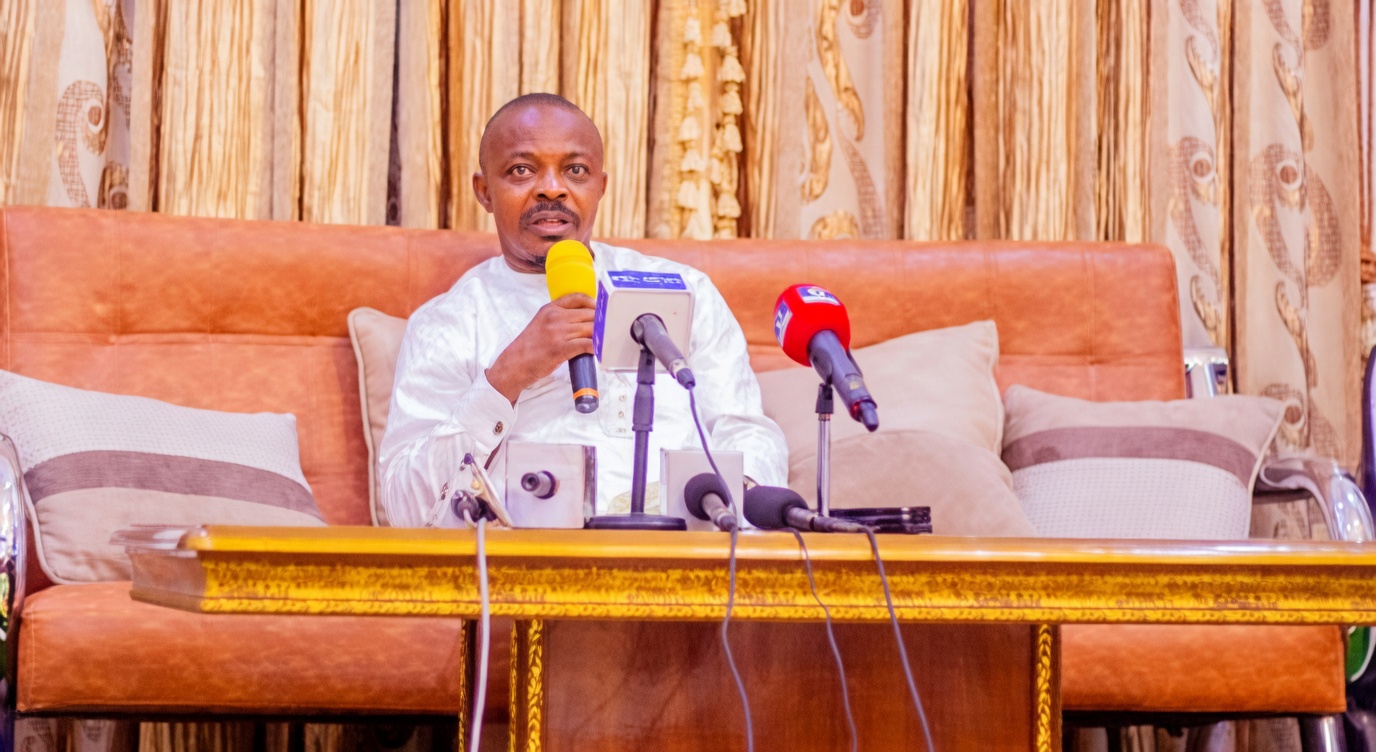
Speaking at the opening of the 2026 NLC Harmattan School in Abuja yesterday, Ajaero warned workers and trade union leaders against allowing differences within the labour movement to undermine their collective interests.
“At this point, as we prepare to negotiate a new national minimum wage, we want to draw your attention to the fact that the enemies of the labour movement are already at work.
“Their strategy is as old as it is dangerous; divide us, weaken our resolve, and sabotage the forthcoming national minimum wage negotiations before they even begin,” he declared.
Although Ajaero did not identify those allegedly behind the plot, he maintained that workers must remain united to secure a wage settlement that reflects the economic realities confronting Nigerians.
He said the negotiations must take into account the rising costs of food, transportation, housing, healthcare and other essential commodities, which have continued to erode workers’ purchasing power.
The NLC president also demanded immediate implementation of the October 27 agreement, particularly the payment of the N70,000 transportation allowance and the establishment of the Tripartite National Minimum Wage Negotiation Council.
He said workers expected the allowance to be paid in November, as agreed, and called for the convening of the monitoring meeting to assess compliance with the terms of the settlement.
Ajaero urged state governments and private sector employers to honour their obligations, warning that selective implementation of negotiated agreements would undermine confidence in industrial relations.
He maintained that agreements freely reached between labour, government and employers must be implemented faithfully rather than only when convenient for any of the parties.
The latest warning recalls the disagreement that erupted shortly after the Federal Government announced the transportation allowance following negotiations with the NLC on October 27.
The TUC rejected the arrangement, arguing that it had not been adequately involved in the negotiations and that workers needed an increase in their salaries rather than a temporary transportation intervention.
Osifo described the agreement as an aberration, maintaining that the TUC should have been carried along in negotiations affecting workers.
Ajaero, however, defended the NLC’s decision to negotiate independently, arguing that the congress was entitled to do so under the International Labour Organisation’s principle of the most representative workers’ organisation.
He maintained that although the two labour centres could negotiate jointly, the NLC did not require the TUC’s participation to engage the government on workers’ welfare.
The dispute exposed differences between the two labour centres over representation, negotiating authority and the appropriate response to the economic hardship facing workers.
However, on November 18, Ajaero and Osifo announced that they had resolved their differences following the intervention of former labour leaders.
In a joint statement, the two leaders acknowledged that their disagreement had played out publicly but insisted that their shared responsibility to Nigerian workers was more important than institutional differences. They described the dispute as a family misunderstanding that had been amicably resolved and reaffirmed their commitment to the unity of the labour movement and the collective defence of workers’ rights.
The reconciliation came as the Federal Government also constituted a high-powered committee to examine issues raised by the TUC, including its preference for a salary increase instead of the six-month transportation allowance.
The committee, comprising representatives of the TUC and relevant government institutions, was mandated to review the outstanding issues and submit recommendations to the Secretary to the Government of the Federation.
The controversy followed weeks of pressure by organised labour for a review of the existing N70,000 national minimum wage, introduced in 2024, amid rising living costs.
On October 8, the NLC issued a two-week ultimatum demanding the commencement of negotiations for a new minimum wage, a reduction in petrol prices and implementation of outstanding agreements affecting workers.
The ultimatum was subsequently extended to October 27 after an earlier engagement with the Federal Government failed to produce concrete commitments.
Although the October 27 meeting resulted in an agreement on temporary transportation support and other outstanding labour issues, the commencement and implementation of a new national minimum wage remained subjects of further negotiations.
The Federal Government had maintained that the existing minimum wage was due for review in June 2027 under the statutory review cycle, while organised labour insisted that worsening economic conditions justified earlier negotiations.
Against this background, Ajaero’s latest warning underscored the importance the NLC leadership attached to maintaining unity within organised labour as negotiations approached.
Turning to the 2027 general elections, the NLC president challenged political parties and candidates to make workers’ welfare central to their campaigns, demanding clear programmes on employment, wages, social protection, education, healthcare, security and food production.
He also urged the Independent National Electoral Commission (INEC) to ensure transparency in its preparations, particularly the compilation of a credible voters’ register.
“Workers and citizens have the right to interrogate political programmes and demand accountability; and people’s votes must count,” he said.
Ajaero argued that organised labour’s responsibility extended beyond workplace negotiations to influencing economic policies, defending democratic institutions and promoting social justice.
Speaking on the theme, “Organising in the Context of Socio-economic Transformation,” he identified artificial intelligence, automation and digital platforms as emerging challenges requiring stronger workers’ education and trade union organisation.
He said the Harmattan School would equip union leaders with the knowledge and capacity to respond to changes in the workplace, adding that the NLC would continue collaborating with civil society organisations to advance workers’ interests.