World
Middle East allies rushing new pipelines, port to bypass Iran’s grip on Strait of Hormuz

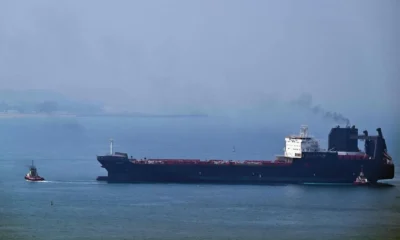
Oil producers in the Persian Gulf are making plans to bypass the Strait of Hormuz with new pipelines and a new port after Iran has repeatedly attacked ships and blocked traffic.
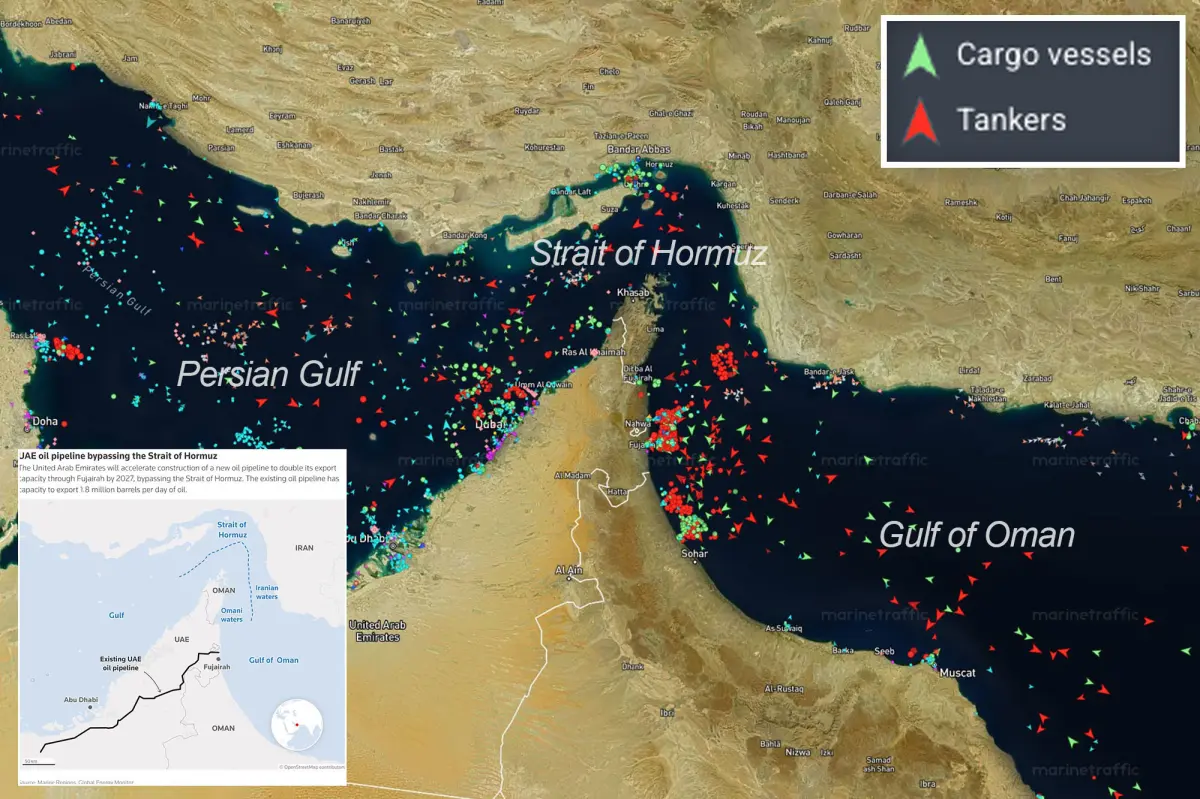
The idea is to minimize Tehran’s leverage on the waterway that once saw 20% of the world’s oil pass through it as the war stretches into its fifth month.
Iran has already insisted that it will impose tolls on the strait, which could cost tens of billions of dollars. And in some cases, it is extracting millions of dollars of protection money per oil tanker.
Two such projects are already underway in the United Arab Emirates and Iraq — with Saudi Arabia eyeing its own and Dubai also seeking to establish a new port to further reduce dependence on the strait.
There should be enough pipeline capacity to divert up to 45% of the pre-war Persian Gulf oil export by the end of 2027, Goldman Sachs analyst Alexandra Paulus told investors on Monday.
Given that pipeline projects can move quickly in the Middle East, the bank estimates that output bypassing the strait could reach 7.3 million barrels by the end of 2028 — making 60% of the Gulf’s oil strait-proof.
The UAE’s much-touted West-East Pipeline project is about 50% complete, with Crown Prince Sheikh Khaled bin Mohamed bin Zayed ordering its completion by 2027.
Once completed, the 252-mile pipeline would run parallel to the Fujairah pipeline and double the country’s overland capacity to 3.6 million barrels a day.
Sultan Al Jaber, the head of the Abu Dhabi National Oil Company, said the war in Iran proved Dubai was moving in the right direction with the project to free more of the world’s oil supply.
“Right now, too much of the world’s energy still moves through too few choke points. That is exactly why the UAE made the decision more than a decade ago to invest in infrastructure that bypasses the Strait of Hormuz,” Jaber told the Atlantic Council in May.
A much more ambitious project is underway in Iraq with the 435-mile-long Basra-Haditha oil pipeline, which would connect with Jordan, Syria and Turkey.
Follow The Post’s coverage of the war in Iran:
The pipeline would carry 2.5 million barrels of oil per day, with Saudi Prime Minister Mohammed Shia al-Sudani hailing it as a way to guard the nation’s exports from regional disruptions.
Construction officially began at the start of May, with about $1.5 billion allocated for the project, according to the country’s oil ministry.
The project was initially approved in 2024, and no timeline has been agreed for when the pipeline will be completed.
Saudi Arabia is also considering expanding the capacity of its crude oil pipeline to the Red Sea to 9 million barrels per day, with the kingdom in preliminary talks with its neighbors on the project, sources told Reuters.
Along with the pipeline projects, the UAE is also planning to build a new port and container terminal on the Arabian Sea side of the Strait of Hormuz — to allow more goods to be imported into the region without going through the waterway, The Financial Times reported.
The port would rival the country’s flagship Jebel Ali hub and would further reduce the country’s dependence on the strait.
Despite the rush to mitigate the disruptions along the Strait of Hormuz, the Middle East will not be able to completely eliminate Iran’s leverage in the region as 7 million to 9 million barrels of oil and refined products per day remain dependent on the waterway.
Some of the pipeline also depends on stability in the Red Sea, which has been threatened in recent weeks by the Iran-backed Houthi rebels in Yemen, who have warned of attacking the Bab el-Mandeb Strait.
With Post Wires