World
Masses gather in Iraq’s holy Shiite cities as Khamenei funeral frenzy crosses border

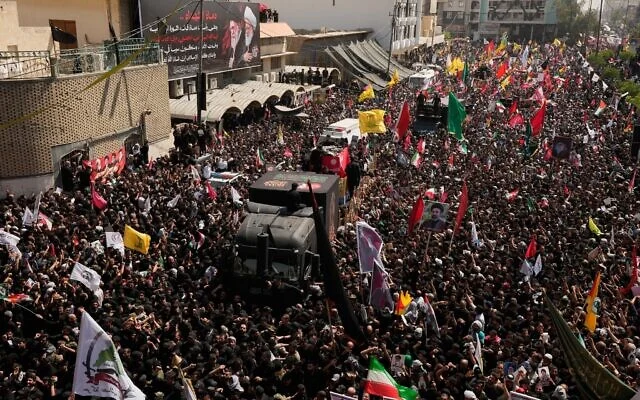
NAJAF, Iraq — Funeral processions for Iran’s late Supreme Leader Ayatollah Ali Khamenei were held Wednesday in the holy Iraqi cities of Najaf and Karbala with masses of mourners present.
The days-long funeral for Khamenei began Saturday, with authorities shutting down streets, airspace, and daily life in the Islamic Republic’s capital, Tehran, as mourners commemorated the life of the man who led Iran for decades with an iron fist while confronting the West.
Khamenei was killed in late February in widescale US and Israeli strikes on Iran. He was among several senior Iranian leaders killed in strikes during the war. He was 86.
His body arrived Tuesday in Najaf, considered one of the holiest of cities for millions of Shiite Muslims worldwide. Many senior Shia clerics have studied, taught, or lived there, including Khamenei’s predecessor, Ayatollah Ruhollah Khomeini.
Mourners holding portraits of the late supreme leader welcomed the body and senior officials escorting it, including Iranian President Masoud Pezeshkian and Foreign Minister Abbas Araghchi.
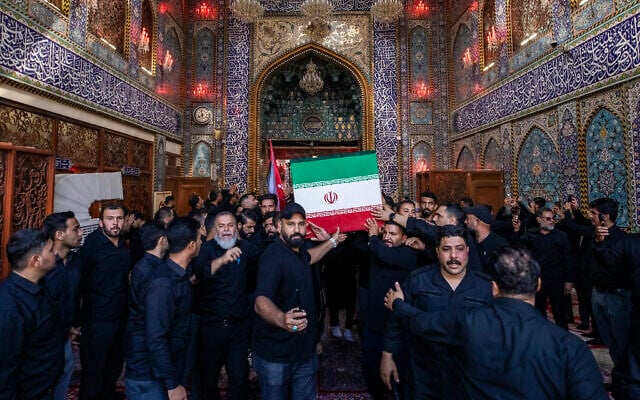
The body was placed in a casket draped in the Islamic Republic’s flag and encased in glass.
Some supporters performed self-flagellation on the streets, while others waved Iranian as well as red and black flags symbolizing mourning and a desire for revenge.
Muhammad Taqi al-Hakim, a senior scholar at the Najaf seminary, led the funeral prayers at the Shrine of Imam Ali, the Prophet Muhammad’s cousin and son-in-law.
As the coffin was carried into the shrine, large crowds of mourners pushed and shoved their way to get close to it. Some threw themselves onto the casket, as Hakim struggled to control the crowd, urging the pallbearers to carry it closer to the ground for fear it might fall.
“We, the people of Iraq, will remain a thorn in the eyes of the enemies,” said Jaafar Jawad, a funeral attendee. The arrival of Khamenei’s body “is the greatest possible honor, and God willing, we will be loyal and repay a little of his debt in the holy city of Najaf.”
Karim Hassan, who attended the procession in Najaf, described Khamenei’s death as “a calamity, a tragedy,” adding that the funeral ceremonies “are a fitting tribute” to “a leader who cannot even be described.”
The body later arrived in Karbala, a holy city for Shiite Muslims where the Imam Hussein, the grandson of the prophet, was killed in 680 CE.
‘My conscience brought me’
In Karbala, as in Najaf, food and drink stalls for mourners lined the streets, while security forces were heavily deployed and medical teams stood ready for emergencies.
Karbala is home to the shrine of Imam Hussein, the third Shia imam, whose death in the seventh century remains central to Shia history.
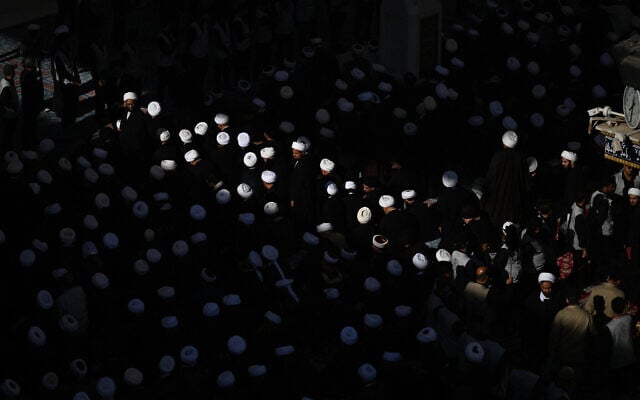
Thousands of supporters gathered in the desert heat in and around the shrine. Abdul Mahdi al-Karbalaei, a representative of Iraq’s top Shiite religious authority, led the prayers at the Imam Hussein Shrine.
Water sprinklers offered some relief from the heat as the coffin was transported through the massive crowds.
Um Ali, who refused to give her name, said she traveled from Baghdad with her sons.
“My conscience brought me. My religion brought me,” she said, adding, “We have done nothing but weep” since Khamenei was killed.
The remains of Khamenei’s relatives who were killed with him, including his granddaughter, were quietly brought to the shrines of both cities early Wednesday.
The bodies were later brought back to Iran.
The bond between Iraq and neighboring Iran, both Shia-majority countries, runs deep and is shaped by religion and by politics. Iran backs influential politicians but also armed groups in Iraq, some of which joined the recent war after Khamenei’s death, attacking US facilities in Iraq in support of Tehran.
Iraq is also allied with the US, and, for decades, successive governments have struggled to maintain a delicate balance between the two foes.
Iran shows new footage after strike that killed leader
Meanwhile, back in Iran, state media released what it said was new footage of the aftermath of US-Israeli strikes that killed former supreme leader Ali Khamenei.
The footage was published amid ongoing funeral processions for the assassinated ruler, who was killed in his compound alongside four members of his family and several high-ranking officials during the opening strikes of the US-Israeli campaign against the Islamic Republic on February 28.
???? انتشار تصاویر دیدهنشده از حسینیهٔ امام خمینی در بیت رهبری پساز حملات ناجوانمردانه آمریکا pic.twitter.com/wAtiRzxjZ2
— خبرگزاری فارس (@FarsNews_Agency) July 8, 2026
Iran’s new supreme leader, Khamenei’s son Mojtaba, was injured in the strike, which also killed his wife and son. He has yet to make an appearance since he was appointed to succeed his father, and is believed to be in hiding.
According to reports, Iranian security officials rejected his requests to partake in his father’s funeral ceremonies, fearing a possible Israeli assassination. He was also absent from a memorial for his wife in Tehran last week.