World
Marco Rubio Says Operation Epic Fury Has Ended, But Hormuz Tensions Continue

The United States says its large-scale military campaign against Iran has formally concluded. But in the waters surrounding the Strait of Hormuz, the crisis that triggered the confrontation is far from settled. Speaking at the White House on Tuesday, Marco Rubio announced that “Operation Epic Fury” — the joint US-Israeli military campaign launched on February 28 — had completed its primary objectives.
“Operation Epic Fury is concluded,” Rubio said, framing the operation as a mission that successfully achieved its intended goals. What he did not say was equally significant.
Rubio stopped short of declaring the broader conflict over. Nor did he rule out the possibility of renewed military escalation if tensions surrounding Iran’s nuclear programme or the Strait of Hormuz worsen again. Instead, the administration appears to be repositioning its message: from offensive combat operations to sustained strategic pressure.
“We’re not cheering for an additional situation to occur,” Rubio told reporters. “We would prefer the path of peace.” That peace, however, remains conditional.
Hormuz Remains The Flashpoint
Even as Washington declares major combat operations complete, US military assets remain deeply engaged in securing maritime movement through the Strait of Hormuz — the narrow corridor through which roughly one-fifth of global crude oil supplies normally transit. Rubio insisted ongoing American military activity in the region was “defensive in nature”.
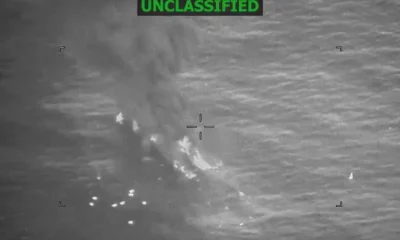
“There’s no shooting unless we’re shot at first,” he said. “We’re not attacking them.” The Pentagon has continued escort and surveillance operations under “Project Freedom”, the US-led maritime initiative designed to reopen commercial shipping lanes after weeks of Iranian restrictions and naval confrontations.
So far, however, progress has been limited. Only two commercial vessels are publicly known to have crossed the US-guarded route successfully, while hundreds of ships remain effectively trapped inside the Persian Gulf amid continued insurance, security and operational concerns.
Defence Secretary Pete Hegseth acknowledged that Washington would prefer a peaceful maritime reopening effort but said US forces remained prepared “if needs change”.
Ceasefire Exists — But Barely
Officially, a ceasefire reached weeks ago remains in place. Operationally, the region still resembles an active conflict zone. The United Arab Emirates said Tuesday it was once again intercepting Iranian missiles and drones, while CENTCOM continues maintaining elevated force posture across the Gulf.
Iranian military officials denied responsibility for recent strikes targeting the UAE. Meanwhile, the United Nations Security Council is considering a new resolution — backed by the United States and Gulf states — demanding Iran halt attacks on shipping and disclose the locations of sea mines allegedly deployed around Hormuz.
The proposed resolution reportedly includes provisions under Chapter VII of the UN Charter, meaning enforcement measures, including sanctions or military action, could theoretically follow if Iran refuses compliance. That significantly raises the diplomatic stakes.