Trends
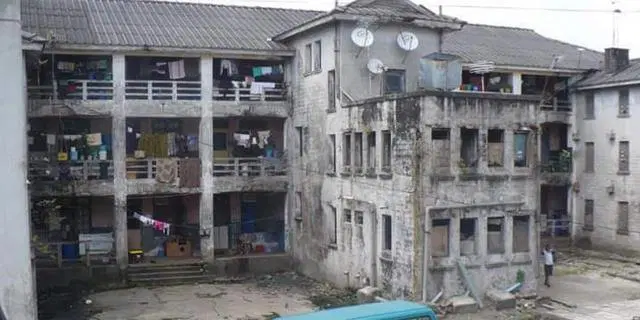
Living in Squalor: How Filth, Decay Continue To Rule Over Nigeria Police barracks

When over 1,000 police officers and their families were forcefully displaced from the historic Central Police Station (CPS) Barracks in Onitsha in 2013 following a controversial land dispute, many Nigerians viewed it as an isolated crisis. But it wasn’t.
The images were disturbing. Policemen who spent decades serving the nation were suddenly packing their belongings under the supervision of court bailiffs. Women who operated small businesses within the barracks watched bulldozers flatten their shops. Children who knew no other home were forced into uncertainty.
Thirteen years later, the Onitsha incident has become more than a local land dispute. It has emerged as a symbol of a much deeper national crisis—the collapse of police housing infrastructure across Nigeria.
Today, from Onitsha to Maiduguri, from Ibadan to Calabar, from Umuahia to Lokoja, thousands of officers and their families are living in conditions many describe as unfit for human habitation.
Investigations by Vanguard across the country reveal a disturbing pattern of leaking roofs, collapsing buildings, broken sewage systems, water shortages, overcrowding, open defecation and severe accommodation shortages.
Ironically, the men and women entrusted with protecting lives and property are themselves living in environments that threaten their safety, health and dignity.
Onitsha: The Incident That Exposed a National Problem
The crisis began when the Ekwerekwu family of Okposieke Kindred in Onitsha successfully secured a court judgment claiming ownership of the land occupied by the ancient police barracks.
According to the family, the land had been leased to the police approximately 100 years earlier and the lease had expired. The enforcement exercise that followed led to the demolition of several structures and the displacement of hundreds of police families.
While police authorities maintained that only illegal structures were removed, affected officers disagreed. Many insisted they had been paying accommodation deductions from their salaries and therefore could not understand how they suddenly became illegal occupants.
The incident forced many officers into rented accommodation across Onitsha, exposing a problem that remains widespread today—the inability of the Nigeria Police Force to provide adequate housing for its personnel.
Ironically, some sections of the Onitsha barracks remain occupied today because only portions of the property were recovered. Yet the scars remain. For many officers, Onitsha became proof that police accommodation in Nigeria rests on shaky foundations—physically, legally and institutionally.
A National Housing Emergency
The Nigeria Police Force is one of Africa’s largest security institutions, with hundreds of thousands of personnel spread across the federation. However, available police housing has failed to keep pace with growing manpower.
Many barracks were built during the colonial era or shortly after independence. Most have exceeded their lifespan. Years of neglect, poor maintenance culture, inadequate funding and bureaucratic bottlenecks have left many facilities in varying stages of decay.
Across Nigeria, the housing crisis confronting police personnel falls into three categories: Dilapidated barracks, insufficient accommodation and legal disputes over land ownership. The result is that thousands of officers either live in dangerous structures or are forced into private rented accommodation at enormous personal cost.
Nightmare facing Police officers in S-South barracks
Across Cross River, Rivers, Akwa Ibom, Bayelsa and Edo states, Vanguard findings revealed a common pattern of neglect: collapsing roofs, broken sewage systems, blocked drainage channels, overcrowded apartments, water shortages and rodent infestations.
For officers who spend their days confronting armed robbers, kidnappers, cultists and other criminals, home should offer refuge and comfort. Instead, many return from duty to environments that threaten their health, dignity and safety.
Cross River: Where open defecation has become way of life
Perhaps nowhere is the housing crisis more shocking than at the Akim and Moore Road Police Barracks in Calabar. What should ordinarily serve as secure residential quarters for police personnel have become symbols of institutional neglect.
A visit to both barracks revealed buildings that have suffered decades of abandonment. Roofs leak profusely during rainfall. Broken railings hang dangerously from storey buildings. Toilets are abandoned and unusable. Sewage systems have collapsed, while potable water is virtually non-existent.
The result is a humanitarian crisis unfolding within facilities owned by one of Nigeria’s foremost security institutions.One police operative who has lived in Akim Barracks for eight years painted a grim picture.
According to him, he has never used the toilet facilities in the barracks since moving there.
“Since I started living here eight years ago, I have never for once used the toilet. I either use facilities at my place of work or wake up very early to use the big drainage opposite the barracks,” he disclosed. His confession reflects the reality facing many residents.