
World
Live fast, die young: Israeli scientists link rapid-growth gene to early aging in fish

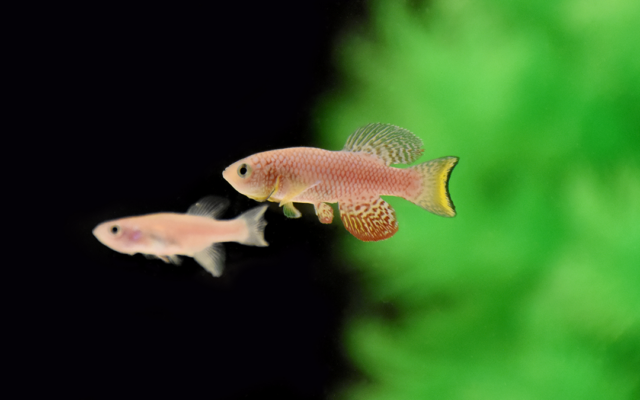
Israeli scientists say a key gene that helps African turquoise killifish grow quickly and reproduce early can also shorten their lives and increase their cancer risk, offering new evidence for a decades-old theory about aging.
The researchers worked with killifish because “they are a unique model that ages at an ultra-fast pace,” explained Prof. Itamar Harel of the Hebrew University of Jerusalem. “This fish is a vertebrate, just like us, but it naturally ages in four to six months.”
In a peer-reviewed study recently published in Nature Communications, Harel and colleagues used the CRISPR gene-editing tool to modify the VGLL3 gene, which is linked to puberty in humans, in African turquoise killifish.
“The same machinery that drives a cell to maturity in a young body hijacks the system to build a tumor in an old one,” Harel told The Times of Israel by telephone.
The researchers found that fish with altered VGLL3 exhibited increased stem cell proliferation, grew faster, and reached sexual maturity earlier, thereby enhancing their survival rate and reproduction abilities.
However, these advantages came at a great cost.
The alteration resulted in a 15 percent shorter lifespan in male fish and a 7% shorter lifespan for female fish. Moreover, there was a greater risk for melanoma-like tumors in both male and female fish.
The study was conducted with Dr. Eitan Moses and Dr. Marva Bergman, who are both involved in Harel’s lab at the Hebrew University, in collaboration with Prof. Nabieh Ayoub at the Technion-Israel Institute of Technology and Prof. Alexei A. Maklakov of the University of East Anglia.
It could pave the way for cancer prevention and research into how to separate the biological mechanisms of healthy growth from the diseases of aging.
“We are looking for mechanisms that do not necessarily extend our lifespan, but maybe extend our health span to give us more healthy years,” Harel said.
Genetic tradeoffs
Harel said the team wanted to understand why animals with short lifespans tend to reach sexual maturity faster.
They tested this by using turquoise killifish and manipulating the VGLL3 gene, which is linked to height, weight, and puberty in humans and other species.
This gene is like a biological switch, Harel said, influencing the timing of sexual maturity.
The researchers realized that one manipulation accelerated puberty and sexual maturation, while the other slowed it down.
“We were really excited, because it meant that we had almost like a thermostat control,” Harel said.
The researchers found that the gene may affect not just puberty, but also overall development.
“Suddenly, the fish were larger, their gonads were bigger, and we saw that they proliferated much faster,” Harel said. “Everything was accelerated.”
Soon, the fish displayed all the features of aging that “we see in ourselves,” Harel said. “There were cataracts and cancer, loss of muscle mass, fertility, and cognitive decline.”
Then, one day, when the scientists walked into the fish room of the lab, they saw that many of these accelerated fish “had a very strange splotch on their tail, a black splotch, and this seemed to us like melanoma,” Harel said. “We saw that it was full-blown cancer.”
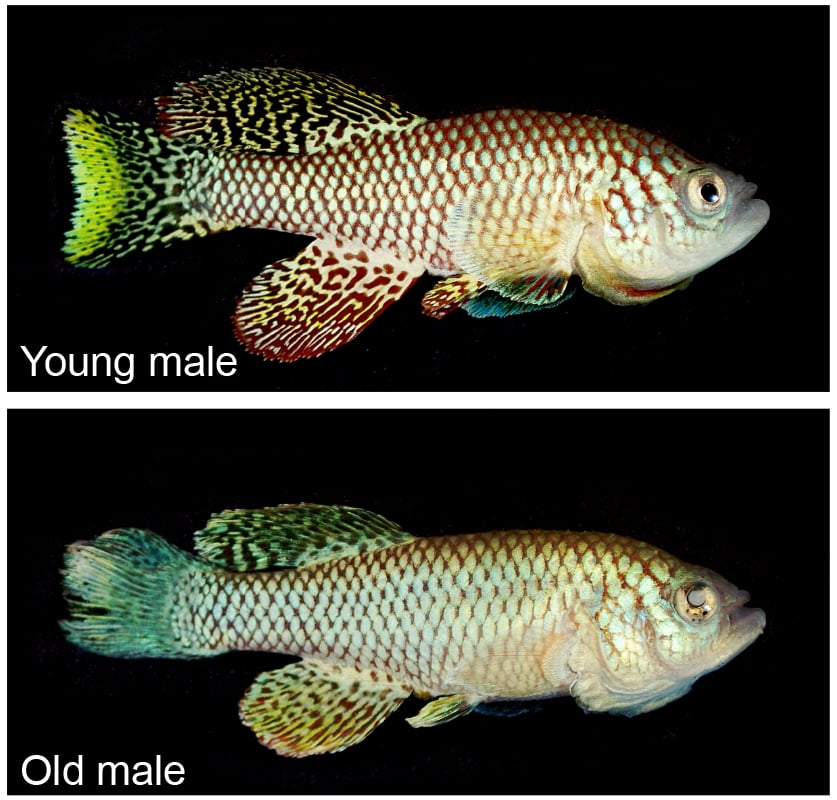
“There was an early life benefit which had a cost later in life,” Harel explained.
The researchers’ observations confirmed the antagonistic pleiotropy theory of aging, Harel said, an idea first suggested by American biologist George Williams in 1957.
“This theory of aging posits that genetic pathways conferring fitness advantages in youth become deleterious in later life, after development and early reproduction are complete,” Prof. Haim Cohen, director of the Sagol Healthy Human Longevity Center at Bar-Ilan University’s Mina and Everard Goodman Faculty of Life Sciences, told The Times of Israel.
“Surprisingly, while this theory has been established for decades, empirical validation has been largely confined to lower organism models such as worms and flies,” said Cohen, who was not involved in Harel’s study.
“A direct causal link mapping early-life developmental benefits to late-life deleterious effects in vertebrates has remained elusive,” Cohen said.
Harel’s study “finally bridges this critical gap,” he said. “It demonstrates that the fitness advantages gained in growth and maturity at a young age are directly paid for with accelerated aging and disease in later life.”
‘The evolutionary lottery of life’
“Paradoxically, the research of aging is quite young,” Harel said.
Although Williams came up with the theory in 1957, the first evidence that scientists could manipulate genes to affect the lifespan of a model organism “happened only in the last 35 years,” Harel said.
Harel said he is fascinated by the “evolutionary lottery of life.”
“We see that there are organisms that live way more than we do,” he said, “and we need to figure out the mechanisms they utilize to be more robust with the passage of time.”
Some species are “built for the long haul, and others are programmed to live in the fast lane,” he said.
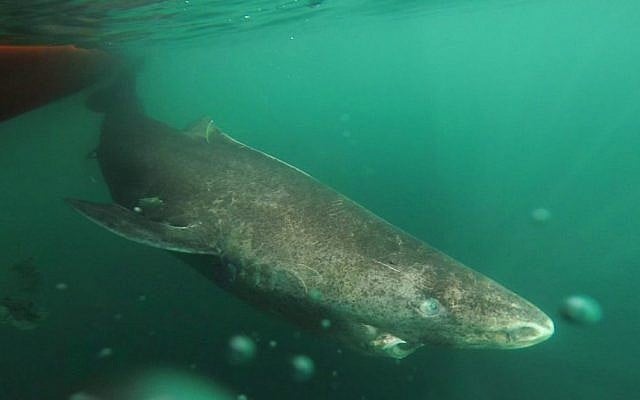
He cited the Greenland shark, which can live up to 500 years, while the turquoise killifish completes its entire life cycle in a matter of months.
The next step for the researchers will be to explore the possibility of separating the gene’s beneficial early-life effects from its harmful consequences later in life.
“If we can understand this mechanism, we might finally learn how to decouple healthy growth from the disease of aging,” he said.