World
Lindsey Graham’s death deprives Ukraine of key Trump whisperer

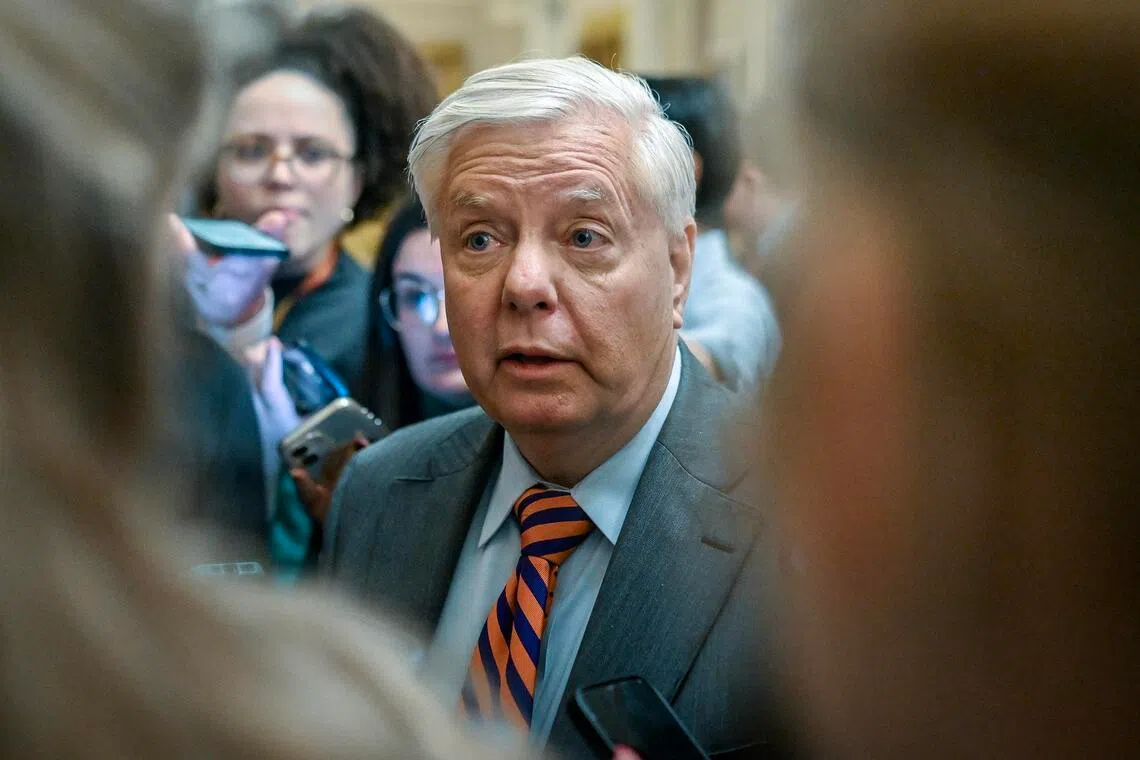
WASHINGTON – The death of US Senator Lindsey Graham leaves key US allies like Ukraine, which have at times struggled to influence the Trump administration, without one of their most effective conduits to the White House.
In the last three days before he died, the South Carolina senator met Ukrainian President Volodymyr Zelensky, strolled through a drone production factory in Ukraine and sealed an agreement with senators to advance a Russia sanctions Bill.
It was the South Carolina Republican’s 10th visit to the country since Russia launched a full-scale invasion in 2022, and he had spent much of US President Donald Trump’s second term trying to sustain US support for Ukraine’s defence against a Russian invasion, despite the US president’s testy relationship with Zelensky.
Before that, Graham was at the NATO summit in Turkey, where he worked to smooth out tensions between the longstanding military alliance and Trump.
Now, Ukraine and other US allies will have to find other advocates, which will not be easy. Graham had honed a unique skill set, combining a close relationship with Trump, the ability to work with Senate Democrats and deep ties with foreign leaders.
Even after Trump won a second term in part by campaigning to end US involvement in foreign wars, Graham remained a staunch proponent of interventionist policies, most notably helping push for Trump to join Israel in a war with Iran.
And despite Trump’s frustration that he could not deliver on his campaign promise to end the war in Ukraine on day one, Graham has been an important asset for Zelensky, who has struggled to maintain a steady relationship with the president.
In Kyiv, Graham’s death was seen as a big loss of a rare Republican who sincerely supported Ukraine and did his best to help the country, according to a person familiar with the matter.
“Ukraine lost a true friend, and America lost one of its finest sons,” Kyrylo Budanov, the head of Zelensky’s office, wrote on social media. “The memory of friends is measured not by words, but by deeds. Lindsey Graham was a true friend of Ukraine because of what he did.”
Graham’s death comes as Ukraine is urging allies, including the US, to provide more Patriot missiles to defend against increasingly deadly Russian ballistic strikes. While Trump last week said he will grant Kyiv licence to manufacture the missiles, getting production up and running will not be quick or easy, requiring continued engagement with the US president.
Volodymyr Fesenko, head of the Penta Research Institute in Kyiv, said that Graham played an important role as one of Ukraine’s lobbyists in Trump’s circle, even if he did not always prevail.
“Trump did not always listen to Graham, as he was not as influential as, for example, envoy Witkoff,” he said in an interview, referring to Trump special envoy for peace talks, Steve Witkoff. “Now the problem for us: Are there other players like Graham – with powerful positions in the Senate and access to Trump?” he said in an interview.
European nations viewed Graham as a key White House influencer, a European diplomat said, to not only support Ukraine but punish Russia. He was also seen as one of a few people among senior Republicans who took an active and informed interest in foreign affairs, according to a person familiar with European leaders’ thinking.
Graham was a regular at global gatherings both public and private, offering interpretations of US administration policy to audiences and officials abroad.
At the Munich Security Conference in February 2025 with Democratic Senator Jeanne Shaheen and NATO Secretary-General Mark Rutte, Graham’s phone rang while they were seated on stage. “Let’s see if this is Trump,” Graham said to a round of laughter. “He would have gladly talked, I’m sure,” he said after clicking the call away.
Graham went on to affirm the value of NATO – the alliance “has stood the test of time” and “it works”, he told the audience – while explaining why Trump is pressing European allies to step up defence spending.
“We’ll need others in the Senate to step up and fill his shoes regarding Ukraine,” said Representative Don Bacon, a Nebraska Republican and vocal backer of Ukraine.
In an interview on July 12 on CNN, Trump spoke about Graham’s influence, saying, “I wanted to see the war with Ukraine end very quickly. I think he was more into keeping it going.” Trump added: “Frankly, he was very militant having to do with that.”
Senator Tim Scott, a fellow South Carolina Republican, recalled Graham’s unique advocacy style.
“Here’s what we need to remember about Lindsey and Ukraine: he wanted to save as many Ukrainian lives as possible because he knew what we all know: that Russia was the aggressor, that Russia was attempting through Putin to create a Ukrainian genocide. And Lindsey Graham wanted to stand in the gap and say, ‘Hades no, not on my watch,’” Scott said on Fox News Sunday.
“And he encouraged President Trump to be as invested as possible.”
Scott added: “And as you know, I know Lindsey Graham was never kind and gentle about the priorities he had. He was loud and obvious, and sometimes even obnoxious because he understood that he had the power of a microphone to make a difference, not for himself but for others.”
On July 10, a bipartisan group of senators, including Graham, announced that Trump had agreed to move forward with new Russia sanctions legislation. They did not detail the updates to the long-stalled legislation, but said they expected to roll it out soon.
Following Graham’s death, several Democratic senators called for passing the Russia sanctions Bill quickly. Senator Richard Blumenthal, a Connecticut Democrat, said it would be a “fitting tribute”.
“I will forever remember our last lengthy conversation this weekend, when he exulted at reaching an agreement on our Russian sanctions Bill and said, ‘This is a big effing deal – we all did good,’” Blumenthal said in a statement. BLOOMBERG