World
Lindsey Graham reportedly prepared push for Israel-Saudi ties after Israeli election

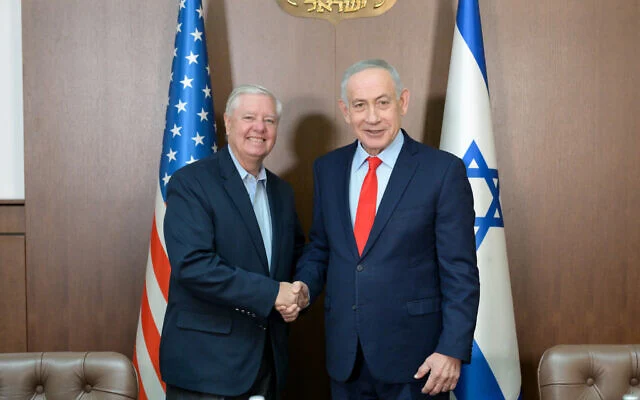
US Senator Lindsey Graham was reportedly working on a new initiative to broker a historic normalization agreement between Israel and Saudi Arabia in the weeks before his death over the weekend.
Graham, a veteran Republican Israel-backer, had worked on achieving Saudi-Israel normalization for years, including during the Biden administration, and believed that the US-Israeli campaign against Iran had created an opening for US President Donald Trump to broker such an agreement, Axios reported on Sunday, citing conversations between Graham and Axios reporter Barak Ravid.
The senator reportedly sought to begin an intensive diplomatic push after Israel’s late-October election and the US midterm elections, with the aim of reaching an agreement before the new US Congress is set to be sworn in in January.
Graham had recently urged Trump to authorize a short, overwhelming military operation to reopen the Strait of Hormuz if diplomacy failed to resolve the crisis there before the initiative got underway, the report added.
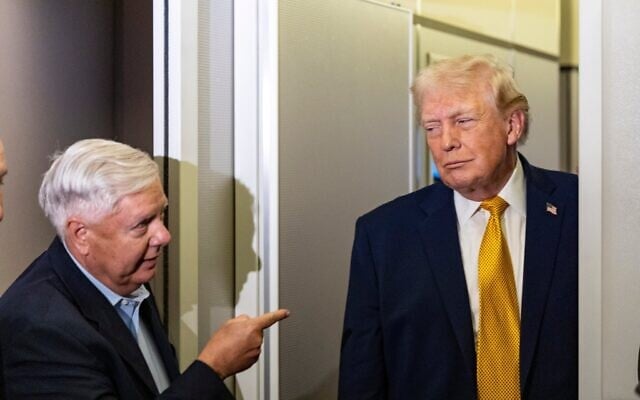
In mid-May, Graham began discussing the idea with Trump, telling him it should be the focus on the “day after” the Iran war, the report said.
Trump’s reported push during a May conference call for the leaders of several Arab and Muslim countries to establish relations with Israel, if an agreement with Iran was reached, came a week after that conversation, according to Axios.
In recent weeks, Graham had discussed the initiative with senior Trump advisers such as Jared Kushner, as well as with Prime Minister Benjamin Netanyahu’s confidant Ron Dermer, Saudi Ambassador to Washington Reema bint Bandar Al Saud, and Saudi Foreign Minister Faisal bin Farhan, the report continued, adding that he had planned to visit both Israel and Saudi Arabia in August to assess the readiness for a breakthrough and to possibly begin working in September toward an agreement.
Graham told Axios that any agreement would have to include a significant Palestinian component and Israeli concessions to secure enough Democratic votes for US Senate approval, and that he intended to work with Trump and his team to make clear to Netanyahu and other Israeli leaders before the election that this was Washington’s expectation.
The South Carolina Republican did not live to see his efforts potentially bear fruit. He died Saturday evening from a heart condition.
Saudi Crown Prince Mohammed bin Salman has previously expressed willingness to normalize relations with Israel, but Riyadh has continued to insist that any agreement include an irreversible, time-bound path toward the establishment of a Palestinian state.
Netanyahu’s current coalition has rejected that condition, and securing such commitments from Israel’s next government, particularly if Washington intended to begin pressing it while coalition negotiations were still underway, would be a major challenge.
Netanyahu: Graham urged me to strike Iran
Separately on Sunday, Netanyahu said that the late senator urged him to strike Iran.
“He came to me and said, Bibi, you have to do it,” Netanyahu told NBC’s “Meet the Press.” “You have to knock out this nuclear weapons program before they knock us out.”
Netanyahu did not indicate when the conversation took place.
He said that Trump “wants to exhaust the possibility of achieving an agreement, especially on the nuclear issue, through negotiations.”

“But he is obviously not shy of using force when the Iranians break every commitment they make, usually a few hours or a few minutes after they make it,” he continued. “We should let the president have his opportunity.”
Netanyahu added that Israel is “keenly grateful for the fact that America and Israel joined forces to prevent Iran from getting nuclear weapons and the means to deliver them.”
The fighting, which began with US-Israeli strikes on February 28, entered a truce on April 8, and the US and Iran are engaged in talks based on the memorandum of understanding they reached last month.
Iran and the US are nearly at the midway point of the 60-day period of that deal, which was supposed to set up talks for a permanent end to the war. Instead, it has devolved into a series of attacks over the strait and its future, worrying world leaders that the Iran war could resume.
Israel is not a party to the memorandum or the talks, and Israeli officials have criticized the document for failing to secure a concrete concession from Iran on its nuclear program.