World
Lebanon paid the price for a ceasefire that never existed

There are moments in international affairs when language itself becomes part of the violence. Lebanon’s latest tragedy may be one of them.
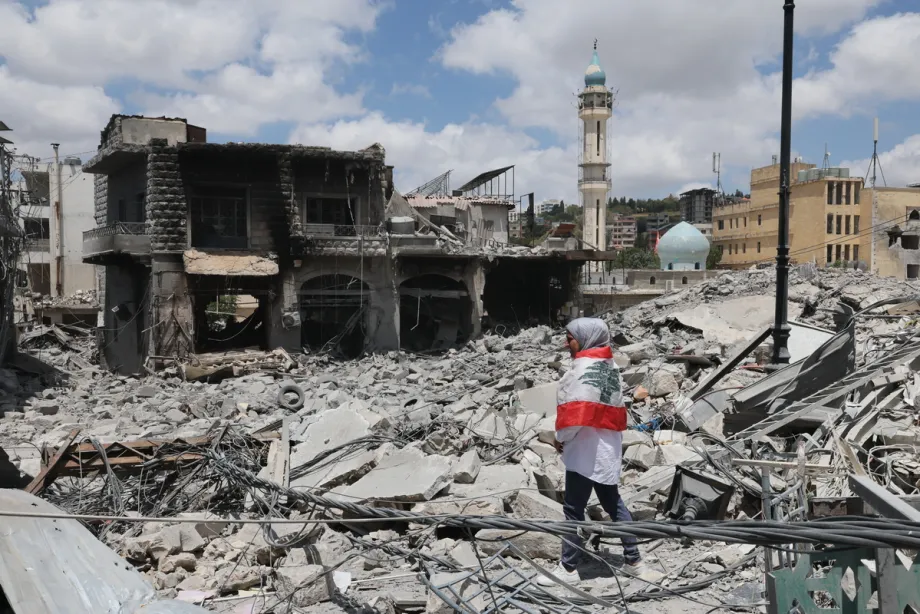
More than 150 Israeli strikes reportedly hit southern Lebanon overnight, leaving dozens dead and hundreds injured. Entire neighbourhoods were shattered before sunrise. Families fled once again along roads already crowded by months of displacement. Yet this devastation unfolded beneath the vocabulary of a ‘ceasefire’ — a word that, in theory, should signify restraint, protection and a chance for diplomacy to breathe.
The scale of the suffering tells its own story. Since March 2, 3,980 people have been killed and more than 12,000 wounded, among them 247 children, 363 women and 133 healthcare workers. More than one million civilians — over one-fifth of Lebanon’s population — have been driven from their homes. Behind each number lies a family uprooted, a community shattered, and a country pushed deeper into exhaustion.
Instead,
READ: Israeli strikes kill at least 28 in southern Lebanon despite ceasefire
The contradiction became especially stark after reports that understandings reached between Washington and Tehran included commitments to reduce hostilities across multiple fronts, including Lebanon. Such arrangements were always fragile. Israel maintained freedom of action in accordance with its own security calculations. Yet the speed with which violence resumed exposed a deeper reality: agreements involving regional powers mean little when the actors most capable of shaping events do not regard themselves as constrained by them.
The MOU was clear. Iran demanded—and received—assurances that hostilities in Lebanon would cease. The US gave those assurances. And then, within days, Israel launched the largest bombing campaign of the entire conflict.
The consequences extend beyond Lebanon. Iran’s withdrawal from negotiations, viewed in some Western capitals as an escalation, can equally be interpreted as evidence of collapsing confidence. Diplomatic processes depend upon credibility. When understandings are overtaken by military realities within days, incentives for compromise disappear. Why invest political capital in negotiations when bombs speak louder than signatures?
Furthermore, the result is not merely a failed agreement. It is the erosion of faith in diplomacy itself. Lebanon’s suffering illustrates the asymmetry at the heart of today’s regional order. According to Lebanese authorities and international humanitarian agencies, thousands have been killed since the current escalation began, with women, children and medical workers among the dead. More than one million people have reportedly been displaced — over one-fifth of the country’s population. The scale rivals, and in some respects surpasses, the destruction witnessed during the 2006 war.
READ: Israeli army won’t withdraw from occupied territory in southern Lebanon, defense minister says
Amnesty International, Human Rights Watch and United Nations agencies have repeatedly warned about the humanitarian consequences of mass displacement and the destruction of civilian infrastructure. UNICEF has reported alarming rates of children killed or injured. The World Bank estimates Lebanon’s economy, already crippled by financial collapse, faces billions of dollars in additional losses.
Yet the strategic conversation remains imprisoned by the language of deterrence. Israel sees Hezbollah through the prism of an Iranian-backed enemy; Hezbollah casts itself as part of the Axis of Resistance and as a defender of Lebanese land and sovereignty. Between these rival narratives lies a devastated country whose civilians bear the consequences of a conflict larger than themselves.
Once an overwhelming force becomes a permanent doctrine rather than a temporary necessity, violence ceases to serve political ends and instead becomes an end in itself. Entire generations are left suspended between memories of loss and the fading hope that diplomacy might one day prevail over destruction.
Words matter because they reveal philosophies. Statements from prominent Israeli ministers invoking imagery of destruction and promising to ‘open the gates of hell’ have attracted international alarm. Such rhetoric may play well domestically during wartime, but it carries strategic consequences. Language that casts entire societies as enemies undermines the very conditions necessary for future coexistence. Security doctrines built upon perpetual punishment rarely produce lasting security. They produce cycles of grievance.