Viral
Learn From Labour Party’s ‘Mistakes’ – Abure Warns NDC Against Handing Excessive Influence to Peter Obi’s Camp

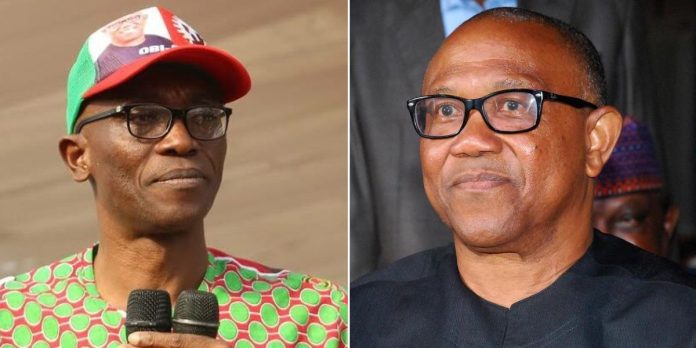
Factional National Chairman of the Labour Party, Julius Abure, has cautioned the leadership of the Nigeria Democratic Congress (NDC) against concentrating political power in the hands of former Anambra State governor, Peter Obi, and his loyalists, warning that such a move could create internal instability within the party.
Abure made the remarks in a statement issued on Monday while reacting to reports of disagreements within the NDC over the allocation of elective and leadership positions among various interest groups ahead of future political contests.
The Labour Party chieftain expressed support for the NDC leadership, reportedly led by Senator Seriake Dickson, for refusing to grant all the requests made by Obi’s supporters. According to him, the party’s stance reflects lessons learned from the Labour Party’s own experiences before and after the 2023 general elections.
Drawing parallels with events that unfolded within the Labour Party, Abure argued that political parties must avoid placing too much influence in the hands of any single individual or political bloc, regardless of their popularity.
According to him, several politicians who secured nominations and won elective positions on the Labour Party platform during the 2023 elections later became involved in conflicts with the party leadership rather than contributing to the growth and stability of the organisation.
“History has a way of repeating itself,” Abure stated. “The NDC leadership appears to have studied what happened within the Labour Party and is taking precautions to avoid a similar situation.”
The Labour Party chairman alleged that many politicians who benefited from the party’s platform eventually aligned themselves with Obi and became key figures in the prolonged leadership disputes that emerged after the elections.
Abure further claimed that the Labour Party made substantial sacrifices in accommodating Obi and his political associates when he joined the party ahead of the 2023 presidential election.
He explained that the party leadership, driven by confidence in Obi’s candidacy and the prospects of electoral success, offered numerous opportunities to his supporters, including tickets for elective positions.
“We interpreted his intentions positively and made room for many of his supporters,” Abure said. “A significant number of tickets were granted without financial demands because we believed we were making a long-term investment in individuals who would strengthen the party.”
However, he lamented that many of those elected on the party’s platform later turned against the party leadership and supported efforts to challenge its authority.
According to Abure, rather than working to consolidate the Labour Party after the elections, some elected officials allegedly became involved in actions that deepened divisions within the party.
He argued that political organisations function best when power and influence are distributed across different groups and interests, ensuring that no faction becomes dominant.
Abure therefore commended Senator Dickson and the NDC leadership for what he described as a balanced approach to power-sharing.
“It is wise for the NDC leadership not to hand over every position being demanded by Obi’s supporters,” he said. “A party leader must also ensure that other stakeholders are adequately represented. Having trusted allies within the structure is important because they can provide support and defend the leadership when challenges arise.”
The Labour Party chairman also revisited the leadership crisis that engulfed his party after the 2023 elections. He accused the Independent National Electoral Commission (INEC) of playing a role in the controversy by accepting arguments from certain party members that the tenure of the party’s executives had expired.
Abure alleged that prominent figures within the party, including Peter Obi and Abia State Governor Alex Otti, subsequently sought to take control of the party’s leadership structure, leading to a prolonged internal dispute.
According to him, the issues currently being debated within the NDC mirror challenges that surfaced within the Labour Party after its strong showing in the 2023 elections.
He noted that his comments were prompted by questions from party members and political observers seeking to understand how the Labour Party managed its relationship with Obi and his supporters during the 2022–2023 electoral cycle.
The remarks are expected to further fuel ongoing political discussions surrounding alliances, leadership structures, and power-sharing arrangements among opposition parties as preparations for future elections continue.