Society
Lagos moves against indiscriminate dredging as Sand crisis deepens

The Lagos State Government has sounded the alarm over the rising scarcity of sand caused by indiscriminate dredging activities, warning that the situation could worsen housing costs, damage the environment and threaten food security if left unchecked.
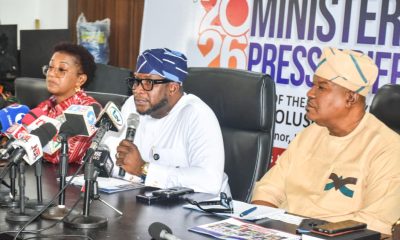
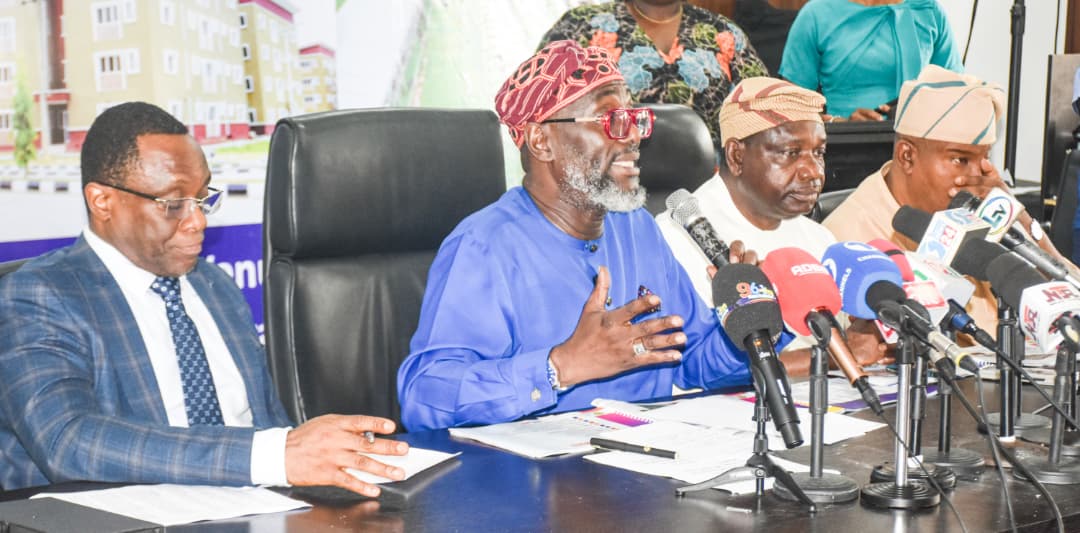
Commissioner for Waterfront Infrastructure Development, Dayo Bush Alebiosu, raised the concern on Wednesday while presenting the scorecard of his ministry at the annual ministerial press briefing held at the Bagauda Kaltho Press Centre in Alausa, Ikeja.
Alebiosu said the increasing demand for sand for land reclamation and construction projects across Lagos is exerting enormous pressure on the state’s waterways and coastal resources.
According to him, developers undertaking reclamation projects in the Lekki-Ajah corridor now source sand from distant communities in Ikorodu because deposits within the axis are becoming depleted.
He disclosed that some operators now pump sand across distances of between 10 and 12 kilometres, a development he described as a dangerous signal that available sand resources in parts of Lagos are gradually drying up.
“For me, it confirms my fears. If you are reclaiming land in Ajah and you now have to pump sand from Ikorodu, it means the sand resources within Ajah are gradually running out,” the commissioner said.
He warned that the development reflects growing pressure on sand deposits across the state and reinforces the need for tighter regulation and comprehensive data collection on dredging activities.
The commissioner said the state government has become more cautious in granting dredging licences and permits because authorities must first understand the volume of sand being extracted daily, the number of operators involved and the quantity of resources still available.
“We need proper data. We need to know how many people are dredging, how much sand is being dredged daily, and what is left within those areas,” he stated.
Alebiosu noted that beyond environmental concerns, sand scarcity could trigger a fresh spike in construction costs and place additional pressure on infrastructure and housing delivery in Lagos.
He also linked indiscriminate dredging to growing threats to food security, particularly among fishing communities whose livelihoods depend heavily on healthy aquatic ecosystems.
According to him, aggressive dredging disrupts aquatic organisms and marine habitats, forcing fishermen to travel longer distances and spend more money before making catches.
“It is putting food security at risk. We are encouraging people to consume more protein, such as fish, but whenever dredging disturbs aquatic life, fishermen are forced to work harder, and naturally, the cost of fish goes up,” he said.
The commissioner observed that the soaring cost of fish in local markets is partly connected to marine disruption caused by unchecked dredging operations.
He further revealed that several waterfront communities are also grappling with infrastructural damage resulting from heavy-duty equipment and increased commercial activities associated with dredging.
Alebiosu identified Ibese in Ikorodu as one of the communities where roads and public infrastructure have reportedly been damaged by dredging operations.
He explained that the Ministry of Waterfront Infrastructure Development remains the statutory agency responsible for regulating sand dredging and sand dealing activities across Lagos State.
According to him, the ministry collaborates with the Ministry of Environment and Physical Planning, as well as host communities, to combat illegal dredging through monitoring, enforcement and whistleblowing mechanisms.
“We thank the communities that alert us whenever illegal activities take place. Enforcement is continuous because many of these operators try to hide their activities,” he said.
The commissioner added that illegal dredging continues to thrive largely because of the financial benefits attached to the business, with some residents and local collaborators ignoring the long-term environmental implications.
Reacting to concerns over the involvement of foreign nationals in illegal dredging activities, Alebiosu insisted that local collaborators must also take responsibility.
“We cannot continue blaming foreigners alone. We must ask ourselves how they got there in the first place. They definitely have the connivance of some locals,” he added.
The Lagos State Government reaffirmed its commitment to stricter regulation of dredging activities to curb environmental degradation, protect waterfront communities and ensure the sustainable management of the state’s natural resources.