Society
Lagos lands major European investment boost

The European Investment Bank (EIB) has strengthened its financial commitment to Nigeria, with total lending to the country reaching €550 million in 2025, as Lagos State seeks to leverage international funding to transform its transportation infrastructure through the Omi Eko Project.
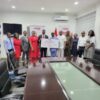
The disclosure was made during a visit by a delegation of the EIB, led by its Vice President, Ambroise Fayolle, to Lagos House, Marina, where discussions focused on investment opportunities, sustainable development and the implementation of strategic infrastructure projects.
Fayolle revealed that Nigeria had become the bank’s largest country of operations in Africa, reflecting growing confidence in the country’s economic potential and strengthening ties between Nigeria, the European Union and the EIB.
As part of its expanding footprint, the EIB recently signed a €200 million facility with the Development Bank of Nigeria to support digital and green investments by micro, small and medium-sized enterprises (MSMEs).
The bank also entered into a financing agreement with Wema Bank aimed at improving access to credit for underserved businesses while encouraging environmentally sustainable practices.
The EIB Vice President said the Omi Eko Project ranks among the European Union’s flagship investments in Lagos and is being financed through a partnership involving the EIB, the European Union and the French Development Agency (AFD).
The project is expected to deliver modern ferry terminals, improve navigation infrastructure and introduce electric boats to boost water transportation across Lagos.
Governor Babajide Sanwo-Olu, who received the delegation, described the project as a strategic investment capable of unlocking the economic potential of Lagos waterways while significantly reducing travel time for commuters.
According to the governor, the initiative aligns with the transportation objectives of his administration’s THEMES+ agenda and forms a critical component of the state’s long-term plan to build an integrated transport network linking road, rail and water transportation.
Sanwo-Olu noted that Lagos, Nigeria’s commercial capital, possesses vast water resources, with about one-third of the state’s landmass covered by water. He said the government remains committed to maximising this natural advantage by expanding water transportation as a viable alternative to road travel.
He explained that the Omi Eko Project would provide climate-resilient transport infrastructure, safer navigation channels and improved commuter services, while helping to ease pressure on existing road networks.
The governor added that the project could reduce journey times on some routes from about two hours to between 40 and 45 minutes, resulting in increased productivity, reduced commuting stress and improved quality of life for residents.
Describing the initiative as a transformative investment, Sanwo-Olu expressed appreciation to the EIB, the African Development Bank and other development partners supporting Lagos’ drive to create a sustainable and efficient transportation system.
He also welcomed the EIB’s growing support for Nigeria’s small and medium-scale enterprises, describing the sector as a major driver of economic growth, job creation and innovation.
The governor referenced the recently concluded Lagos Investment Summit, saying the state remains focused on converting investor interest and commitments into tangible economic outcomes that will benefit residents and businesses.
Fayolle reiterated the EIB’s commitment to supporting projects that promote economic growth, environmental sustainability and improved living standards, adding that the bank would continue exploring opportunities to deepen collaboration with Nigeria.
The EIB delegation is also expected to inspect several projects in Lagos, including investments supported through partnerships with the Bank of Industry, as part of ongoing efforts to strengthen development financing and expand sustainable infrastructure across the state.