World
Israeli jails a ‘graveyard,’ says freed Palestinian journalist

A Palestinian journalist on Wednesday claimed that Israeli prisons have become a “graveyard” for the living, following a dramatic decline in his health after being released from detention earlier this year.
Mujahed Bani Mufleh, 37, spent six months in jail after being accused of inciting violence against Israel through his journalistic work.
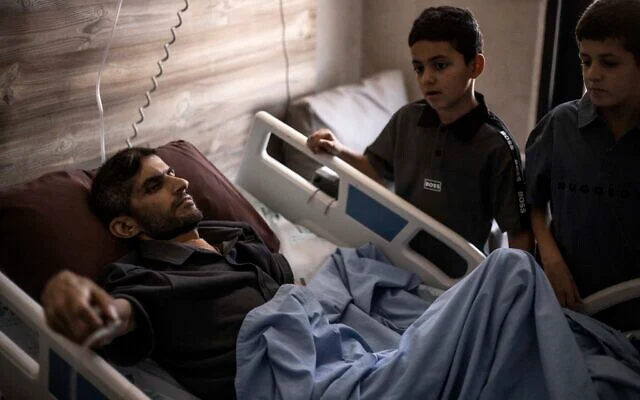
Two days after his release in January, he suffered a severe brain hemorrhage and was admitted to hospital in critical condition, according to the Palestinian Prisoners’ Club advocacy group.
Now frail and barely recognizable, Bani Mufleh is recovering at a hospital in Jenin, in the West Bank, after undergoing a series of surgeries during which doctors removed part of his skull.
“The prison was like a graveyard,” Bani Mufleh told AFP, as he underwent rehabilitation to regain his ability to talk and move.
“I was assaulted inside my home in front of my children,” he said of his 2025 arrest during a raid on his house.
Israeli military and prison authorities did not immediately respond to AFP’s request for comment on Bani Mufleh’s allegations, or on the reason for his initial detention and subsequent release without charges.
Israel’s Prison Service has previously said that all prisoners are detained according to the law with their basic rights fully upheld. However, multiple reports have alleged that Palestinian security prisoners have faced systematic abuse, neglect and deprivation in Israeli jails under the orders of far-right National Security Minister Itamar Ben Gvir, who has repeatedly boasted about the harsh conditions he imposes.
Soon after Bani Mufleh’s release, the former prisoner posted a video online saying that in jail, he “came to understand what real hunger means.”
Bani Mufleh, editor of news website Ultra Palestine, part of Qatar-based media network Ultra Sawt, said he had been “placed in administrative detention without any complete or substantiated charge. They claimed that I incited violence but had no proof.”
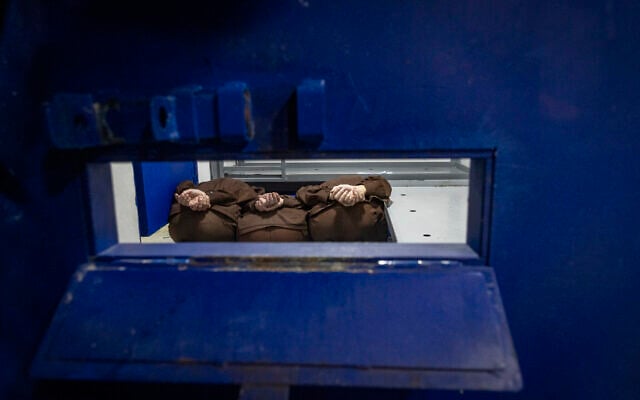
Israel currently holds over 1,300 Palestinian detainees under the terms of the law for unlawful combatants, in a practice known as administrative detention.
Such detainees include those arrested by the IDF and security services inside Gaza and the West Bank during military operations, but who have not been charged with a crime.
The measure sees individuals held without charge for up to six months at a time, under limited court review. The detentions can be renewed indefinitely while allowing military prosecutors to keep suspects from being able to see the evidence against them.
The tool is typically used when authorities have intelligence tying a suspect to a crime but do not wish to reveal the source of the information.
State denies detained Gaza hospital chief and Hamas officer in ‘life-threatening’ condition
Also on Wednesday, Israel admitted that Gaza hospital chief and Hamas officer Hussam Abu Safiya has been examined by medical officials “several times” since he was admitted to Nitzan Prison in Ramle, after Abu Safiya’s lawyer alleged on Sunday that his medical condition had become life-threatening.
The disclosure came as part of the state’s response to petitions by the Physicians for Human Rights Israel (PHRI) group to the High Court of Justice seeking the release of 14 Palestinian doctors from Gaza who are being held in Israel without charge.
The state lawyers, representing the IDF chief of staff, said that Abu Safiya was under “continuous medical monitoring” and that “at no stage” has his life been in danger.
The state did not explain why the medical examinations were necessary. It asked the court to dismiss the petitions.
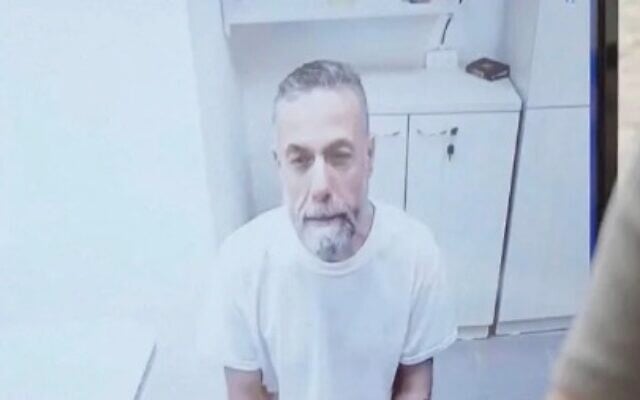
Abu Safiya’s lawyer Nasser Odeh visited his client last Thursday and stated in an affidavit to the court that Abu Safiya “bore fresh, severe injuries to his head, around his eyes, and on his ears and neck — to the extent that his lawyer initially struggled to recognize him,” according to Physicians for Human Rights.
The state, in its response to the High Court, did not address Odeh’s allegations of physical injuries to Abu Safiya, who has been held in Nitzan Prison’s underground Rakefet detention facility since June 24.
“An independent medical examination and an independent judicial review of Dr. Abu Safiya’s condition are urgently required,” said PHRI, calling on the High Court to schedule an urgent hearing on the petition concerning the continued detention of the 14 doctors.
Abu Safiya was arrested by Israeli forces during the war in Gaza in December 2024. He holds the rank of colonel in the Hamas Military Medical Services, according to the service itself and Palestinian media reports.
According to his lawyers, Abu Safiya has faced repeated solitary confinement, lengthy interrogations, and beatings with batons and electric shock sticks.
Last month, the Supreme Court rejected Abu Safiya’s appeal against his ongoing detention, ruling that he can continue to be held under Israel’s law for unlawful combatants despite criminal charges not having been brought against him.
The IDF has said that Abu Safiya was a high-ranking Hamas operative, but has not accused him of participating in any specific acts of terror.
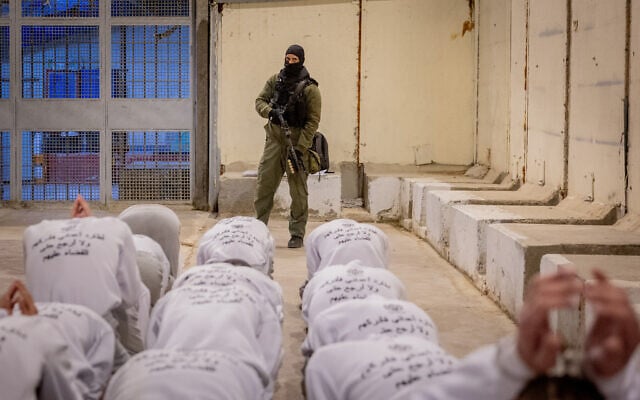
Commenting on Abu Safiya, a UN human rights body this week called his detention arbitrary and urged his immediate release.
In its finding, the UN Working Group on Arbitrary Detention said that Israel’s actions contravened multiple articles of the Universal Declaration of Human Rights as well as the International Covenant on Civil and Political Rights.
“The appropriate remedy would be to release Mr. Abu Safiya immediately and accord him an enforceable right to compensation and other reparations,” it said.
The panel also raised broader concerns, saying the case — one of several submitted to it — “may indicate a widespread or systematic practice of arbitrary detention in the country.”