World
Iran-US war: Iran plans shutdown under sea, set to affect USD 10 trillion business across world, India to face trouble due to….

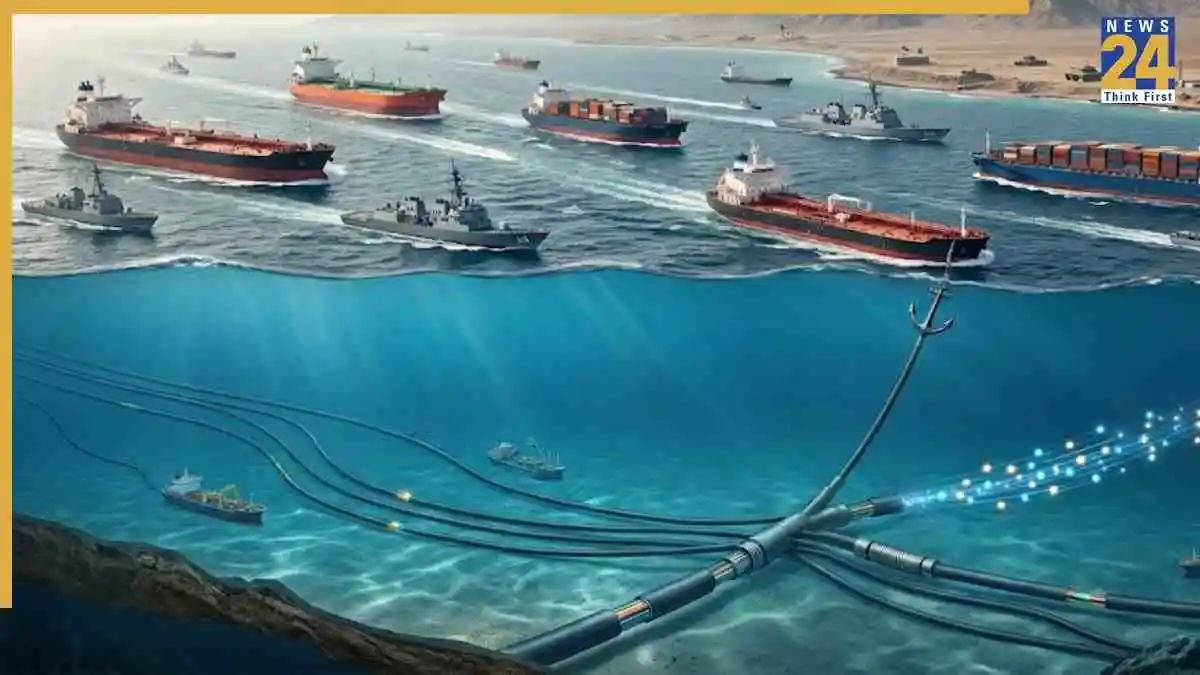
Amid escalating West Asia tensions, a fresh cyber war has now erupted over Hormuz. Iran has announced a sweeping new mandate to gain complete control of seven critical undersea fiber-optic cables passing through the Strait of Hormuz. The move threatens to disrupt the world’s most important energy corridor and turn it into a “digital chokepoint.”
The Iranian Revolutionary Guard Corps (IRGC) has announced that international operators will now be required to obtain Tehran’s permits and pay “protection fees” to maintain seabed infrastructure. The declaration comes amid a 72-day maritime standoff with the US, raising concerns over the security of the $10 trillion in global financial transactions that are transmitted through these cables each day.
ALSO READ: Pakistan Bomb Blast: 9 killed after explosives-laden car detonates at crowded market in Khyber Pakhtunkhwa
The emerging digital frontline
The Strait of Hormuz is the lifeline of the global oil trade. However, it is equally important for the hidden architecture of the internet. Seven crucial cables, including the Asia-Africa-Europe 1 (AAE-1) and the FALCON network, stretch across the seabed, linking the digital economies of Asia, Europe, and the Gulf nations.
What is the set of conditions proposed by IRGC?
Iran’s state-run Tasnim News Agency framed the move as necessary, claiming “sovereignty” over the seabed under the UN Convention on the Law of the Sea. The IRGC has proposed the following set of conditions for the maintenance of undersea fiber-optic cables:
- Initial licensing fees for all international companies operating across the region.
- Annual security payments from tech giants like Amazon, Meta, and Microsoft.
- Exclusive control over all maintenance and repair work within the Hormuz.
“In a situation of active military operations, the risk of unintentional damage increases. If a vessel is struck and loses maneuverability, it could drag an anchor across these lines, triggering a blackout that satellite systems simply cannot fix,” Masha Kotkin of the Stimson Center was quoted as saying.
ALSO READ: Which is world’s most expensive Wood? It is costlier than Gold, not Sandalwood, Teakwood or Rosewood, name is…
The cost of connection, impact on India
Building as well as maintaining these cable networks is a big financial undertaking. The cost of a single transoceanic system can range between $300 million and $1 billion to deploy. Once laid, they need specialized deep-sea ships for maintenance – vessels that could now be blocked from entering the Strait without Iran’s permission.
If Iran imposes this “digital toll” successfully, the cost of connection will go beyond being measured in dollars. For data-heavy economies, including India and the United Arab Emirates (UAE), any disruption could trigger financial paralysis in a matter of minutes.
ALSO READ: Angry Donald Trump slams Iran, considers big military action amid Strait of Hormuz crisis, says, ‘They change their…’