World
Iran, Taiwan, AI: What’s at Stake in the Trump-Xi Summit

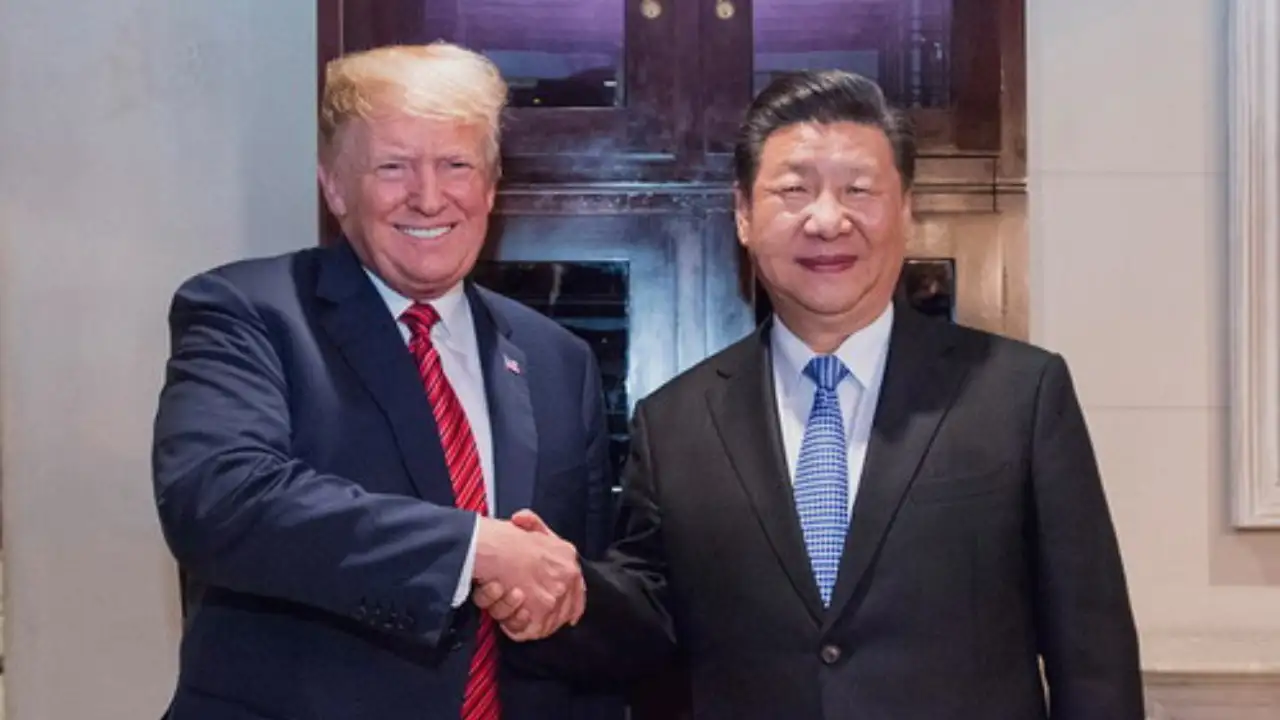
President Donald Trump and Chinese leader Xi Jinping are scheduled to hold a high-stakes summit in Beijing next week, their second face-to-face meeting since Trump returned to the White House.T
he two-day summit, beginning Thursday, comes at a particularly tense moment in US -China relations. The agenda is expected to cover the war in Iran, trade imbalances, artificial intelligence, Taiwan, and several other flashpoints.
Last Meeting and Current Context
Trump and Xi last met in October 2025 in Busan, South Korea, where they agreed to temporarily pause an escalating trade war. That truce halted US triple-digit tariffs on Chinese goods and Beijing’s threats to restrict rare earth mineral exports.
Much has changed since then. The United States is now engaged in a direct conflict with Iran — China’s key partner in the Middle East. The war has triggered a global energy crisis, driven up oil prices, and diverted significant US military resources away from the Asia-Pacific region. Some Chinese analysts believe the conflict has weakened America’s ability to defend Taiwan if needed.
Meanwhile, Xi Jinping is dealing with slowing economic growth in China and the risk of a broader global recession that could hurt Chinese exports.
What’s on the Agenda
For the US:
- Pressing China to help convince Iran to reopen the Strait of Hormuz
- Increasing Chinese purchases of American goods (Boeing planes, beef, soybeans)
- Reducing fentanyl flows into the United States
- Easing tensions over Taiwan
- Cooperation on managing risks from artificial intelligence
- The case of imprisoned Hong Kong democracy activist Jimmy Lai
For China:
- Extension of the current trade truce
- Loosening of US export controls on advanced semiconductors
- Reducing US support for Taiwan
- Easing of tariffs and technology restrictions
Modest Expectations
Both sides are approaching the summit with cautious expectations. Analysts do not anticipate any major breakthroughs or comprehensive deals. A more realistic outcome would be modest agreements on investment, an extension of the existing trade truce, and commitments to continue high-level dialogue.
Zhao Minghao, an international relations expert at Fudan University in Shanghai, said the meeting is more about stabilizing relations and buying time than achieving big wins.
Risks and Challenges
The war in Iran poses the biggest potential obstacle. China has criticized US actions in the Middle East while simultaneously urging Iran to negotiate. Any public disagreement over Iran could sour the atmosphere.
Despite the challenges, both leaders appear motivated to keep communication channels open. Trump has often referred to Xi as “a friend,” while Xi sees value in managing tensions with Washington amid China’s domestic economic pressures.
The summit is being closely watched around the world as any significant shift in US -China relations could have major consequences for global trade, energy markets, and security in the Asia-Pacific region.The meeting is expected to conclude on Friday. Further details on outcomes will likely emerge after the summit wraps up.