World
Iran stand-off could leave Trump worse off than before he went to war

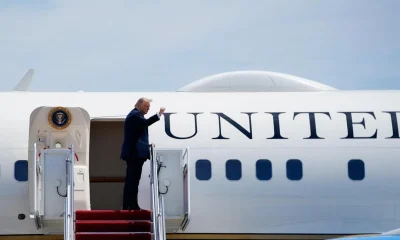
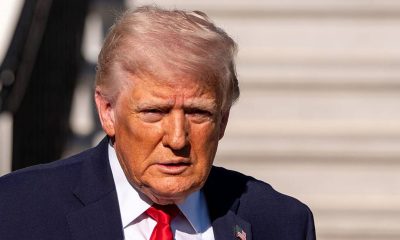
WASHINGTON – More than two months into a conflict that has failed to deliver a decisive military or diplomatic win, US President Donald Trump faces the risk that a stand-off with Iran will drag on indefinitely and leave an even bigger problem for the US and the world than before he launched the war.
With both sides outwardly confident they hold the upper hand and their positions far apart, there is no obvious off-ramp in sight, even as Iran submitted a fresh proposal to restart negotiations. Mr Trump quickly rejected it on May 1.
For the US President and his Republican Party, the implications of a continued impasse are grim.
An unresolved conflict would likely mean the global economic fallout, including high US petrol prices, will persist, putting further pressure on Mr Trump, whose poll numbers are falling, and darkening Republican candidates’ prospects ahead of November’s midterm congressional elections.
Those costs highlight a deeper problem: The war has failed to achieve many of Mr Trump’s stated goals.
While there is little doubt that waves of US and Israeli strikes heavily degraded Iran’s military capabilities, many of Mr Trump’s often-shifting war objectives – from regime change to shutting Iran’s path to a nuclear weapon – remain unfulfilled.
Fears for a more protracted deadlock have grown since Mr Trump called off a trip by his negotiators to Islamabad last weekend and then dismissed an Iranian offer to halt the war, suspended since April 8 under a ceasefire agreement.
Tehran proposed setting aside discussion of its nuclear programme until the conflict is formally ended and a deal is reached on reopening the Strait of Hormuz. That was a non-starter for Mr Trump, who has demanded the nuclear issue be dealt with at the outset.
There was a glimmer of hope on May 1 when state news agency IRNA reported that Tehran had sent a revised proposal through Pakistani mediators, causing a drop in global oil prices that had risen sharply since Iran effectively closed the strait. Mr Trump told reporters he was “not satisfied” with the offer, though he said there were ongoing contacts by phone.
A failure to wrest the vital oil-shipping waterway from Iranian control at the conclusion of the conflict would be a major blow to Mr Trump’s legacy.
“He’d be remembered as the US president who made the world less safe,” said Middle East expert Laura Blumenfeld of Johns Hopkins University in Washington.
White House spokeswoman Olivia Wales said that Iran’s “desperation” is increasing due to military and economic pressure, and Mr Trump “holds all the cards and has all the time he needs to make the best deal”.
With his next steps uncertain and no clear endgame, Mr Trump has in private meetings raised the prospect of a prolonged naval blockade of Iran, possibly for months more, aimed at further squeezing off its oil exports and forcing it to reach a denuclearisation agreement, a White House official said on condition of anonymity.
At the same time, he has left the door open to resuming military action. The US Central Command has prepared options for a “short and powerful” series of strikes as well as for taking over part of the strait to reopen it to shipping, Axios reported on April 30.
European diplomats said their governments, whose relations with Mr Trump have been strained by the war, expect the current situation with Iran to persist.
“It’s hard to see how this will end soon,” one of them said on condition of anonymity.
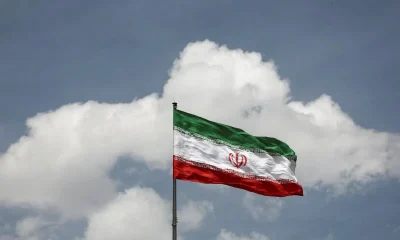
Iran has remained defiant.
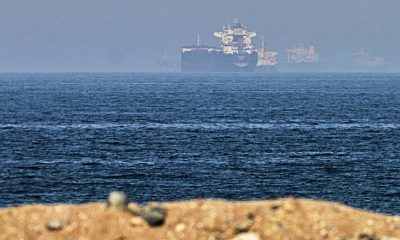
It has exerted powerful leverage against the US and its allies, triggering an unprecedented energy supply shock by choking off shipping in the strait, where tanker traffic flowed freely before the war, carrying a fifth of the world’s oil.
Analysts say that Iran will be emboldened knowing that it will have this weapon at its disposal even after the war.
“Iran has realised that, even in a weakened state, it can shut off the strait at will,” said Dr Jon Alterman of the Center for Strategic and International Studies in Washington. “That knowledge leaves Iran stronger than it was before the war.”
Mr Trump – who took office promising to avoid entanglement in foreign interventions – has also failed to achieve his main stated aim in attacking Iran on Feb 28: to close off its path to a nuclear weapon.
A stockpile of highly enriched uranium is believed to remain buried following US and Israeli air strikes in June 2025 and could be recovered and further processed into bomb-grade material. Iran says that it wants the US to recognise its right to enrich uranium for what it says are peaceful purposes.
Ms Wales, the White House spokeswoman, said that Mr Trump had “met or surpassed” all military objectives, including action “to ensure that Iran can never have a nuclear weapon”.
Another of Mr Trump’s declared war goals – forcing Iran to stop support for proxy groups such as Lebanon’s Hezbollah, Yemen’s Houthis and Palestinian Hamas – also remains unmet.
Defence Secretary Pete Hegseth, in congressional testimony, denied the conflict had become a “quagmire”, despite Mr Trump having initially predicted it would be over in four to six weeks.
Renewed peace talks are unlikely to yield a quick resolution, given the large gaps.
Though Mr Trump has said that he will accept nothing less than a long-term solution to the threat posed by Iran, he has at times shown signs of seeking an exit plan from an unpopular conflict.
At the request of Mr Trump’s aides, intelligence agencies are studying how Iran would respond if he declared a unilateral victory and pulled back, US officials have told Reuters.
Independent analysts say that Tehran would interpret that as its own strategic success for having survived the military onslaught.
At the same time, European and Gulf Arab diplomats have expressed concern that Mr Trump might eventually agree to a flawed deal that would allow a wounded Iran to remain a threat.
With negotiations deadlocked, some analysts have suggested that the war could devolve into a frozen conflict that would defy a permanent solution. That could prevent Mr Trump from significantly scaling down forces in the Middle East.
The US is already paying new strategic costs.
Those include fractures with traditional European allies, who were not consulted before Mr Trump went to war.
He has harshly criticised North Atlantic Treaty Organization partners for not sending their navies to help open the strait, and in the past week spoke about possibly drawing down troops in Germany, Spain and Italy.
Mr Trump also must deal with a more hard-line Iranian leadership, dominated by the Islamic Revolutionary Guard Corps, that took over after US-Israeli strikes killed several figures, including Supreme Leader Ayatollah Ali Khamenei.
The President’s call at the start of the conflict for the Iranian people to overthrow their rulers has gone unheeded.
At home, Mr Trump is under pressure to end a war that has dragged his approval rating to the lowest level of his term – 34 per cent, according to a Reuters/Ipsos poll – and spiked petrol prices above US$1.06 (S$1.34) a litre ahead of the midterms, in which Republicans are at risk of losing control of Congress.
A second White House spokeswoman, Ms Taylor Rogers, said that Mr Trump was committed to maintaining his party’s congressional majority and that high petrol prices were only “short-term disruptions” that would be overcome as the conflict subsides.
The Iranians, however, are mindful of Mr Trump’s domestic troubles and may be prepared to wait him out, but the question remains how long they can stave off economic calamity.
“Iran isn’t fractured or folding, it’s playing for time,” senior fellow Sina Toossi of the Center for International Policy think-tank in Washington, wrote on social media platform X. REUTERS