World
Iran said to threaten Israel, reject US ceasefire proposal passed along by Iraqi PM

Iran on Thursday rejected a ceasefire proposal passed along from the United States by Iraqi mediators, The New York Times reported, citing Iranian and Iraqi officials, as the US staged its 13th straight night of strikes against the Islamic Republic.
Iraqi Prime Minister Ali al-Zaidi had traveled to Iran that day, with a proposal formulated shortly after he met with US President Donald Trump in the White House earlier this month.
Iranian officials told the newspaper, however, that they were not interested in a “temporary deal” that would not address the final status of the Strait of Hormuz, a key sticking point in negotiations.
Al-Zaidi’s office said he visited Tehran to call for peace and dialogue, and promised not to allow Iraqi territory to be used for attacks on Iran.
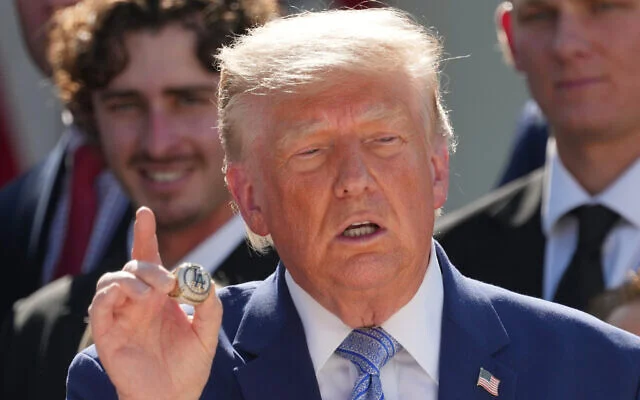
Trump, meanwhile, warned that the United States would use Iranian money under Washington’s possession or control to pay for “any and all damages” done to ships and cargo by strikes in and around the Gulf.
“Please let this statement serve to represent, until further notice, that from this point forth, any and all damages done to Ships, Cargo, or anything related thereto, will be paid for by Iranian Money that the United States has in its possession, and controls,” Trump wrote on the Truth Social platform.
Iranian Foreign Minister Abbas Araghchi responded: “Seizing another nation’s assets to pay for unrelated future claims is an incendiary precedent.”
“Those who celebrate or profit from such funds should remember: once governments normalize confiscation, no one’s assets are safe,” Araghchi wrote on social media. “Ensuing chaos will not be pretty or peaceful.”
Iran officials: Escalation would mean striking Tel Aviv
Two Iranian officials cited by The Times warned that the next stage of the escalation in fighting between Washington and Tehran would include Iran striking Tel Aviv.
The newspaper reported the officials saying that if Trump follows through with his threats to hit Tehran as well as infrastructure in Iran, the Islamic Republic will retaliate by striking Tel Aviv and ask the Houthi rebel group in Yemen to impose a maritime blockade on the Bab al-Mandab strait.
During the first stage of the war, which began on February 28, the IDF took part in the strikes on Iran and Tehran fired hundreds of ballistic missiles at Israel. But Israel has been sitting out the current renewal in fighting and Iran has not struck the Jewish state in recent weeks.
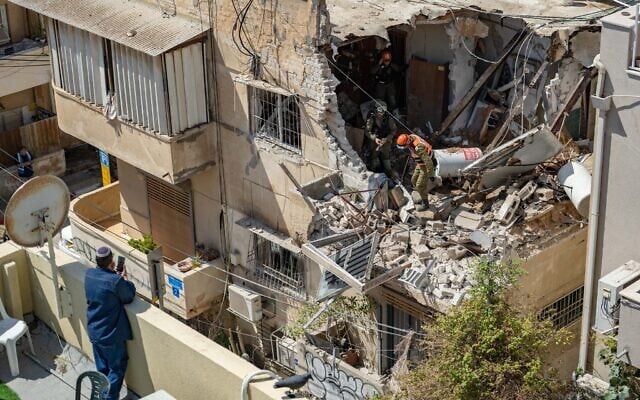
Overnight Thursday-Friday, the US launched its 13th consecutive night of strikes on Iran, its Central Command announced.
The attacks on Iranian military targets “aimed to hold Iran accountable and diminish threats from the Islamic Revolutionary Guard Corps to commercial shipping,” CENTCOM said.
The strikes “targeted Iranian military command centers, drone storage facilities, communication networks, coastal surveillance sites and maritime capabilities,” it added in a later statement.
Iranian state media reported that US missiles hit the southwestern city of Ahvaz, and explosions were heard in nearby Omidiyeh, as well as the port city of Bandar Abbas and the island of Qeshm in the Strait of Hormuz.
The wave of strikes lasted more than two hours, and concluded shortly before 5 a.m. local time, according to CENTCOM.
U.S. Central Command (CENTCOM) has announced the completion of the 13th consecutive night of strikes against targets in Iran designed to diminish the threat that Iran poses to commercial shipping in the region. pic.twitter.com/fjbZvzXvHw
— OSINTdefender (@sentdefender) July 24, 2026
Some hours later, around 8 a.m. Israel time, Bahrain activated its sirens, warning residents to shelter from detected fire.
“This morning, the fuel tanks, large equipment warehouses and silos and the barracks of the US terrorist army forces at the Isa Air Base in Bahrain were targeted by Arash kamikaze drones,” the army said in a statement carried by state TV.
The Gulf states have come under frequent fire over the past week as the US and Iran exchange escalating strikes in fighting that began with a struggle over control of the strategic Strait of Hormuz.
The Iranian army also claimed drone attacks against Jordan, targeting “aircraft hangars, aviation maintenance hangars and a barracks” at Al-Azraq base. Jordan had not reported any strikes in the previous few hours, however.
Additionally, several blasts sounded near Erbil airport, which hosts US-led coalition troops in Iraq’s autonomous Kurdistan region, an AFP journalist said.
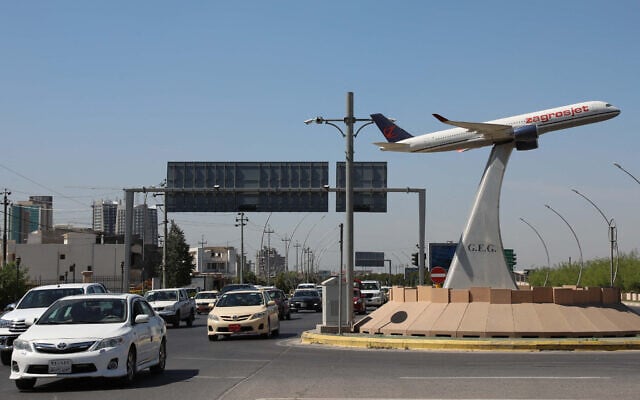
Explosions were heard after air defenses were activated, according to the journalist, who also saw drones hovering over the city and smoke rising in the airport area.
Since hostilities resumed in the Middle East, drones have repeatedly been intercepted over Erbil, which is also home to a major US consulate complex.
Iran threatens any country aiding US in attacks
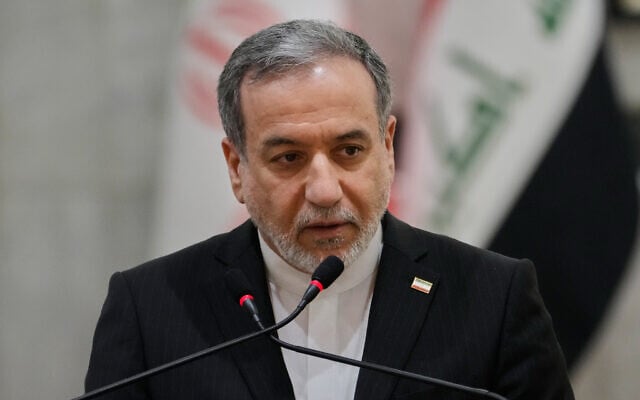
On Friday, Araghchi said Iran would hold accountable any country assisting the US in an attack on the Islamic republic.
“Any participation, cooperation or assistance in committing aggression against Iran will create international responsibility for the relevant parties,” Araghchi said at a meeting in Kyrgyzstan, adding that Iran “reserves its right to take all necessary measures within the framework of self-defense.”
Iran’s Revolutionary Guards recently threatened the United Kingdom for allowing US bombers to fly from UK bases.
The UK responded early Friday, saying its military was “ready to keep the United Kingdom safe from any kind of attacks, whether it’s on our soil or from abroad,” using its own assets and working closely with NATO allies.
Iran has similarly threatened Bulgaria, whose parliament recently voted to allow the US to station refueler planes on its territory but which, it has insisted, will not be used to directly launch attacks.
The US and Israel launched their campaign against Iran on February 28, aiming to degrade the Iranian regime’s military capabilities, distance threats posed by Iran — including its nuclear and ballistic missile programs — and “create the conditions” for the Iranian people to topple the regime, the Israel Defense Forces and Israeli leaders have said.
Despite a ceasefire and subsequently reached US-Iran memorandum of understanding — which Israel was not part of negotiating, but deferred to — attacks have restarted in recent weeks.
Trump said on Thursday that he is considering ordering the largest US attack on Iran yet, adding that Israel would join the strikes upon his request. Prime Minister Benjamin Netanyahu was expected to convene top ministers and aides for a national security meeting on Friday.