World
Iran narrowly knocked out of World Cup after tumultuous contest on and off field

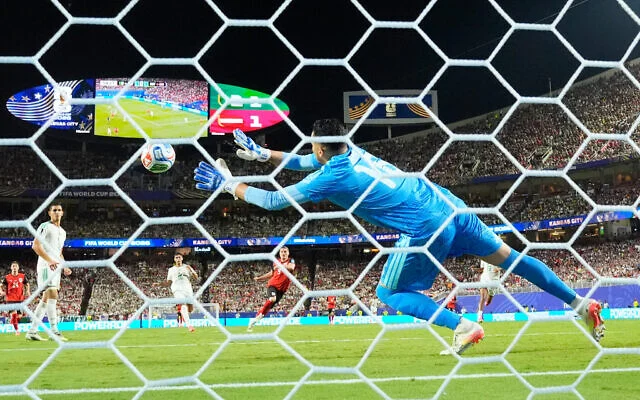
AP — Iran was eliminated from the World Cup on Sunday, narrowly failing to advance past the group stage in a politically charged tournament where the team played its matches amid tight restrictions imposed by the United States.
Iran missed the round of 32 by one spot in heartbreaking fashion.
It finished third in Group G with three points earned from draws against Belgium, New Zealand, and Egypt. Iran appeared to have advanced via tiebreakers when Algeria scored a stunning stoppage-time goal to go ahead of Austria 3-2 Saturday night, but Austria tied it back up seconds later on the game’s final play. Their draw ensured Iran’s elimination.
It was one last painful moment for Iran in a World Cup that’s been tumultuous, on and off the field.
The Iranians have been playing while Tehran negotiates with Washington on terms of a deal meant to permanently end the war that began earlier this year.
Tensions continued Saturday when Iran launched a drone assault targeting Bahrain, home to the US Navy’s 5th Fleet, in a likely response to overnight airstrikes by the US. Hours later, the US said it struck multiple Iranian military targets after it said Iran attacked a ship near the Straight of Hormuz.
During the World Cup, Iran coach Amir Ghalenoei and players complained about numerous complications, including travel restrictions, visa denials for support staff and quick departures from the US after matches. US officials have said all restrictions were known before the tournament.
The US and Israel began the war on February 28 by attacking Iran, which retaliated with attacks in the region and by asserting control over the Strait of Hormuz.
In March, Iran sought to move its group-stage matches to Mexico, with which it has diplomatic ties. Its request to move its base camp from Tucson, Arizona, to Tijuana was granted two weeks before the team’s arrival.
At its first match, several hundred Iranian Americans protested outside the stadium, calling for regime change in Tehran and waving the pre-revolutionary lion-and-sun flag. Thousands more poured into the stadium to watch them play, and the pre-game national anthem was met with a mix of cheers and boos.
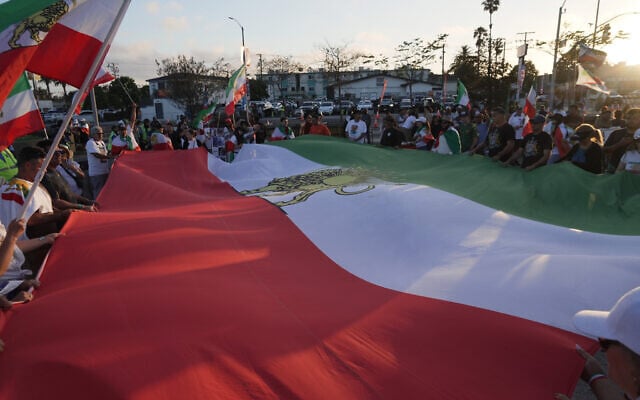
For the first two matches, near Los Angeles, the team was not permitted to travel until the day before and had to return to Mexico immediately after each game. The US then eased its restrictions, allowing the squad to travel to Seattle two days before Friday’s match against Egypt. If Iran had advanced, it would have played its next match in Vancouver, British Columbia.
“We were treated very, very badly,” Ghalenoei said after Friday’s draw with Egypt left the Iranians clinging to a slim hope they would get to the next round. “I hope the world becomes aware of these issues.”
“What these young Iranian national team players have done should be recorded in history,” Ghalenoei said. “Why? Because the host treated us in the worst possible way.”