World
Iran fires 10 missiles at Jordan after US strikes reported near Bushehr nuclear plant

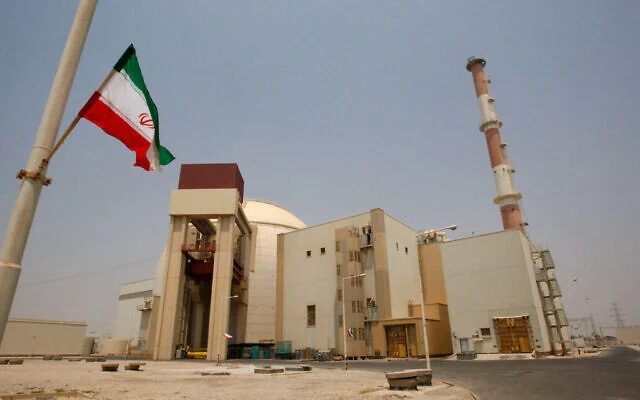
Iran fired missiles into Jordan as it targeted US military infrastructure across the Middle East after the American military carried out another wave of strikes on Iran, including attacks that Iran said hit near the perimeter area of the Bushehr nuclear plant.
Tit-for-tat attacks have repeatedly threatened the shaky ceasefire between the US and Iran since it was first introduced in April, but hostilities have steadily escalated in recent days, and continued to do so on Thursday, when Iran targeted Bahrain — home to the US Navy’s 5th Fleet headquarters — Kuwait, and Qatar with multiple rounds of missile fire.
After that, Iran fired 10 ballistic missiles at Jordan’s Azraq military base, Iran’s Revolutionary Guards said in a statement carried by state media.
Jordan said earlier that it had intercepted eight missiles launched from Iran, with no casualties or damage reported, according to the state news agency. Sirens had sounded in Jordan, which hosts US troops and aircraft.
The Revolutionary Guards said US bases in the region would be targeted if “US aggression” was repeated.
Meanwhile in Iran, the state-run IRNA news agency quoted a local official as accusing the US of carrying out strikes near the country’s Bushehr nuclear power plant.
The official, Ehsan Jahanian, said the strike came around noon, hours after the US military’s Central Command (CENTCOM) said it had ended its strikes on Iran.
The deputy governor of Bushehr province told state media that several locations in the province, including the perimeter of the nuclear facility, were hit in the attacks.
CENTCOM did not immediately respond to a request for comment.
⚡️BREAKING: Iran has carried out Major Strikes against U.S. Assets in Bahrain and Kuwait
The IRGC warns that U.S. assets in the UAE, Qatar, and other countries will be targeted in the next Operation pic.twitter.com/R23rV1Ahcq
— Iran Observer (@IranObserver0) July 9, 2026
Hours earlier, US President Donald Trump said recent Iranian attacks on ships in the Strait of Hormuz signaled the end of a fragile ceasefire and threatened to escalate the conflict if they didn’t stop. That raised concerns that the region could tip back into a war that would engulf several countries and could halt energy shipments through the strait that are crucial for the global economy.
In Iran, the two days of American airstrikes have killed at least 14 people and wounded another 78, Iran’s Health Ministry said Thursday — most of those reportedly members of the armed forces.
Iran’s military also said it targeted sites in Kuwait, Qatar, and Bahrain with one-way attack drones, state media reported, in retaliation.
The Iranian army said it had targeted a Patriot missile interceptor system in Kuwait, an early warning system in Qatar, and fuel tanks in Bahrain with drones, as part of its attacks on US bases in the region.
In Kuwait, the military said falling debris wounded one person as it shot down three ballistic missiles, a cruise missile, and 10 drones. Bahrain said it shot down incoming fire, without elaborating. There was no immediate word of damage in Qatar, while Jordanian government spokesman Mohammad al-Momani said all incoming fire from Iran had been intercepted.
US strikes hit more targets
CENTCOM said on Wednesday that the US military had hit some 90 targets across Iran in the renewed fighting, releasing black-and-white footage of what appeared to be strikes on an airport runway and missile launchers.
???? JUST IN: The Pentagon releases videos of American forces OBLITERATING over 90 TARGETS in Iran tonight in retaliation for the regime’s attacks on civilian vessels
This is in ADDITION to the 80 targets hit last night by U.S. forces.
Tonight’s strikes included “air defense… pic.twitter.com/DV9xVQbYDd
— Nick Sortor (@nicksortor) July 9, 2026
The US said the strikes were intended to “further degrade” Iran’s ability “to threaten freedom of navigation” in the strait, through which a fifth of the world’s traded oil and natural gas passed before the war began with US and Israeli attacks on February 28.
Iranian state media reported explosions in several locations, including Bushehr and southern port cities.
During the Iran war, several strikes hit the area around the nuclear plant, which is managed by Russian technicians, but caused no damage to the plant itself. The exchange of fire began after Iran attacked three tankers in the Strait of Hormuz on Tuesday.
Parliament Speaker Mohammad Bagher Ghalibaf, a key negotiator in talks seeking a permanent end to the war, was defiant in a post on X on Thursday morning: “America still hasn’t learned that bullying and breaking promises are no longer cost-free. Let me put it plainly: If you strike, you’ll get hit.”
In Iran’s southwestern Khuzestan province, at least three people were killed Thursday, state media reported. In Iranshahr, authorities said a strike killed a firefighter at an airport. Those fatalities followed the deaths of at least nine members of Iran’s armed forces in Wednesday’s strikes, according to state media. It wasn’t clear when the other death happened or who was killed.
Key trade route to China
For the first time since April, US strikes also appeared to target Iranian bridges. State media reported a strike on a railway bridge in Iran’s northeastern Golestan province, and the Revolutionary Guard said two bridges were attacked on the route to Mashhad, where officials plan to bury the late ayatollah Ali Khamenei on Thursday.
The Iranian foreign ministry said the US attacks targeted civilian infrastructure, including railway bridges, and described the strikes as a “gross war crime.”
It called the US administration “evil and psychopathic” and accused it of “obscenity, lies, and military aggression.”
The ministry, in a statement, said it “condemns in the strongest terms the aggressive attacks by the US terrorist army on several points in the southern coastal provinces and two bridges in the eastern provinces on the railway route to the holy city of Mashhad,” and calls the US administration “evil and psychopathic.”
Israel has not participated in recent US strikes on Iran.
Train services between Tehran and Mashhad were suspended, state TV reported.
The Islamic Republic of Iran Railways blamed “a criminal attack by the US-Israeli enemy” and said it has dispatched teams to repair the damage, according to the state broadcaster, which added that road transportation is being arranged for stranded passengers.
One of the bridges hit, the Aq Taqeh Khan railway bridge in northern Iran’s Golestan province, is a key part of a trade link to Tehran’s strategic partners China and Russia.
The Fars news agency said the route that goes on to pass through Turkmenistan and Kazakhstan has been an important land link to China that gained further relevance during this year’s blockade of Iran’s Gulf ports by the US.
It added that the route has also been used by Russia for cargo shipments to Iran since late 2025.
The agency said repairs to the bridge are expected to be completed quickly.
Iran’s Guards accused the United States of an “effort to overshadow” Khamenei’s funeral with its attacks on the railway bridges.
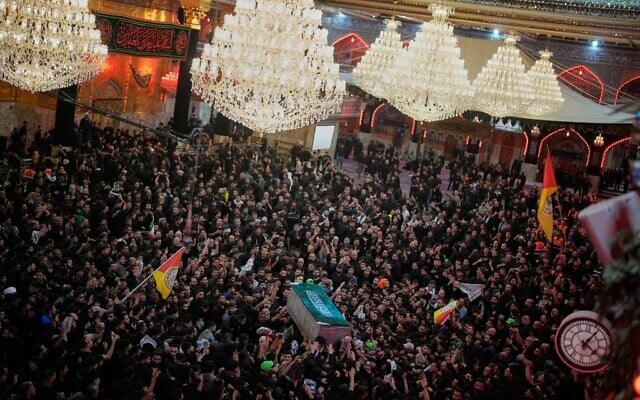
In a sign of the security tensions, at least one fighter jet escorted the plane carrying Khamenei’s coffin to its final burial in Mashhad, footage from the supreme leader’s website showed.
Strikes raise fears that war could resume
Trump fueled concerns that the war could restart by saying Wednesday that the interim agreement to pause the fighting was “over.” He added that he would allow negotiations to continue, though he cast doubt on the outcome.
“They can talk, but I think they’re wasting their time,” he said.
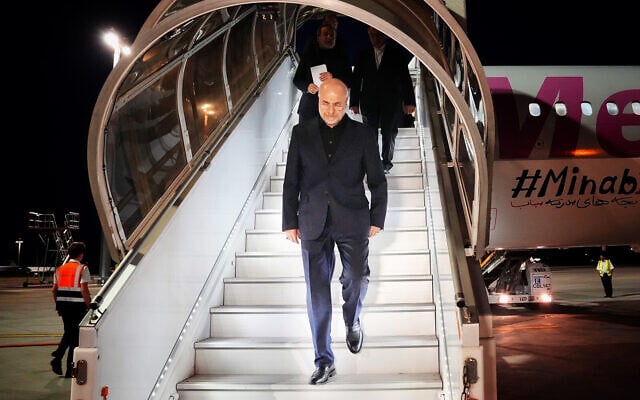
Iranian Deputy Foreign Minister Kazem Gharibabadi, also a top negotiator, retorted on X that Trump’s remarks “are not a sign of power but an admission of the failure” of US policy toward Iran.
Mediators sought to lower the tensions.
Qatari Prime Minister Sheikh Mohammed bin Abdulrahman al-Thani told Iranian Foreign Minister Abbas Araghchi in a phone call that Iran and the United States should commit to diplomacy.
Al-Thani added that Washington and Tehran should implement the signed memorandum of understanding aimed at ending the war, according to the Qatari foreign ministry.
Negotiations to reach a final deal were due to start after the funeral for Khamenei, who was killed in the war’s first moments. The funeral, which ends Thursday, was supposed to be a period of lower tensions.
The talks are meant to focus on the toughest matters, including fully reopening the strait and rolling back Tehran’s disputed nuclear program.
While the most recent exchange of fire has remained confined to the Gulf and has not spilled over into Israel, Jerusalem is preparing for multiple scenarios, given concerns that the situation could deteriorate rapidly, Channel 12 has reported.
The IDF has reportedly raised its level of readiness across the board, maintaining both defensive and offensive preparations. The military was said to have operational plans ready, fighter jets armed and on standby, and target banks prepared based on updated intelligence.