Viral
IPMAN Threatens Nationwide Fuel Station Shutdown Over Planned Price Controls

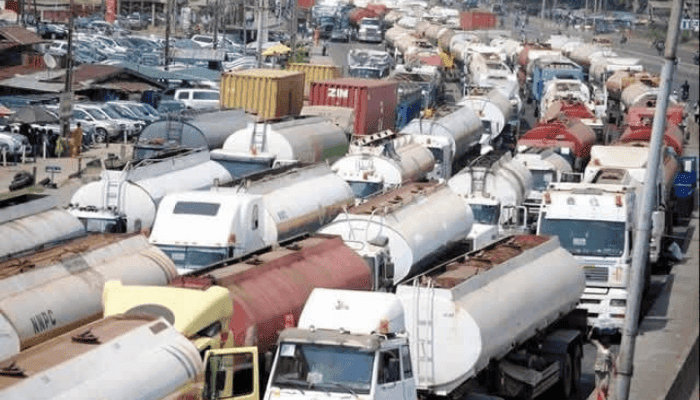
The Independent Petroleum Marketers Association of Nigeria (IPMAN) has warned that its members could shut down filling stations across the country if the Federal Government attempts to impose fuel price controls in Nigeria’s deregulated downstream petroleum sector.
The warning follows recent comments by the Minister of State for Petroleum Resources (Oil), Heineken Lokpobiri, who stressed that although petrol pricing has been deregulated, government regulators still have a duty to prevent excessive profiteering and protect consumers.
Speaking at the 2026 General Counsel and Legal Advisers Forum organised by the Nigerian Midstream and Downstream Petroleum Regulatory Authority (NMDPRA) in Abuja, Lokpobiri said deregulation should not be interpreted as giving marketers unrestricted freedom to exploit Nigerians through unjustifiable pricing.
His remarks come amid growing public concern over the persistent high cost of petrol, which currently sells for between ₦1,140 and ₦1,210 per litre in many parts of the country, despite a significant drop in international crude oil prices.
Global crude prices have reportedly fallen from about $120 per barrel during the recent United States-Iran tensions to around $72 per barrel, prompting questions about why domestic pump prices have not declined proportionately.
According to the minister, the Petroleum Industry Act (PIA) empowers government agencies to ensure petroleum products remain available while preventing exploitative pricing practices in the downstream sector.
He maintained that market forces should continue to determine fuel prices but insisted that regulators still have a statutory responsibility to intervene where there is evidence of excessive profiteering.
While acknowledging that the era of government-fixed fuel prices has ended, Lokpobiri argued that deregulation does not absolve regulators of their obligation to protect consumers and ensure fairness in the marketplace.
However, IPMAN strongly rejected suggestions that marketers were exploiting Nigerians, insisting that many independent filling station owners are instead grappling with severe financial losses brought about by frequent price fluctuations.
Reacting to the minister’s remarks, IPMAN National Publicity Secretary, Chinedu Ukadike, said many marketers purchased petrol at significantly higher prices before the latest reductions announced by the Dangote refinery.
According to him, numerous operators still have expensive fuel stocks in transit or in storage, forcing them to sell at a loss if they attempt to match the lower prices currently being offered by competitors.
Ukadike explained that marketers are simultaneously battling shrinking profit margins, weak consumer demand and mounting obligations to commercial banks, many of which financed fuel purchases through loans with fixed repayment schedules and interest rates.
He warned that any attempt by the Federal Government to dictate retail pump prices in what is officially a deregulated market would be strongly resisted.
“Marketers will shut down if they somehow attempt to enforce price control. We will close our filling stations nationwide. You cannot claim the market is deregulated and at the same time tell marketers the price at which they must sell products without considering the cost at which those products were purchased,” he said.
The IPMAN spokesman argued that the current situation demonstrates how deregulation naturally rewards efficiency and competition while exposing businesses to market risks.
He noted that marketers who bought fuel at lower prices now have an advantage over those holding older, more expensive stock, making it increasingly difficult for the latter to remain competitive without recording substantial losses.
Ukadike further maintained that government efforts should be directed toward creating genuine competition instead of attempting to regulate retail prices.
According to him, the most effective way to reduce petrol prices is by ensuring that Nigeria’s state-owned refineries become fully operational, encouraging greater private-sector refining and expanding fuel importation where necessary.
He expressed confidence that increased competition among suppliers would naturally force prices downward without the need for government intervention.
“What we are asking for is not price control or forcing marketers or even Dangote to sell below production cost. Government should open up the market, support local refining and allow multiple supply channels. When competition increases, prices will naturally fall,” he said.
Ukadike also accused the government of sending conflicting signals regarding its economic policy, arguing that it cannot promote deregulation while simultaneously considering measures that resemble price regulation.
He insisted that the principles of the Petroleum Industry Act should be implemented consistently, warning that any move to impose fuel price controls would undermine investor confidence and disrupt the downstream petroleum market.
Reiterating IPMAN’s position, he stressed that if authorities proceed with any form of compulsory price regulation, independent marketers would have no option but to embark on a nationwide shutdown of their filling stations in protest.