Topnews
Inside The Oyo Abduction: What Viral Videos Reveal, And Why They Still Don’t Lead To Rescue

On May 15, 2026, a dire incident occurred in Oyo State that shook the nation to its core.
Gunmen carried out coordinated attacks on three schools, Baptist Nursery and Primary School, Yawota; Community Grammar School; and L.A. Primary School, Esiele, all in Oriire Local Government Area, abducting pupils, students, and teachers.
A total of 46 victims were abducted, including 39 students and seven teachers.
The police also confirmed the killing of an Assistant Headmaster identified as Mr Adesiyan during the attack, while an okada rider was reportedly shot dead after resisting attempts by the attackers to seize his motorcycle.
Days after the abduction, a viral video allegedly showing the killing of one of the abducted teachers surfaced online, with authorities later identifying the victim as mathematics teacher, Michael Oyedokun.
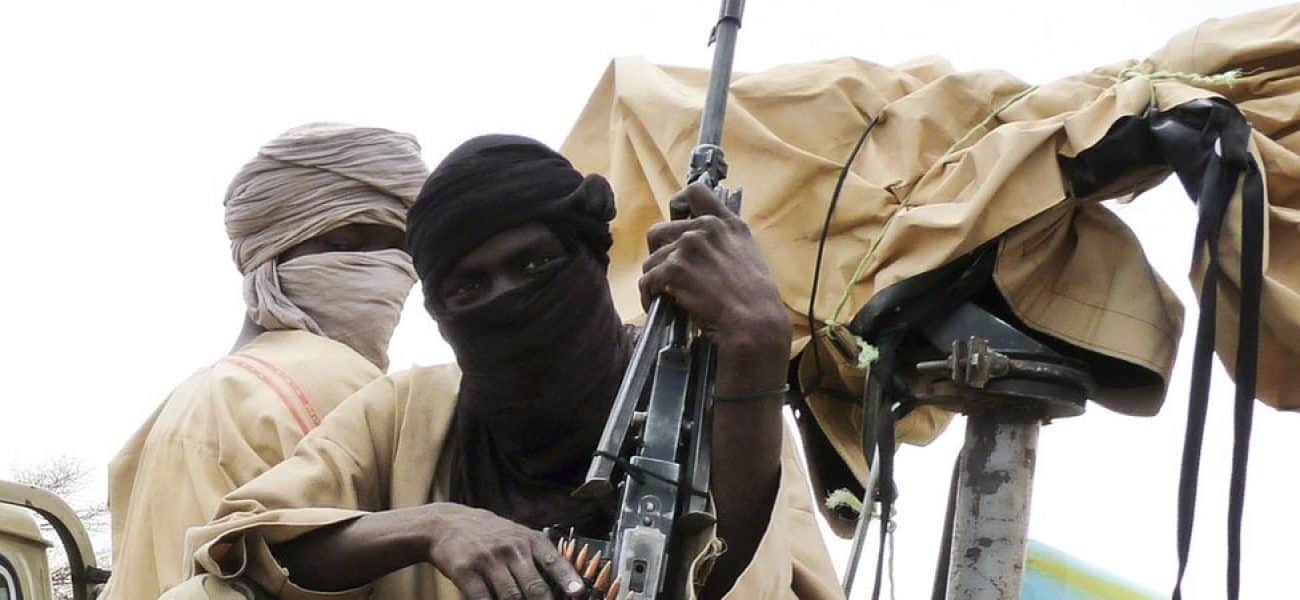
Since the abduction, several videos have circulated online, including distress footage of abducted teachers and another allegedly showing the killing of one of the victims.
These videos raise questions about why the police have not been able to use them to pinpoint the location of the abductors and rescue the victims.
There have been incidents in which the Nigerian police successfully traced criminals’ locations using a video shared online.
Earlier this month, police in the Federal Capital Territory (FCT) announced that they had successfully apprehended three suspected kidnappers who were captured in a viral video openly displaying AK-47 rifles, ammunition, and walkie-talkies while dressed in military camouflage.
According to the Commissioner of Police, FCT Command, Ahmed Sanusi, a comprehensive forensic analysis was ordered to trace the origin of the footage, while intelligence teams were simultaneously directed to track down those involved.
The Command said it immediately launched an investigation after the video surfaced online and generated widespread concern among residents.
This raises questions about what may be preventing security agencies from adopting a similar approach in the Oyo kidnapping case.
However, Nigerian security analyst and researcher, Ikemesit Effiong, has stated that kidnapping videos in Nigeria rarely lead to immediate rescue because they are often designed as propaganda tools rather than operational evidence.
According to him, such videos are usually released to generate public panic and pressure on families, while security agencies typically prioritise intelligence-led operations over reactive responses.
Speaking exclusively to Naija News, he said, “Videos are propaganda tools, not rescue triggers. They generate public panic and pressure on families, but security forces prioritise intelligence-led operations over reactive moves. Rushing in based solely on a video risks hostage casualties.”
When asked how useful these videos are in tracking location, he said, “Most consumer-grade videos lack actionable geolocation data. Metadata is often stripped when shared via messaging apps and social media. Environmental clues (for example, vegetation and architecture) can help, but kidnappers often film in generic or disguised locations. The police in Oyo say they are subjecting footage to a ‘comprehensive forensic examination’, but this is painstaking forensic work, not real-time GPS.”
On key limitations facing security agencies, he identified three major constraints: hostage safety risks, forensic capacity gaps, and information warfare involving recycled or staged videos.
He said, “Three core constraints: hostage safety, any action risks collateral damage; forensic capacity, digital labs face storage limits and insufficiently trained analysts; and information warfare, many videos are recycled or staged, wasting investigative resources. Investigations must be led by digital forensics and call data records, but these are resource-intensive.”
He added that investigations must rely on digital forensics and call data records, which are often resource-intensive and time-consuming.
“While agencies can track individuals when motivated, tracing a social media influencer differs vastly from locating a bandit in a remote forest. The public underestimates how easily metadata is stripped and overestimates the real-time applicability of digital forensics in complex, low-infrastructure environments. I’d blame Western television shows for that perception,” he said.
On the biggest challenge preventing a breakthrough in the Oyo abduction case, Effiong said authorities are currently faced with the delicate task of balancing negotiation efforts with operational pressure.
He noted that Oyo State Governor Seyi Makinde had confirmed that the government is in communication with the abductors, describing it as an unusual step in a case involving nursery and primary school children.
“Balancing negotiation with operational pressure. Governor Makinde confirmed the state is in communication with the abductors, an exceptional measure for a case involving nursery and primary school children who ‘cannot even run’. The primary challenge is executing a rescue that secures all hostages alive, especially after over a month in captivity, without triggering a deadly escalation,” he said.
A cybersecurity expert based in the Netherlands, Ehizogie Otio, said while kidnapping videos may appear useful to the public, tracing their origin is a more complex technical process than it seems.
He told Naija News that the key question is not whether the videos can be traced, but the level of capacity and resources available to investigating authorities.