Topnews
Industrial Panic in Lagos as Explosion Rocks Apapa Tank Farm

 Loading …
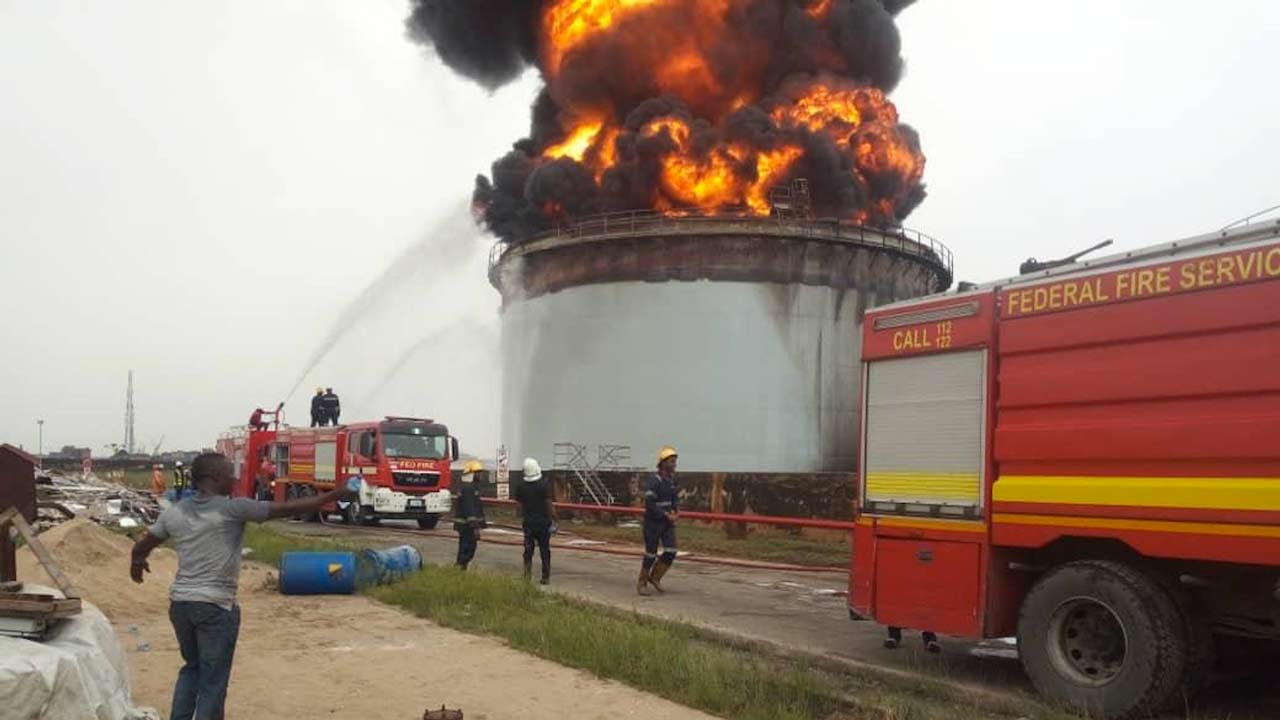
APAPA, LAGOS — A major emergency operation is currently underway in the industrial heart of Lagos after an explosion rocked a fuel storage terminal in the Coconut area of Olodi Apapa.
The incident, which occurred at the Bono Energy Terminal facility located along the busy Apapa-Oworonshoki Expressway, has triggered a massive, multi-agency response to prevent a catastrophic secondary chain reaction across the region’s dense network of petroleum storage infrastructure.
Emergency Mobilization at the Waterfront
Following the initial blast, the Lagos State Fire and Rescue Service (LSFRS) rapidly deployed firefighting teams to the scene to battle the growing inferno. Given the terminal’s proximity to the Lagos ports and critical waterways, federal maritime regulators have moved swiftly to establish a containment perimeter.
The Nigerian Ports Authority (NPA) and the Nigerian Maritime Administration and Safety Agency (NIMASA) have mobilized both land-based emergency teams and specialized marine vessels to combat the flames from the waterfront. In previous industrial accidents within the port complex, the NPA’s Marine Department has successfully utilized tugboats to suppress fires affecting loading jetties and barges, a tactic maritime sources indicate is being deployed to isolate the Bono facility.
Confirming the containment efforts, the spokesperson for the Lagos State Fire and Rescue Service, Shakiru Amodu, stated:
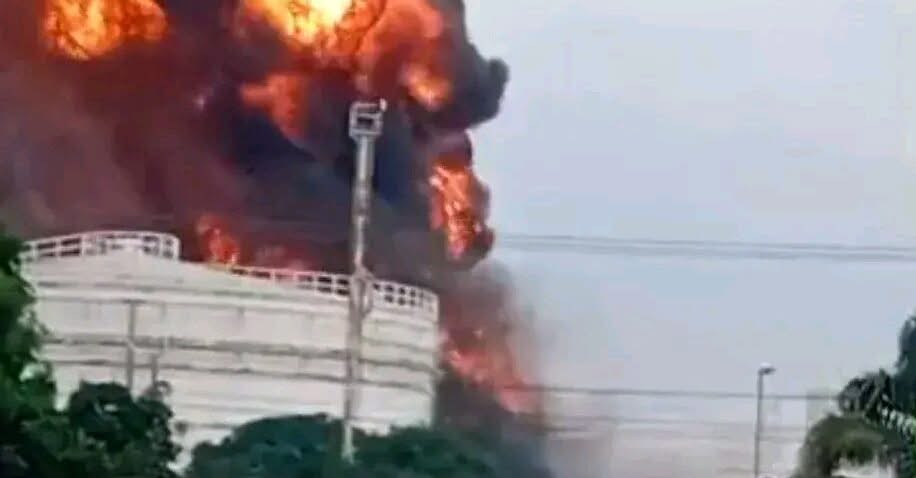
“The Lagos State Fire and Rescue Service is currently curbing a fire explosion at Bono Energy Terminal on Apapa-Oworonshoki Expressway, by Coconut, Olodi Apapa, Lagos.”
A Highly Sensitive Industrial Zone
As of the time of filing this report, authorities have yet to establish the definitive cause of the explosion, and there has been no official confirmation regarding the extent of property damage or potential casualties.
For your analytical readers, the location of this incident underscores a perennial regulatory anxiety. Apapa houses the largest concentration of private and state-owned refined petroleum product depots in Nigeria. The proximity of these highly volatile assets to residential communities and arterial highways means that any localized failure in Health, Safety, and Environment (HSE) protocols poses a direct systemic threat to the nation’s commercial capital.
Economic and Infrastructure Concerns
Beyond immediate safety worries, explosions at major terminals frequently disrupt national logistics. While joint efforts by the Federal Fire Service, state responders, and private major oil marketers are focused purely on containment to stop the fire from jumping to neighboring tank farms, energy analysts warn that prolonged operational shutdowns at the terminal could temporarily bottlenecks downstream fuel distribution.
Regulatory bodies, including the Nigerian Midstream and Downstream Petroleum Regulatory Authority (NMDPRA), are expected to launch a full-scale forensic audit into the terminal’s containment infrastructure once the joint emergency forces completely extinguish the blaze.
Related