Trends
IJEBULAND: Inside Story Of The Awujale Succession Crisis

For Ijebuland, the wait for a new Awujale has become much more than a traditional succession exercise.
It has evolved into a complex contest involving custom, law, family interests, institutional authority and allegations of political influence.
More than a year after the death of Oba Sikiru Kayode Adetona, the late Awujale of Ijebuland, the kingdom is yet to produce a successor.
Instead, the process has been repeatedly suspended, challenged and reopened, with fresh disputes now emerging within the very ruling house expected to produce the next monarch.
The latest crisis in the Fusengbuwa Ruling House has added another layer to an already complicated succession saga.
At the centre of the latest dispute is the purported removal of three senior officials of the ruling house: Chairman, Otunba Abdulateef Owoyemi; Vice-Chairman, Prof. Fassy Yusuf; and Deputy Chairman, Prince Oladokun Ajidagba, over allegations of financial inducement, manipulation of documents and breach of due process.
But the trio has rejected the allegations and the purported removal, describing those behind the action as “usurpers and impostors.”
The competing claims have raised a fundamental question: Can Ijebuland choose a new Awujale without further damaging public confidence in the institution?
A throne of immense history
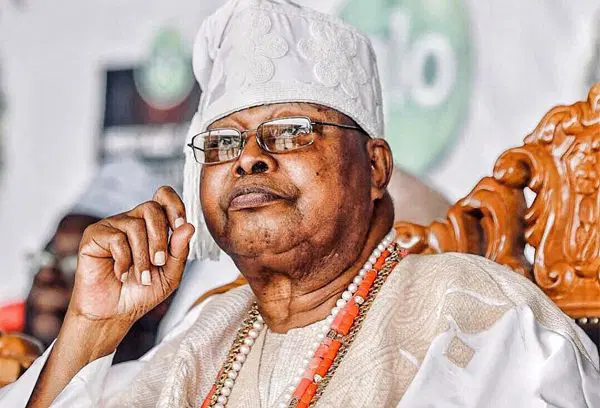
Oba Adetona died in July 2025 at the age of 91 after an extraordinary 65-year reign.
His reign transformed the Awujale stool into one of Nigeria’s most respected traditional institutions.
He was widely regarded as a monarch who combined tradition with modernity, while his outspoken interventions on national issues gave the throne an influence extending well beyond Ijebuland.
His death therefore created not merely a vacancy, but a profound institutional transition.
Under the Awujale Chieftaincy Declaration and the Ogun State Obas and Chiefs Law, succession rotates among the recognised ruling houses: Anikinaiya, Fusengbuwa, Fidipote and Gbelegbuwa.
Following the late monarch’s death, the turn fell to the Fusengbuwa Ruling House.
By December 2025, the Ijebu-Ode Local Government had formally invited the ruling house to commence the process of nominating candidates.
What followed was an unprecedented rush of interest.
No fewer than 95 aspirants; 94 princes and one princess reportedly emerged.
The sheer number reflected the prestige attached to the throne, but it also exposed the difficulty of administering a contest involving numerous branches, lineages and competing interpretations of eligibility.
Almost immediately, controversy followed.
Politics of succession
The succession process became increasingly contentious amid allegations that political interests were attempting to influence the outcome.
One of the most explosive allegations concerned a reported late-night meeting involving Governor Dapo Abiodun and kingmakers.
According to accounts attributed to people familiar with the meeting, the governor was alleged to have indicated support for Hon. Ademorin Kuye as his preferred candidate and urged the kingmakers to present him.
The allegation has been denied by the government, which has repeatedly insisted that it has no preferred candidate and is committed to due process.