World
IDF’s viral Arabic-language spokesman sparks fear, fascination in Gaza and Lebanon

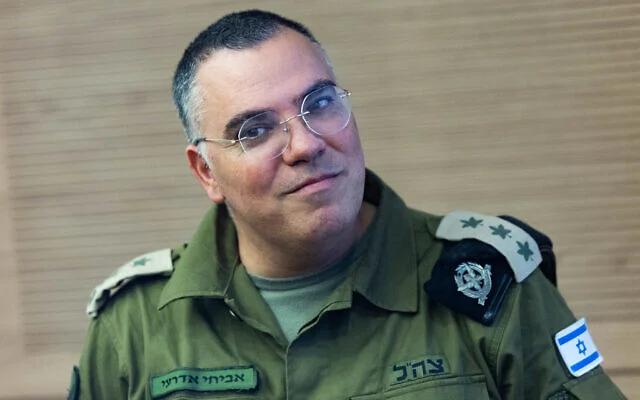
AP — For over 2 1/2 years, hundreds of thousands of people in Gaza and Lebanon have lived in dread of Avichay Adraee’s next social media post.
Israel’s Arabic-language military spokesman has been the animated face of its campaigns and the main source of warnings ahead of strikes and major offensives. That has made him one of the most recognizable Israelis in the Arab world — a focus of fury as well as some fascination.
In social media videos shared to his 2.5 million followers across platforms, the colonel appears in military fatigues, gesticulating as he delivers official statements and mocks Israel’s enemies, often using satire or pop culture references, all in fluent Arabic.
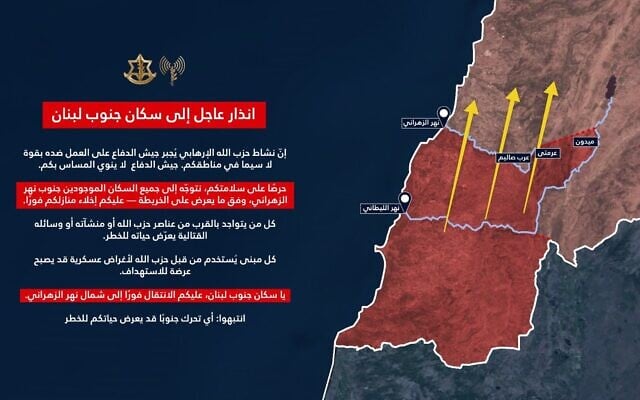
In the wars sparked by the Hamas-led October 7, 2023, attack, his social media accounts have carried warnings for civilians to leave — sometimes at a moment’s notice — areas shaded in red on maps of Gaza and Lebanon. Millions have paid heed, with hundreds of thousands seeking refuge in squalid tent camps.
Adraee, who is retiring this year, takes pride in his work. Asked to respond to the fact that many associate him with death and displacement, he said he has helped Arabs to better understand Israel’s military operations.
“Because of these evacuation orders, many millions were saved,” he told The Associated Press. “There’s no other army in the world that acts this way.”
The ‘face of evil’ for many Palestinians and Lebanese
Israel’s offensive in Gaza killed tens of thousands of Palestinians and displaced most of the population of some 2 million, often multiple times, before a fragile ceasefire took hold in October. Its latest war with the Iran-backed Hezbollah in Lebanon has killed some 3,500 people and displaced over 1.2 million. The figures from Hamas and Lebanon do not differentiate between civilians and combatants.
Both campaigns have drawn allegations of war crimes and crimes against humanity, which Israel has adamantly denied, often through spokespeople like Adraee.
The grim warnings also have made him something of a celebrity. In Lebanon, a look-alike delivery driver posts satirical videos and pranks unsuspecting residents, showing the fear Adraee inspires.
“Avichay Adraee is the face of evil, to me and to the people of Gaza,” said Ayman Ahmad, a resident of Khan Younis in southern Gaza who has been displaced twice during the war. Few people in Gaza had heard of Adraee before the war, he said, but now everyone closely monitors his social media accounts.
“Once we see a new post from him, we know that a disaster is about to happen,” he said.
Adraee’s family has deep roots in the region
Adraee, 43, grew up in the mixed Jewish and Arab city of Haifa in northern Israel.
His father’s family is part of the Jewish community that lived in the area for generations before Israel’s establishment in 1948. His mother’s family came to Israel from Iraq, among hundreds of thousands of Jews from centuries-old communities across the Middle East who emigrated to Israel to escape violence and persecution.
Adraee said he loved watching Egyptian soap operas on Israeli TV as a kid and that studying Arabic was “love at first sight.” He picked up some Arabic at home before studying the language in school and during a stint in military intelligence.
“My ability to speak and absorb Arabic is connected to my roots,” he said. “My grandmother and father were very proud when they saw me on TV speaking in Arabic.”
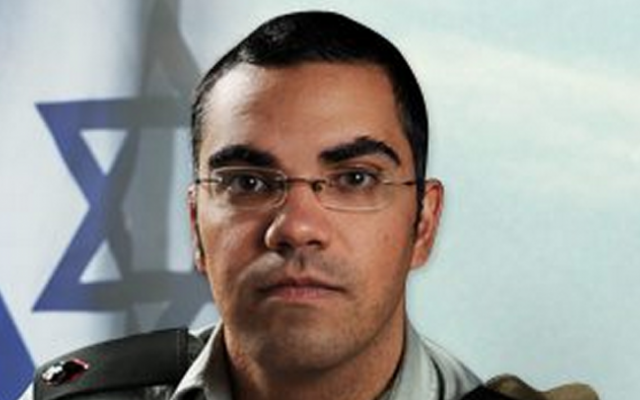
Adraee became the military’s first Arabic-language spokesperson in 2005, doing interviews with TV outlets, including regular appearances on the increasingly influential Al Jazeera.
He said 2011 marked a turning point with the rise of social media, which was used to great effect during the Arab Spring uprisings that year.
“People know me, we’ve been through so many wars,” he said. “But the revolution of social networks in 2011 allowed us to lean on the persona of Avichay.”
Adraee wants his videos to go viral, leaning on the casual nature of social media to get his message across.
The military’s claim to have found Hamas infrastructure under a luxury hotel in Gaza made little impact, but Adraee said his satirical video of a Hamas leader leaving a Trip Advisor review for the tunnels was widely shared. He has sent birthday messages to singers and holiday greetings to Arab influencers, even exchanging public messages with Lebanese journalists who work for Hezbollah-linked outlets.
“We want people to be exposed to the really important and serious messages, the information we’re trying to convince them of, but if you want them to remember you, you have to be more creative,” he said. Social media, he said, allows him to “talk directly to the people, above the heads of the government.”
A race to draw attention to war narratives
Fawaz Gerges, a professor of Middle East studies at the London School of Economics who was born in Lebanon, said Adraee’s posts are “dreaded and feared because they really carry life and death implications for hundreds of thousands of people.”
Still, “you have some people basically who are fascinated by his personality because he’s now almost an official influencer for Israel,” he said.
Israel’s military has spokespeople in several languages, but only Adraee is famous enough to be known by his first name.
Gerges said it’s part of a wider trend in which official spokespeople try to make their messages go viral.
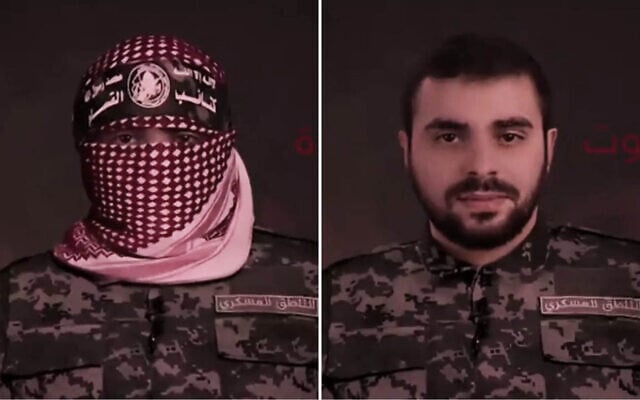
The Hamas spokesman Abu Obeida was widely known for delivering fiery statements, sometimes cut with footage of attacks or Israeli hostages, before he was killed in an Israeli airstrike last year. Hamas and Hezbollah have released videos showing their attacks, cut with music and graphics.
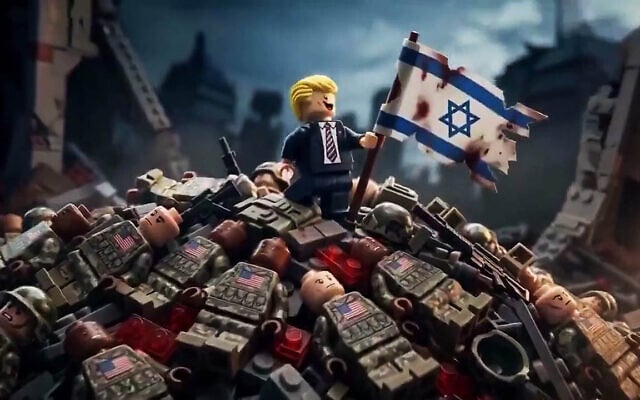
Supporters of Iran’s government have released AI-generated music videos with Lego characters mocking US President Donald Trump. The White House has released its own videos celebrating strikes on Iran, featuring video game screenshots and movie clips.
Accusations of role in killing of journalists
It’s not unusual for military spokespeople to have adversarial, if professional, relations with reporters. But Adraee has been accused of justifying the killing of some journalists.
The Committee to Protect Journalists says there is a “repeated pattern” in which Adraee “publicly labels Palestinian and Lebanese journalists as militants or terrorists — often without presenting verifiable evidence — before or after they are killed in Israeli strikes.”
After a strike in March killed three journalists in Lebanon, Adraee’s account published a photo of one of them, Ali Shoeib, in military fatigues. The image was later determined to be computer generated.
Adraee said it was a mistake not to label the photo as “illustrative,” but insisted Shoeib was a known Hezbollah operative who spied on Israeli positions while working as a reporter for a Hezbollah-linked outlet, though he presented no evidence he was involved in fighting.
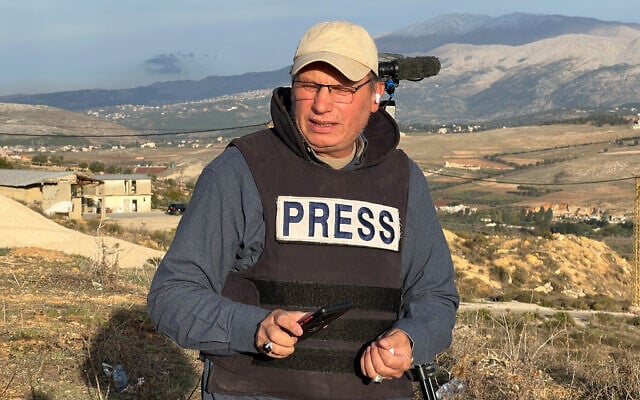
At least 207 journalists have been killed in Gaza and 16 in Lebanon since 2023, according to the Committee to Protect Journalists.
Israel has rejected allegations that it deliberately targets journalists and asserts that many of the ostensible members of the press that it has killed were active members of terror groups like Hamas or Hezbollah. In several cases, Israel has acknowledged targeting ostensible journalists in Gaza and Lebanon who it said had links to terror groups, and has, in some cases, provided documentation seized from terror groups in Gaza that lists the journalists as fighters for those groups.
Journalists, even those linked to terror groups, enjoy protection under international humanitarian law unless or until they take up arms and participate directly in hostilities, in which case they become a legitimate target.
Someone you can reach on Instagram
After 20 years in the role, Adraee is retiring and will be replaced by Lt. Col. Ella Waweya, the military’s highest-ranking Muslim woman.
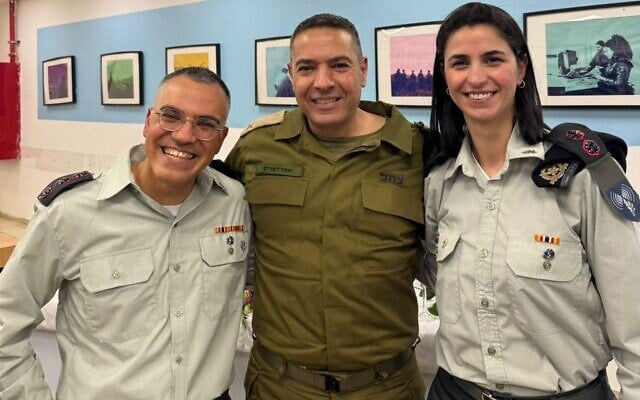
Last month, Adraee received one of the strangest messages of his long career.
A teenager in a Beirut suburb reached out on Instagram and told Adraee that her school was hiding weapons. Israel regularly bombs buildings it says are used by terror groups, so the message prompted panic, vehement denials by school officials and a search by the Lebanese military, which turned up nothing.
It was later revealed the girl was playing a joke with a friend and likely wanted to avoid going to class.
Adraee chalked up the whole situation as a win.
“The fact that the (Israeli military) spokesperson is someone you can write to on Instagram, that’s the whole story,” he said.
Times of Israel Staff contributed to this report