World
IDF shells Hezbollah sites after soldier hurt in clash with gunman in south Lebanon

An IDF soldier was severely wounded in a clash with a Hezbollah gunman in southern Lebanon on Thursday, and Israel responded by striking a number of the terror group’s targets, a week after Beirut and Jerusalem signed a new framework agreement aimed at ending the conflict.
And as tensions recede, more than half a million Lebanese residents have returned home to areas they evacuated amid escalated fighting earlier this year, according to a new report.
The IDF announced Friday morning that the reservist soldier was severely wounded in southern Lebanon’s Bint Jbeil on Thursday afternoon. He was taken to a hospital, and his family was notified, the Israel Defense Forces added.
According to an IDF probe of the incident, at around 6 p.m. during operations of the 679th “Yiftah” Armored Brigade in Bint Jbeil, troops encountered a Hezbollah gunman who opened fire on them, seriously injuring the soldier.
Immediately after, troops fired tank shells and struck the building from which the gunman had shot, and the Israeli Air Force struck other targets in the area.
IDF troops were continuing to scan the area for the gunman as of Friday morning.
The military said the Israeli Air Force struck some 10 additional Hezbollah sites in southern Lebanon in response to the attack, along with “another violation” of the ceasefire, and separately hit a cell of operatives identified near Israel’s buffer zone.
The Hezbollah infrastructure sites in Bint Jbeil, Beit Yahoun, Kounine and Baraashit had been used by the terror group to advance attacks on troops in southern Lebanon, the military said.
In a separate incident overnight, troops identified a cell of Hezbollah operatives transporting weapons using a truck near the IDF’s security zone, according to the military. A short while later, the Air Force struck the truck “to remove the threat.”
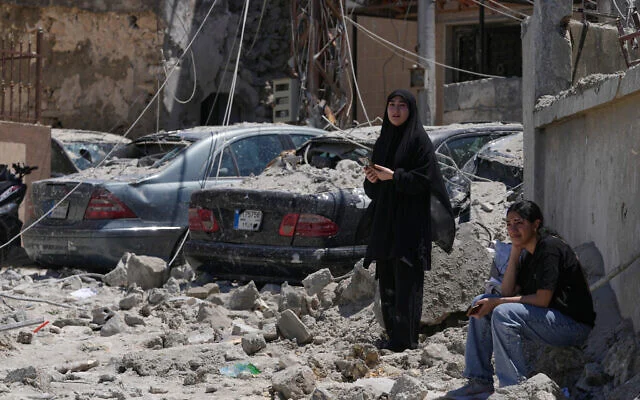
Hezbollah dragged Lebanon into the war in March by attacking Israel in support of Iran, resulting in the destruction of large parts of southern Lebanon and the disruption of the lives of those living in northern Israel. US-sponsored efforts to halt fighting between the two sides have reduced hostilities, but have yet to achieve peace or bring the war to a definite end.
Last week, Israel and Lebanon signed a framework agreement committing Lebanon to restoring sovereignty over its territory through the “verified disarmament of non-state armed groups,” which would in turn enable a progressive Israeli withdrawal. The state of Lebanon, along with Israel and the US, signed the agreement, but Hezbollah and its allies are opposed to it.
Meanwhile, a Thursday report by the International Organization for Migration (IOM) said more than 640,000 displaced people in Lebanon have returned home, in southern Lebanon and Beirut’s southern suburbs — a Hezbollah stronghold.
The IOM said “646,107 IDPs (internally displaced persons) have begun returning to their communities,” while about 500,000 other people remain displaced, based on data collected in coordination with local authorities since June 22.
Lebanese authorities say they have worked to remove informal tent encampments in and around Beirut and reduce the number of official shelters.
But it remains impossible to return to dozens of towns and villages near the southern border, many of which have suffered massive destruction, and where Israel maintains a buffer zone.
Prime Minister Benjamin Netanyahu, on a visit to the security zone — which runs up to 10 kilometers (six miles) deep — in south Lebanon on Tuesday, reaffirmed that forces would remain there so long as Hezbollah remained a threat.