World
IDF officer killed in clash with Hezbollah gunman in south Lebanon

An IDF officer was killed in a clash with a Hezbollah gunman in southern Lebanon overnight, the military announced Sunday, as clashes continue to strain an agreement between Jerusalem and Beirut to end the conflict. The Hezbollah terror group has rejected the pact.
The slain soldier was named as Cpt. David Hazutt, 21, a platoon commander in the Golani Brigade’s 12th Battalion, from Ashkelon. He was the first Israeli fatality since Israel, Lebanon, and the United States signed a trilateral agreement on Friday aimed at paving the way for a broader peace deal between the two Middle East nations.
According to an IDF probe of the incident, at around 2 a.m., Golani soldiers encountered a Hezbollah operative as they entered a structure in the village of Deir Siryan. During the clash, Hazutt was killed and another soldier was lightly hurt.
The IDF said the wounded soldier was taken to a hospital and his family was notified.
Troops launched searches for the operative and struck Hezbollah sites in the area, the military added.
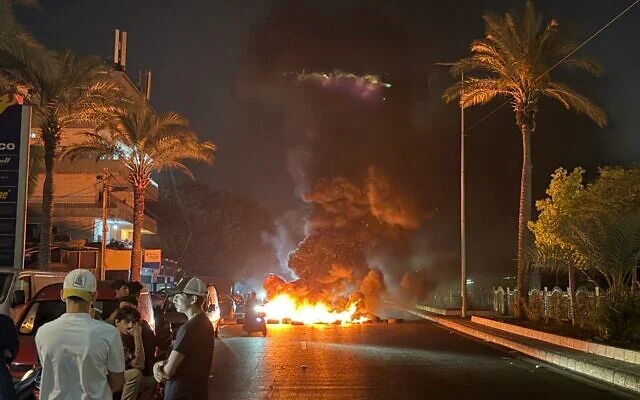
Lebanese media on Sunday reported an Israeli airstrike in southern Lebanon.
The strike took place near the towns of Deir Siryan and Taybeh, according to Lebanon’s National News Agency. Both towns are located inside Israel’s southern Lebanon security zone.
There were no immediate reports of casualties, and the IDF did not immediately comment.
The IDF also said that on Saturday, it struck and killed several Hezbollah operatives who were armed with RPGs and operating close to troops in southern Lebanon.
After the operatives were identified by commandos of the Egoz Unit, the Israeli Air Force carried out strikes on the operatives and the structure they were in in the Nabatieh area, “to remove the threat to the forces,” the military said.
In a separate incident, troops of the Multi-Domain Unit struck and destroyed a Hezbollah rocket launcher that the military said “posed a threat to forces.”
The IDF published footage of the strikes.
במטרה להסיר את האיום: צה”ל חיסל מחבלי חיזבאללה חמושים ב-RPG ותקף משגר במרחב נבטיה
כוחות יחידת אגוז בפיקוד אוגדה 36 זיהו אתמול מספר מחבלים חמושים ב-RPG מארגון הטרור חיזבאללה, שפעלו במרחב נבטיה בסמוך למרחב הביטחוני בו פועלים כוחות צה”ל בדרום לבנון.
מיד לאחר הזיהוי, חיל האוויר… pic.twitter.com/5trowGJfY6
— צבא ההגנה לישראל (@idfonline) June 28, 2026
The IDF also carried out several other strikes in southern Lebanon on Saturday.
An IDF spokesperson told The Times of Israel that those strikes were intended to “remove threats” to Israeli forces, with further details to be provided later.
The framework agreement between Israel and Lebanon aimed at paving the way for an eventual peace deal between the two long-time Middle East adversaries. It includes a pilot effort in which Lebanese soldiers take control of some small areas currently held by Israeli troops and includes a process aimed at disarming Hezbollah. Hezbollah swiftly rejected the agreement, and Israel has said it will continue to take action against the Iran-backed terror group.
On Saturday, Lebanese President Joseph Aoun told US President Donald Trump that he hopes Washington will help prevent violations of a framework agreement and ensure agreed commitments are fulfilled, particularly by pressing Israel to withdraw from occupied areas in southern Lebanon, the Lebanese presidency said.
Aoun also told Trump in a phone call that Lebanon will assume its responsibilities in implementing the framework agreement, the presidency added in a statement, which made no mention of Hezbollah or disarming the terrorist group.
The statement added that Trump indicated that he would soon host Aoun in Washington for a meeting.
There was no immediate statement on the call from the White House.
Lebanon was drawn into the broader Middle East war on March 2 when Hezbollah fired rockets at Israel in support of its Iranian sponsors, as the Islamic Republic came under US-Israeli strikes.
Israel responded with heavy airstrikes and a ground invasion in southern Lebanon, where its troops hold swaths of territory and have been carrying out extensive demolitions of homes and other buildings, saying the infrastructure was being used by Hezbollah as it built its forces along the Israeli border.
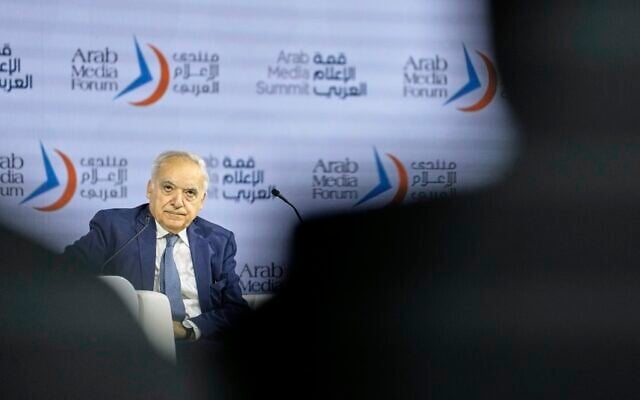
Israel’s nearly four-month air and ground campaign has damaged or destroyed several heritage sites across southern Lebanon, Lebanese Culture Minister Ghassan Salame told Reuters in a report published Sunday.
Authorities have yet to build a full picture of the damage as Israeli troops still occupy much of south Lebanon that is off-limits to Lebanese, Salame said.
That zone includes the medieval Beaufort Castle as well as centuries-old villages that were home to Christians, Shiite Muslims and Sunni Muslims and their places of worship.
Even ancient towns outside the zone were pummeled with airstrikes, including Tyre and Nabatieh. Heavy bombing hit the town of Tebnin, prompting fears that its Crusader fortress was also damaged, Salame said.
“Heritage is not only Roman and Phoenician antiquities,” he added. “Heritage is also historic buildings, archaeological sites, and buildings with a cultural function.”
In response to questions from Reuters, Israel’s military said it does not aim to “cause excessive damage to civilian infrastructure and strikes only out of military necessity, with consideration for the safety of its citizens,” a reference to residents of northern Israel, which Hezbollah has targeted.
It said it took into account the existence of “sensitive sites” and applied “a rigorous approval process as required.” Israel has accused Hezbollah of placing weapons in Beaufort Castle, a claim that Lebanese authorities deny. Earlier this month, the IDF revealed a major Hezbollah tunnel system near Beaufort Castle, which it said was constructed with direct Iranian assistance.
In a statement last month, the United Nations Educational, Scientific and Cultural Organization (UNESCO) said it was concerned about the state of conservation of Tyre, a World Heritage Site that is under the body’s enhanced protection status.
It also said it was “deeply alarmed” by reports of damage to a citadel in the southern town of Chama and fighting by Beaufort Castle, while condemning what it described as “unlawful attacks against cultural property.”
The agency had voiced similar concerns over the fate of historical sites in Iran in March.
When Israeli bombing spread to the ruins of Tyre, Salame asked UNESCO to reclassify it as a UNESCO World Heritage Site in Danger, which would trigger more protection responsibilities on UNESCO and the international community. It has not yet been listed as one.