Breaking
Ibadan: Fear, anxiety over robberies in commercial taxis

• Commuters worry as taxicabs become security nightmare
A woman, whose name is withheld for security reasons, thought she was taking an ordinary taxi ride from Eleyele to Onireke, Ibadan.
She boarded a commercial Nissan Micra near Unity Hospital at about 9.50am on October 1, 2026, expecting to arrive at her destination without incident. But something went wrong along the way.
By the time she found herself in Oje, she realised that some of her belongings were missing, including her iPhone 11 Pro, valued at N240,000; N2,500 in cash and clothes worth about N10,000. The total value of the missing items was put at N252,500.
More than a month later, on November 4, she was heading to work when she sighted a Micra taxi she believed she had boarded on that October morning.
She also recognised two occupants, whom she said were in the vehicle during the earlier journey. This time, she raised the alarm.
Her action attracted the attention of people around the area, who helped apprehend the two men. They were subsequently handed over to the police.
The suspects were identified as Gbenga Olubade, 42, and Oluwaseun Adeoye, 50. The Oyo State Police Command confirmed their arrest, saying detectives took the passenger, the driver and another occupant to the station for investigation.
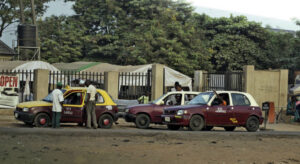
According to the command, it received a distress call at about 9.30am on November 4 over a confrontation between a commercial taxi driver and a passenger at TCTC Junction, Idi Ope, along Eleyele Road, Ibadan. Police operatives responded to the report and took the persons involved to the station.
The police said statements had been obtained and that the suspects made confessional statements. It added that investigations were continuing to establish the full circumstances of the incident and determine whether the suspects were connected to other criminal activities.
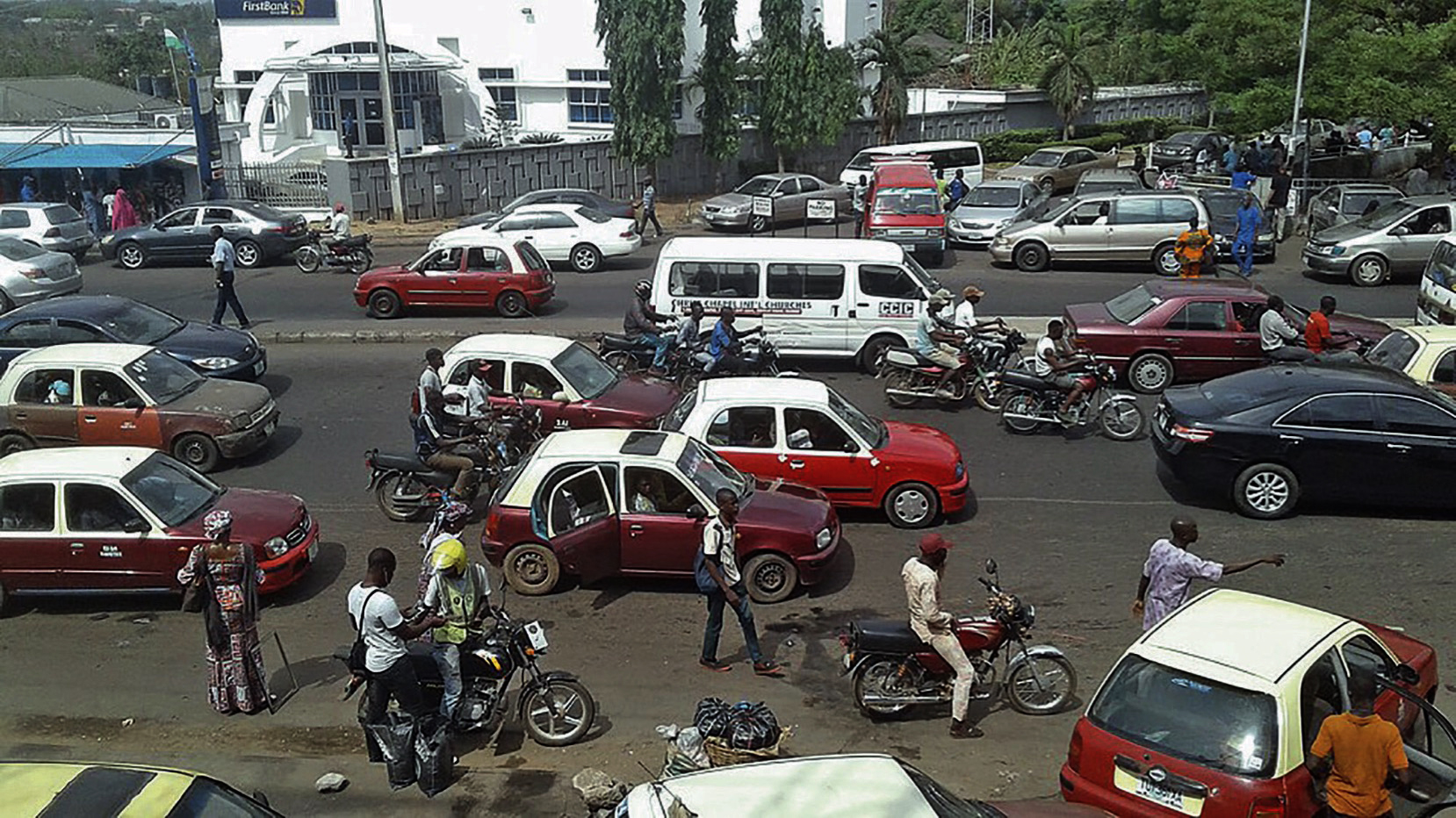
Meanwhile, the case has again drawn attention to growing concerns surrounding the use of commercial Micra taxis in Ibadan and other parts of Oyo State.
For many residents, the small, affordable cars are an important part of daily life. They provide convenient transport along busy routes and connect neighbourhoods that may not be easily served by larger commercial buses.
From Eleyele, Sango and Mokola to Bodija, Ojoo, Akobo, Challenge, Ring Road and Iwo Road, Micras are a familiar sight.
But accounts from some commuters suggested that the same convenience could become a source of danger when criminals exploit the public’s dependence on the vehicles.
Passengers have also recounted incidents involving suspected armed robbery, theft, abduction and attempts to extort money.
In some cases, victims said they were lured into vehicles by people posing as passengers or transport workers. Others alleged that they were threatened with guns and forced to surrender their belongings.
But thousands of drivers depend on the business to earn a living, and many commuters use the service every day without incident. But the allegations raise questions about passenger safety, the monitoring of commercial vehicles and the effectiveness of measures meant to keep criminal elements out of the transport system.
A gun pointed at passengers
One of the accounts involved two commuters, who journeyed from Ojoo to Mokola in Ibadan. They arrived at a filling station beside the Mokola flyover on a commercial motorcycle and intended to board another motorcycle to Iyaganku.
Some Micra taxis were parked in front of the filling station, calling out destinations to attract passengers. Some were announcing Oke-Padre, others Molete, Apata, and Challenge.
As the two men walked past one of the vehicles, a man standing beside it called their attention, saying someone inside the taxi wanted to speak to them. They looked towards the car. According to one of the victims, an occupant pointed a gun at them while the man outside ordered them to enter or risk being shot. They had little choice but to obey.
The vehicle made a U-turn under the bridge at Mokola Roundabouts and headed towards Sango. The occupants dispossessed the two men of a laptop, cash and other valuables before ordering them out of the vehicle and driving away.
The victims said they shouted for help after being dropped, but nobody pursued the vehicle. They also claimed that they did not see any police personnel around the scene at the time.
Earlier accounts of abduction
In May 2022, the case of Oluwafemi Edem, an operations analyst based in Oyo State, was reported in the media. He said he was kidnapped after boarding a Micra taxi in Ibadan.
Edem was reportedly on his way to visit his younger sister at Joke Plaza, Bodija, when he boarded the vehicle. He sat at the back with another passenger, while another person later joined them.
According to the account, Edem lost consciousness around the General Gas Bridge in Akobo. He later regained consciousness in Ogun State, almost naked and wearing only shorts and a singlet. His hands were tied with a rope. He said he managed to untie himself and escape.
Another case was reported in May 2021, which involved a woman identified as Jolayemi Ajuwon, a pseudonym used to protect her identity.
She alleged that she narrowly escaped a kidnapping attempt at Eleyele Bus Stop, along Sango Road, on May 15, 2021, at about 10pm.
According to her account, she boarded a Micra with four occupants, including the driver. The other passengers were women, a circumstance that initially made her feel safe. But she became suspicious because of the way the occupants were seated and decided to get out of the vehicle.
She crossed the road, only for another Micra to arrive. One of its occupants pointed a gun at her. She jumped into a gutter and crawled towards a nearby filling station, where she was able to contact her sister and find safety.
In October 2024, a case was also reported on ‘one-chance’ encounter involving a resident of Olodo, in Lagelu Local Government Area, identified as Akeem Adekunle.
The report described his experience after boarding a Micra taxi heading towards Ojoo. While the details of the different accounts vary, they point to a recurring concern.
How Micra taxis entered Ibadan’s transport system
The administration of former Governor Adebayo Alao-Akala introduced an intra-city taxi scheme in October 2009.
Investigation showed that the then government purchased 200 cars from Asia for the scheme. The initiative was designed to provide taxi services, empower unemployed graduates and improve urban transportation.
The taxis became popularly known as Micra taxis and subsequently gained considerable acceptance among commuters.
Over the years, Micra taxis became a familiar feature of Ibadan’s urban transportation network. Their relatively small size and ability to navigate narrow roads made them attractive to operators and commuters.
They gradually became prominent on several intra-city routes, alongside commercial buses and other forms of public transportation.
By 2016, reports started coming up that though Micra taxis held sway in Ibadan for years, it also raised concerns about their roadworthiness and compliance with traffic regulations.
Eight suspects arrested – Police
The Oyo State Police Command said it is intensifying efforts to address security concerns involving commercial Micra taxis.
The Police Public Relations Officer (PPRO) for the state, Olayinka Ayanlade, said the command was working with relevant ministries and stakeholders to improve the safety of passengers and sensitise both drivers and commuters.
According to him, the police had also deployed intelligence operatives to identified black spots and strategic locations across Ibadan to identify and dismantle criminal networks using commercial transport as a cover.
“These proactive measures have yielded significant results in recent months, leading to the arrest of no fewer than eight suspects linked to different criminal syndicates involved in these nefarious activities,” Ayanlade said.
He said the police would continue to engage the Park Management System (PMS) to improve intelligence gathering and identify people, using commercial Micra operations to commit crimes.
He appealed to residents to provide timely and credible information that could help the police identify criminal elements and prevent further incidents.
The police spokesman also advised passengers to be cautious about conversations with strangers in commercial vehicles, particularly discussions involving financial transactions, unexpected business opportunities or monetary incentives. Such conversations, he warned, could be tactics used by criminals to identify and exploit unsuspecting victims.
Ayanlade also advised anyone, who suspects that he or she is in a vehicle with armed robbers or fraudsters.
“Passengers who find themselves in a vehicle with suspected armed robbers or fraudsters are strongly advised not to engage in physical confrontation or take unnecessary risks in an attempt to resist their attackers.
“Where possible, they should remain calm, avoid provoking the suspects, prioritise their personal safety and seek the earliest safe opportunity to escape before promptly reporting the incident to the nearest police station or through the Command’s established emergency channels.”
He stressed that human life should take precedence over the recovery of stolen property.
PMS raises alarm, points to vehicle identification
The Park Management System has also acknowledged receiving reports of criminal activities, involving commercial Micra taxis.
Alhaji Olaide Afunleyin, Chairman of PMS, Sango Park, Terminal Two, Iwo Road, Ibadan, said the reports were not new to the transport management body.
“We have also received information about some people using Micra taxis to do evil. It did not happen just today. It has been on for a long time,” he said.
Afunleyin said one of the measures introduced by the Oyo State Government was the sale of identification stickers to commercial public vehicles, including Micra taxis operating in the state.
He said the current stickers carry the Oyo State Government logo and the inscription, ‘Oyo State Park Management System 2026’. According to him, they also contain a QR code, the image of a taxi painted in the state’s brown and yellow colours, as well as a registration code linked to a particular park in a local government area.
He explained that a code, such as YNF RC. 189 indicated a vehicle registered under Lagelu Local Government, while BDJ referred to Bodija in Ibadan North Local Government Area. EGB, he said, represents Egbeda Local Government Area.
The PMS chairman for the unit urged passengers to pay attention to vehicle identification before boarding.
“People should be very careful when boarding taxis in Ibadan and other parts of the state. Any taxi that is not painted in the colour of Oyo State, they should not bother to board it.
“Then, they should also check the registration code of the vehicle before boarding. They can even snap it and send it to a loved one before boarding,” he said.
Afunleyin also disclosed that commercial drivers could themselves become victims of criminals, who disguise themselves as passengers.
He said some suspected criminals chartered a Micra taxi and, after reaching a lonely location, would try to dispossess the driver of the vehicle.
But it was observed that the existence of identification stickers and registration codes does not, on its own, answer every question about enforcement.
Challenge of policing commercial transport
Oyo State had previously taken steps to capture information about commercial transport operators.
In November 2021, Governor Seyi Makinde launched the Oyo State Security and Data Planning initiative, which was designed to collect information about commercial vehicle operators, including their biometric details, vehicle particulars and routes of operation.
The exercise covered different categories of commercial vehicles, including Micra taxis, minibuses and heavy-duty vehicles.
At the launch, the government said the information would be kept in a centralised database to support security planning and monitoring of commercial transport operations.
The initiative was intended to make it easier for security agencies to identify operators and trace vehicles involved in criminal activities. The governor also warned at the time that commercial operators, who failed to register would be regarded as operating illegally.
The Park Management System has since been used to organise commercial transport activities across the state’s 33 local government areas.
Also, the state government has taken other steps to regulate road transport. On June 5, 2026, Makinde signed Executive Order No. 002 of 2026 on the Regulation and Enforcement of Vehicle Registration and Traffic Management.
The order strengthened the state’s vehicle registration and traffic management framework. The governor also announced restrictions on commercial motorcycle operations between 10.30pm and 5.30am. The restriction applies to commercial motorcycles and should not be confused with a curfew on Micra taxis.
Park managers must clean the system
For Professor Oludayo Tade, the problem requires a combination of stronger park-level monitoring, public vigilance and intelligence-led policing.
Tade, a Professor of Criminology, Victimology and Security Studies, University of Ibadan, said park managers had an important responsibility to identify and remove criminal elements from the transport system.
“The park managers will have to step up their task force to clean the system of bad eggs,” he said.
He advised commuters to board vehicles at designated parks, rather than informal loading points, where it may be more difficult to establish the identity of drivers and other occupants.
Tade also enjoined passengers to be particularly careful when boarding vehicles in isolated locations and at vulnerable periods, especially early in the morning and late at night.
But he said the responsibility should not rest on commuters alone.
Security agencies, he argued, should make better use of information provided by previous victims to identify patterns, trace suspects and uncover criminal networks.
He acknowledged that victims might report similar experiences at different times and locations, but unless the information is properly documented and compared, opportunities to identify repeat offenders might be lost.
Tade stated that a passenger, who reports a suspicious vehicle, its registration details, route or occupants could provide information that becomes useful in another investigation.
He added that the same applies to drivers, who report passengers who hire vehicles under suspicious circumstances or attempt to divert them to isolated locations.
Commuters caught between convenience and caution
For many residents, avoiding Micra taxis altogether is not a realistic option. The vehicles remain an affordable and convenient means of getting around Ibadan, particularly for people travelling short distances or connecting between major transport routes.
A passenger, who boards a commercial vehicle should not have to fear that the journey could end in an armed robbery or abduction.
According to him, the challenge is to ensure that criminal elements do not take advantage of the trust commuters place in public transport operators.
He added that passengers could also take precautions. They should, as much as possible, board at recognised parks or established loading points, check the vehicle’s registration details and share them with family members or trusted contacts. They should be wary of drivers or occupants who make unusual demands, change agreed routes without a convincing explanation or introduce suspicious financial offers.
The police have urged members of the public to report suspicious activities through established emergency channels.
The Oyo State Government has also publicised the toll-free number 615 for reporting security and related concerns.
The allegations, for legitimate Micra drivers, posed another problem. It is about the risk that public confidence in the entire business could be damaged by the actions of a few people.
The Chairman, Nigeria Union of Journalists (NUJ), Oyo State Council, Akeem Babatunde Abas, appealed to transport unions and park managers to have a direct interest in identifying suspicious operators and ensuring that their members comply with registration and identification requirements.
“I can say that the November 4 arrest of two suspects has shown the importance of public vigilance. A victim, who recognised a vehicle and its occupants and raised an alarm, which led to the apprehension of two men and a police investigation, is good. But it is an isolated case.
“I must say that isolated arrests will not be enough if the conditions that allow criminals to operate remain unchanged.
“The security agencies must establish the facts in reported cases, investigate possible links between suspects and prosecute those against whom sufficient evidence is found.
“Also, the PMS must ensure that its registration and monitoring arrangements are effective. The government must also make clear how passengers can verify commercial vehicles and where complaints should be directed.
“Above all, the public needs to see that reports are taken seriously and that action follows.
“Micra taxis are part of Ibadan’s everyday transport system. They should remain a means of getting people safely to work, school, markets and home, not a source of fear for the very commuters they are meant to serve,” Abas stated.