Topnews
I Remember One Doctor Saying They Were Going to Do a Bone Marrow Test – Nigerian Woman Shares How She Survived Pancreatic Cancer After Being Misdiagnosed in the UK

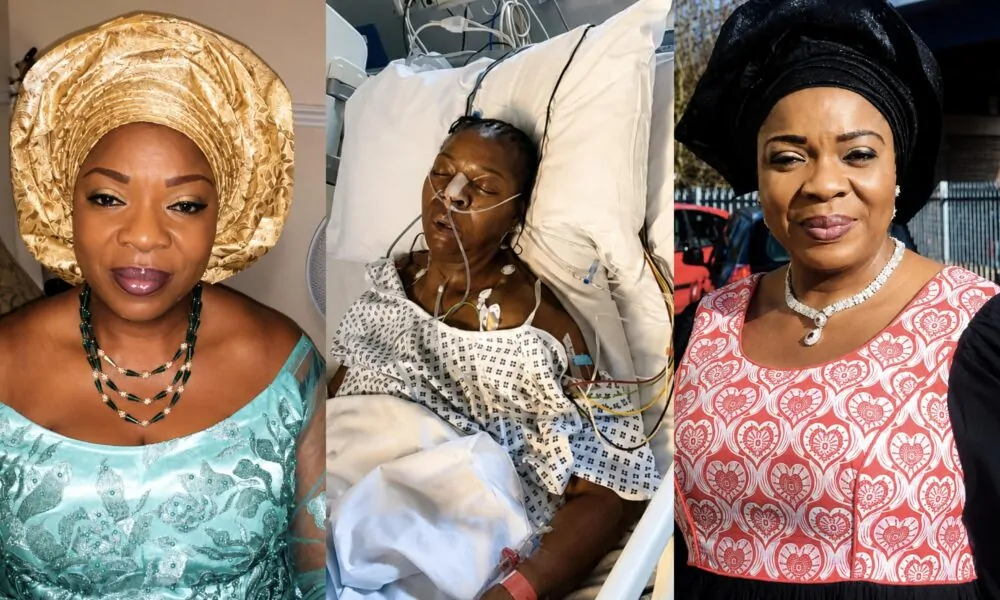
A 65-year-old mother, Yinka Sowemimo-Coker, has opened up about the difficult journey that saw her battle for her life after doctors repeatedly failed to identify the illness that was silently taking over her body.
After enduring months of unanswered questions, multiple hospital admissions and worsening symptoms, Yinka was eventually diagnosed with pancreatic cancer—one of the world’s deadliest common cancers. Despite being told she had only a 3% chance of survival, she underwent treatment and today has no cancer detected in her body.
Follow the Elizabethblog channel on WhatsApp: https://whatsapp.com/channel/0029VbDQN5lI1rcbSgriLG2M
Yinka’s health problems began in April 2018, when she was 56 years old.
While attending a work event, she suddenly became drenched in sweat as she climbed a flight of stairs. Although it seemed like a simple incident, she immediately knew something was not right because she had always been active and had never experienced such exhaustion before.
Within weeks, she developed severe stomach and back pain. Her condition continued to worsen, leading to four separate hospital admissions over an eight-month period.
Doctors initially believed she was suffering from anaemia, a condition caused by a lack of healthy red blood cells or haemoglobin. Blood tests and a colonoscopy failed to reveal any major concerns, so she was treated with blood transfusions to improve her iron levels and given intravenous paracetamol to manage her symptoms.
Despite the treatments, Yinka’s condition continued to deteriorate.
By the beginning of 2019, she had lost an alarming amount of weight, dropping from a size 20 to a size 6. She also developed jaundice and became so weak that she struggled to walk.
Looking back on those difficult months, Yinka admitted she often felt ignored by the medical professionals she turned to for help.
“I was always going to the hospital and they were discarding me. I felt unseen. I felt unheard. Sometimes I was even thinking, am I sure there’s something wrong with me? I started to second guess myself.
“And all that time, something was really wrong,” she added.
She also recalled how uncertain she felt throughout the months of repeated hospital visits.
“I knew I wasn’t feeling fine, but I couldn’t pinpoint exactly what was wrong with me.
“I can remember a particular time where one of the doctors said they were going to do a bone marrow (aspirate test for cancer) for me, and the other doctor said there was no need.”
In December 2018, Yinka was admitted to hospital after doctors suspected she had a virus affecting her liver.
Just days later, on January 2, 2019, her condition became critical. She developed a fever exceeding 40°C and was preparing to return to hospital for another blood transfusion when a doctor from her church came to visit.
After seeing her dramatic weight loss and jaundice, he urged her to seek treatment at King’s College Hospital instead of returning to the hospital she had previously attended.
When she arrived, her condition was so serious that she overheard one doctor say her “systems (were) shutting down.”
During the three-week hospital stay, specialists carried out extensive medical investigations, including MRI scans, CT scans, PET scans and X-rays.