Trends
Here’s What Seyi Makinde Wants to Do If He Becomes President

If you became Nigeria’s president tomorrow, where would you even start? Would you fix the economy, tackle insecurity or sort out the education system first?
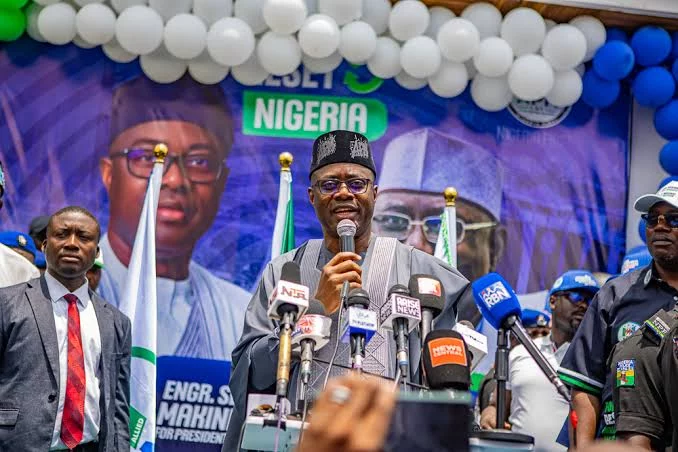
Seyi Makinde said he has his own answers. On Wednesday, November 4 2026, he unveiled his 2027 presidential manifesto, titled The Reset Agenda. The manifesto outlines what he hopes to do if Nigerians elect him president in the January 16 2027 election.
According to Makinde’s manifesto, he wants to reset four major areas:
What aspects of these four areas is Makinde promising to reset? And what could these plans mean for ordinary Nigerians? Let’s break it down.
Seyi Makinde has based his economic reset agenda on these points:
In September 2026, BusinessDay reported that food, transport and housing accounted for about 59% of Nigeria’s overall inflation in August. Food alone contributed the largest share.
Makinde says he wants to address some of these problems by:
For security, Seyi Makinde says he wants to replicate some of the security measures he introduced in Oyo State at the national level, including the state’s 615 toll-free emergency line, CCTV cameras and a security control room. He plans to replicate these on a national level by:
In Nigeria, kidnappings, banditry, terrorism, and attacks on communities continue to make travelling and living in some parts of the country frightening.
On November 10 2026, The Punch reported that the Nigeria Police Force recorded 418 homicide incidents and 227 kidnapping cases in just eight weeks. The police also recorded 168 banditry incidents and 51 acts of terrorism within the same period.
It would be interesting to see how Makinde will execute his plans to reduce the level of insecurity across the 36 states in the country.
For Makinde, getting children into classrooms is only half the job. They also need to learn and stay in school.
And Nigeria has a serious learning problem. In October 2026, the United Nations Children’s Fund (UNICEF) reported that nearly three-quarters of Nigerian girls lack basic literacy and numeracy skills. One in four girls also remains out of school. In September 2026, Minister of Education Dr. Tunji Alausa said Nigeria has between seven to eight million out-of-school children.
Here’s how he plans to fix the problem:
In practical terms, Makinde wants to ensure that young Nigerians actually learn, and that they do so in an environment befitting learning. With his vocational education plan, he also wants young Nigerians to have more options outside university education.
The Big Daily is your weekday shortcut to the biggest news shaping Nigeria. We cut through the noise, connect the dots, and explain why the news actually matters, all in one quick read.
Makinde also wants to change how power is shared between the Federal Government and state governments. He believes states should have more freedom to handle problems in their areas, while government offices should be strong enough to do their jobs properly.
His plans include:
Makinde’s proposal to give states more control over security fits into this wider debate about how much power state governments should have to address problems within their territories.
A November 3 BusinessDay report raised concerns about weak oversight of state government spending. It examined the EFCC’s decision to monitor FAAC allocations to states and local governments, as well as the ability of state assemblies to hold governors accountable.
Makinde’s promise is that this will not be the norm in his government; Nigerians will be able to see how public money is spent and whether the government is delivering on its promises.
Makinde’s Reset Agenda covers four areas that affect almost every Nigerian: how much things cost, how safe people feel, the quality of education and how the government works.
The manifesto gives an idea of the direction he wants to take Nigeria if elected. However, many of the proposals still need clearer details on funding, timelines and implementation. There’s a lot of “I will,” but Nigerians would prefer to hear how he actually wants to do these things.
For now, Nigerians have a set of promises to examine as the 2027 elections approach. And as with every campaign manifesto, time will tell whether the candidate can turn those promises into policies that improve people’s lives.