World
Hantavirus Cruise Ship Evacuation On — What Happens Next to Passengers and Crew?

The cruise ship at the centre of a deadly hantavirus outbreak has arrived in Spain’s Canary Islands, where authorities have begun a large-scale operation to test passengers and fly them home for quarantine. The MV Hondius anchored off the island of Tenerife on Sunday after days at sea while governments and health agencies coordinated a response to the outbreak, which has killed three people and infected several others.
Spain’s Health Minister Monica Garcia described the evacuation effort as an “unprecedented operation” and said it was “proceeding normally”. Officials said repatriation flights would continue through Sunday and Monday.
International Operation Launched
The response involves Spanish authorities, the World Health Organization (WHO) and several countries including the United States, Germany and France, which have sent aircraft to evacuate their citizens.
Medical teams boarded the vessel after it reached Tenerife to test passengers and crew.
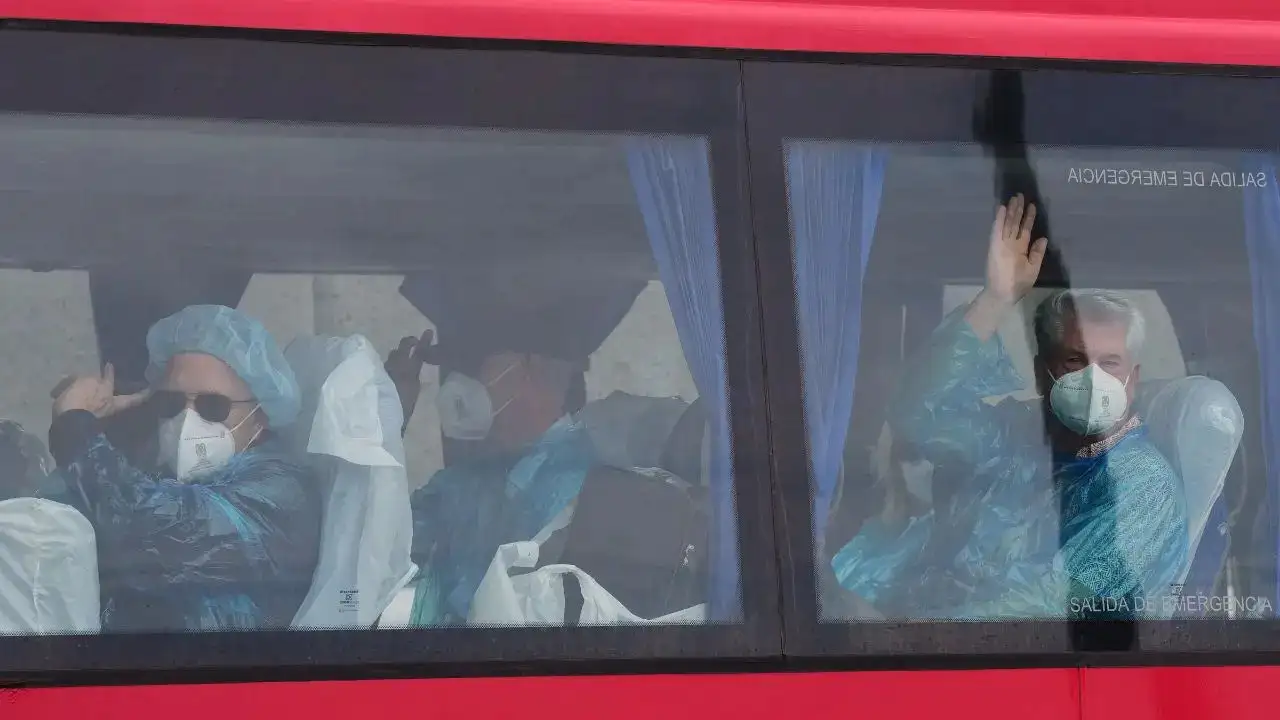
According to Oceanwide Expeditions, the operator of the luxury cruise ship, passengers will be “transferred immediately to their allocated aircraft” after disembarking and will later enter quarantine in their home countries.
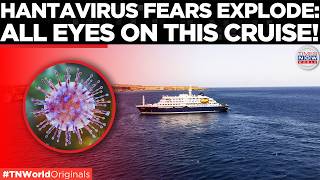 https://www.youtube.com/watch?v=VG-vMOdPSaE
Pedro Gullón, Spain’s director general of public health, said strict measures had been put in place to prevent contact with local residents. “The operation has been designed to avoid any contact with the local population,” he said.
“Only the essential personnel, equipped with full personal protective equipment, participate in the loading and unloading tasks.”
What Happens Next
Around 150 people were onboard the MV Hondius when reports first emerged of passengers suffering from what the WHO described as a “severe respiratory illness”. The agency also said 34 passengers and crew members had previously left the vessel.
Spanish officials said passengers would be brought ashore in small boats according to nationality before being transferred by bus to a nearby airport.
Spanish nationals are being evacuated first, followed by passengers travelling to the Netherlands, Turkey, France, the UK and the US.
Dutch evacuation flights will also carry citizens from Germany, Belgium and Greece.
A separate flight will transport six passengers to Australia.
The remaining crew members will stay onboard as the vessel sails to the Netherlands for disinfection. Oceanwide Expeditions said the journey to Rotterdam would take about five days after departure from Tenerife.
How Countries Are Planning to Receive Passengers
Spanish passengers are being flown to Madrid and quarantined at the Gómez Ulla military hospital.
The 17 American passengers will be taken to the University of Nebraska Medical Center, home to the US National Quarantine Unit, a specialist federally funded isolation facility for highly infectious diseases.
British passengers are expected to quarantine at Arrowe Park Hospital in Wirral, Merseyside, according to the UK Health Security Agency. The hospital was previously used during the early stages of the coronavirus pandemic in 2020.
The European Centre for Disease Prevention and Control said people without symptoms could still be monitored in isolation for up to six weeks under WHO guidance.
Oceanwide Expeditions said quarantine procedures would be determined by each country individually.
“No quarantine of non-Spanish nationals will take place in Spain,” the company said.
WHO’s Response to Situation
WHO Director-General Tedros Adhanom Ghebreyesus sought to reassure residents in Tenerife, saying the public health threat to the island remained limited. “I need you to hear me clearly: this is not another COVID,” he said in a statement shared online. “The current public health risk from hantavirus remains low. My colleagues and I have said this unequivocally, and I will say it again to you now.”
He added: “The virus aboard the MV Hondius is the Andes strain of hantavirus. It is serious. Three people have lost their lives, and our hearts go out to their families. The risk to you, living your daily life in Tenerife, is low.”
During a joint press conference with Spanish officials, he again urged residents not to panic.
Some local groups had protested against allowing the ship to dock in Tenerife.
“If the boat is going to stop here, then it can do so, but with the necessary measures in place,” one dock worker told the BBC during a demonstration outside the Canary Islands parliament building on Friday.
“Local people need to be told how this will affect them, how the passengers will be transported. We need reassurance above all.”
The US Centers for Disease Control and Prevention (CDC) said the public health risk to Americans remained “extremely low”. “As a precaution, CDC is working to increase awareness of the outbreak among travelers, public health agencies, laboratories, and healthcare professionals nationwide,” the agency said in an advisory.
Jay Bhattacharya defended the agency’s handling of the outbreak after criticism over the timing of the US response. “We shouldn’t be panicking when the evidence doesn’t warrant it,” he told CNN. “You want to moderate the response to the actual epidemiological threat.”
The WHO informed the CDC of the outbreak on 2 May, while the agency formally established a response team on 6 May.
What Investigation Has Revealed So Far
The WHO is working with authorities in Argentina and Chile to determine how the outbreak began. Officials said a couple who died onboard had recently travelled in Argentina before boarding the ship on 1 April.
Early investigations suggested there may have been “possible exposure to rodents during birdwatching activities”.
Dutch ornithologist Leo Schilperoord was identified earlier this week as the first known case connected to the outbreak.
Schilperoord, 70, and his wife Mirjam, 69, had spent several months travelling across Argentina, Chile and Uruguay before joining the voyage.
Dr Stephen Kornfeld, a passenger from Bend, Oregon, told ABC News he helped coordinate medical care onboard after the outbreak was detected. “It just kind of escalated to within 24 hours after I stepped in,” he said.
“One of the patients died and the other two, the physician and one of the other staff members, were getting progressively sicker, and then the first news of hantavirus came out.” He added that no passengers had shown symptoms in recent days.