World
Greece offers bounty to catch ravenous fish lured by warming sea

ATHENS – Stavros Moraitis has spent more than three decades fishing in the azure waters off the Greek island of Milos. He’s used to competition from rare monk seals, but now global warming has brought a rival with a far more voracious appetite: the silver-cheeked puffer fish.
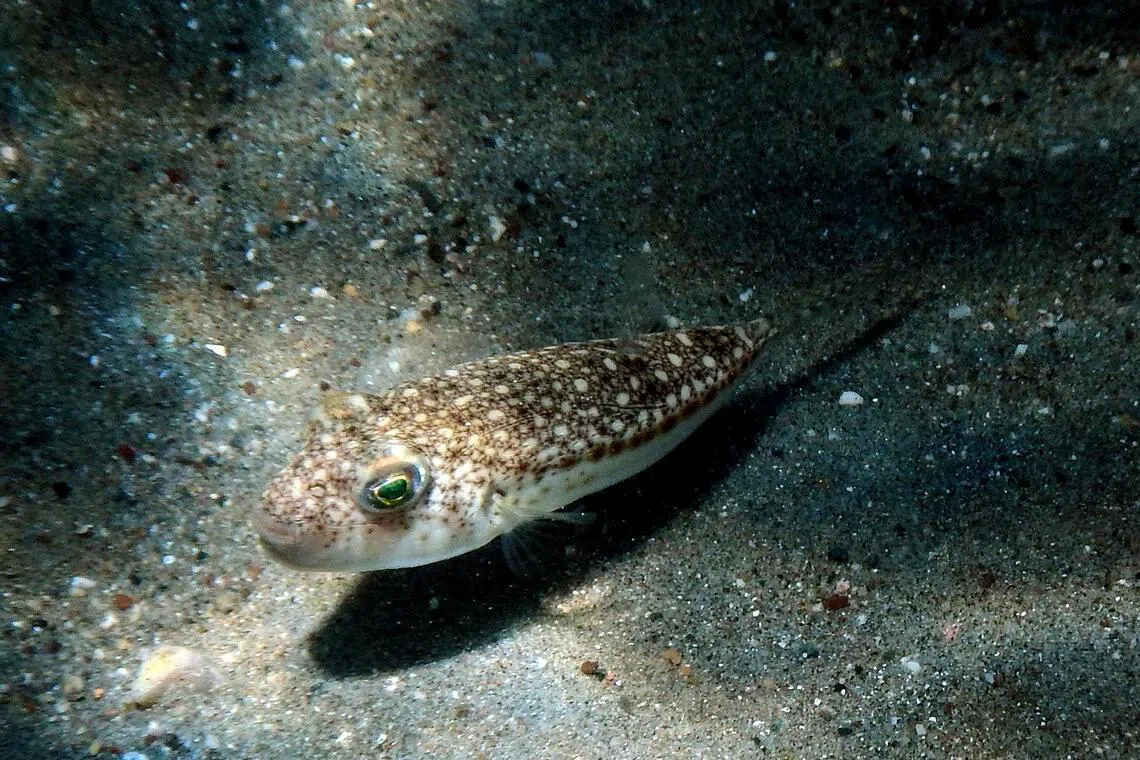
As the seas have warmed, the fish has migrated from the tropical waters of the Indian Ocean to the Mediterranean via the Suez Canal. Armed with teeth that can bite through steel cans and a body containing a neurotoxin 1,000 times more potent than cyanide, it has few natural predators.
The species first appeared in Greek waters in 2005, but numbers have exploded in recent years. The adaptable and hungry puffer – known in Greece as the hare head after its scientific name lagocephalus sceleratus – is devastating a fishing industry that’s the economic heartbeat of many coastal communities.
“It is ravenous and our catches are now down by an average of 30 to 40 per cent compared with just a couple of years ago,” said Moraitis, who followed in his father’s footsteps, fishing for sea bream, grouper and squid around Milos and the neighboring Cycladic islands of Kimolos and Polyaigos.
With the European Union’s second-biggest fishing fleet at stake, Athens has been forced to take action. In a pilot phase, the government is putting up a €1.5 million (S$2.2 million) bounty to encourage fisherman to catch the invasive puffer fish. They will be paid €5.33 for every kilogram they land, according to Greek Rural Development and Food Minister Margaritis Schinas.
It’s Greece’s first such response to a climate change-induced threat from an alien species, with both marine biodiversity and the livelihoods of almost 16,000 fisherman at stake. The puffer fish eats both the adults and the young of other species and competes for food, placing additional pressure on marine ecosystems already strained by warming waters.
Average water temperatures in the Mediterranean are more than 3C above long-term normals, data from the Balearic Islands Coastal Observing and Forecasting System show. In June, global sea surface temperatures reached 20.86C, the highest ever for the time of year, turbocharged by a developing El Nino, according to the Copernicus Climate Change Service.
Global warming is spurring a host of marine invasions. Despite its poisonous spines, the Indo-Pacific lionfish has become a delicacy on menus in Cyprus, and has also spread to Greek waters. Last year, English fishermen landed bumper hauls of octopus as the North Atlantic warmed, but that came at the expense of the shellfish populations they prey on. Warming is also hitting plankton, the foundation of marine food chains.
As puffer fish numbers surge, Greece will focus its pilot cull on Crete and the South Aegean Sea, where the invasion is most acute. Fishermen will be taking on a species whose four teeth – fused to form a beak-like structure that resembles a hare – can bite through ordinary fishing nets.
That powerful bite has fed a social media frenzy in Greece this summer, with accounts of puffer fish allegedly attacking bathers. Thankfully for a country where tourism is the biggest industry, the reality is far less dramatic: there has been just one recorded attack, and that was in Crete four years ago, according to the Hellenic Center for Marine Research.
The puffer fish’s fearsome reputation has been compounded by its toxicity, which can cause muscle weakness, paralysis and breathing difficulties that can become life-threatening if it’s eaten. While the fish is considered a delicacy in Japan – where it’s prepared by specialist chefs – consumption is banned in Europe.
Swimmers shouldn’t be overly concerned as the fish avoid humans, according to Giorgos Tserpes, research director at the Hellenic Center for Marine Research:
“I don’t think there is a danger,” he said, while noting that they’re likely to become part of Greece’s ecosystem over the long term. “Climate change favors this kind of fish.”
That’s also the conclusion of Moraitis, who is also president of the Fishing Association of Milos. Even when the cull is eventually rolled out across Greece, the potential need for specialised nets is going to make it costly and it’s unlikely to severely dent the growing population.
“The cull is a step in the right direction but has come late,” said Moraitis. “The puffer fish is here to stay.” BLOOMBERG