World
Golden Fleet Price Shock: Trump’s Warship Plan Runs Into Billions

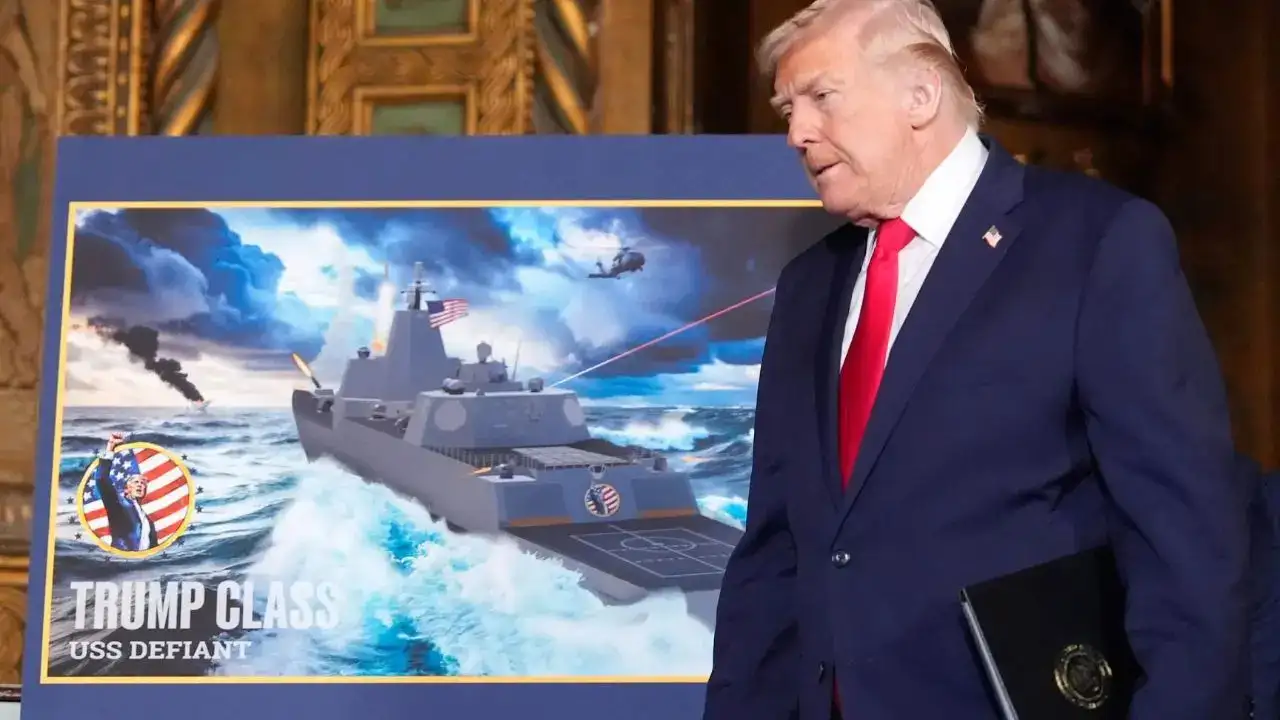
Budget documents have revealed that the first Trump-class battleship will carry an initial price tag north of $17 billion, with a fleet of three ships totaling more than $43 billion. The figures offer the first concrete look at what the administration’s ambitious Golden Fleet initiative will actually cost American taxpayers.
John Phelan, who served as Navy secretary until last week, was careful to frame the numbers as preliminary. Speaking on the sidelines of the Sea-Air-Space conference in Maryland, he described the figure as an “early, initial estimate,” adding that costs would become clearer as the design process moves forward with vendors.
“We’ll see where we really settle down, as we get through that and start to rationalize some of the costs,” Phelan said, as per a report from Axios.
Part of a Bigger Naval Push
The Trump-class battleship is one piece of a larger effort the administration has branded the Golden Fleet. Also included in the initiative is a future frigate built around a design from HII, the shipbuilding company, based on its National Security Cutter platform.
The Navy has been in talks with two separate vendors on the battleship project, and the final cost will depend heavily on how the design process plays out and what capacity those shipyards can realistically bring to bear.
A Ship Built for Modern Warfare
Preliminary specifications paint a picture of a vessel loaded with next-generation firepower. The battleship is expected to carry laser turrets, a railgun, and space for both hypersonic and nuclear weapons. It would be crewed by at least 650 sailors.
One major question remains unresolved: whether the ship will be nuclear powered. The Navy is still actively debating that decision, and it will have significant implications for both cost and capability.
The Industrial Base Problem
The ambition behind the Golden Fleet runs headlong into a practical reality. The United States has struggled for years to build and maintain its existing fleet of warships on schedule. The USS Boise stands as a stark example, a submarine the Navy ultimately cancelled after it sat dockside for roughly a decade without being completed.
Phelan acknowledged that adding major new construction demands on top of existing commitments could strain both public and private shipyards considerably.
“We are looking at a couple of different ways to relieve some of the pressure that might put on the industrial base,” he said. “I think we have to still define that a little bit more.”
How the Navy solves that problem will be just as important as the ship design itself.
What Comes Next
Construction on the first Trump-class battleship is expected to begin in 2028. Between now and then, the Navy needs to finalize its vendor relationships, settle the nuclear propulsion question, and figure out how to keep the broader shipbuilding industry from buckling under the weight of expanded demand.
At $17 billion a ship, the stakes for getting those decisions right could hardly be higher.