World
Gaza mediators glum on chances for breakthrough before Israeli elections in the fall

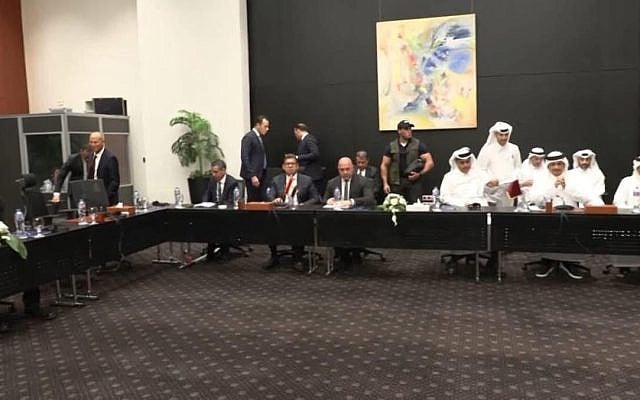
ABU DHABI, United Arab Emirates — Hamas participated in disarmament talks in Cairo this week, and while some progress was made, officials familiar with the matter told The Times of Israel that mediators of the tenuous Gaza ceasefire do not think a breakthrough is likely before Israeli elections in the fall.
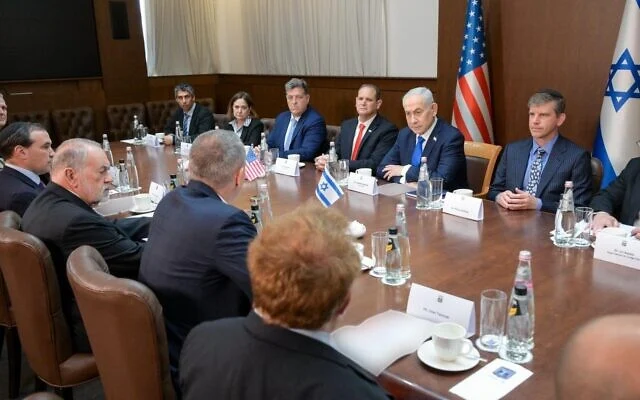
Operating under the auspices of the US-led Board of Peace, Middle East mediators Egypt, Qatar and Turkey faced an uphill battle from the onset of negotiations late last year, with the stated goals of disarming Hamas and withdrawing Israeli troops from the Gaza Strip appearing to be nonstarters for both sides.
The Board of Peace’s Gaza envoy, Nickolay Mladenov, has made clear in recent months that the bigger obstacle has been Hamas’s refusal to give up its weapons, as envisioned by US President Donald Trump’s 20-point plan for ending the Gaza war, which the Board of Peace is tasked with implementing.
Hamas has dragged out disarmament talks, chiefly arguing that it shouldn’t be expected to execute what is seen as the second phase of Trump’s plan if Israel has failed to uphold many conditions of the first phase regarding humanitarian aid, pulling back troops, reopening Gaza’s main crossing and halting strikes.
Mladenov has argued that Hamas should only expect Israel to adhere to those commitments if the terror group gets on board with the phase two disarmament requirement, The Times of Israel revealed last month.
But a diplomat from each of the mediating countries told The Times of Israel this week that Israeli officials indicated that even if Hamas were to agree now to start the process of disarming, Jerusalem is unlikely to be willing to take the steps necessary to advance the deal.
The Board of Peace’s 15-point disarmament plan envisions a gradual process based on the principle of reciprocity, with Israel expected to immediately withdraw from the areas where Hamas agrees to give up its weapons.
Such withdrawals of Israeli troops — who in recent weeks have pushed deeper into the Strip in violation of the October 2025 agreement that ended the Gaza war after over two years — are far less likely, given that Prime Minister Benjamin Netanyahu is now just several months away from one of the most daunting reelection campaigns of his political career, the diplomats said.
The diplomats said their analyses were based on conversations with Israeli counterparts in recent months, during which the latter expressed significant skepticism about the chances of the Trump plan succeeding. And as the elections approach, questions to Israeli counterparts regarding the implementation of specific measures in the US plan have gone from receiving substantive pushback to getting no response whatsoever.
The date of the national vote has not yet been set, but it will take place in either September or October, and Netanyahu’s opponents are already calling him out for failing to defeat Hamas in Gaza after repeatedly promising “total victory.”
Accordingly, pulling Israeli forces back from Gaza — even if that were preceded by beginning to hand over some of its weapons — is not something Netanyahu has shown readiness to authorize, with the election campaign in full swing, the diplomats from Egypt, Qatar and Turkey said, speaking on condition of anonymity.
The three senior Middle Eastern officials pointed to Netanyahu’s willingness earlier this year to at least verbally commit to implement phase one requirements, even if there was no follow-through. In recent weeks, though, the premier and his aides have refrained from even making such promises in conversations with mediators.
To demonstrate that point, one of the diplomats pointed to the planned training of a new police force that the Board of Peace plans to stand up in Gaza. The panel has been seeking a commitment from Israel that recruits who leave the Strip for training in Egypt be allowed to return, amid concerns that Jerusalem may try to exploit the large-scale exit of Palestinians to thin out the Strip’s population — a stated goal of many members of the Netanyahu government.
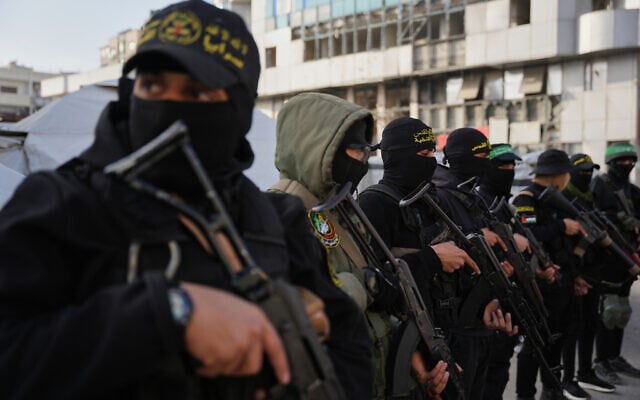
While initially indicating it was prepared to cooperate with the training of police meant to replace Hamas in providing internal security for Gaza, Israel in recent weeks began conditioning progress on the matter on Hamas first agreeing to the Board of Peace disarmament plan, a second Middle Eastern diplomat said.
The diplomat also rejected the notion that Hamas acquiescence would be sufficient, as Israel has put up other roadblocks relating to the entry of the National Committee for the Administration of Gaza (NCAG) — the panel of Palestinian technocrats that is supposed to replace Hamas in running Gaza.
The Prime Minister’s Office did not respond to a list of questions regarding the implementation of Trump’s Gaza plan, but an Israeli official insisted that Jerusalem remains committed to the framework.
The third Middle Eastern diplomat said that was not the perception the mediators have taken away from talks with Israeli officials in recent weeks.
“The closer we get to elections, the harder it gets to convince Israel to even respond to requests, let alone accept them,” the diplomat said.
The first diplomat said the regional mediators are concerned that Israel is seeking to resume the war against Hamas, convinced that the group will not willingly agree to give up its weapons.
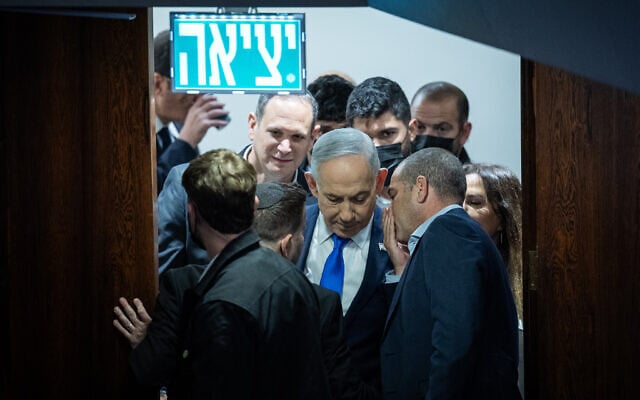
But the mediators believe another round of the conflict will be no more definitive than the previous ones, while extracting a further humanitarian cost to an exhausted Gazan population.
Accordingly, the diplomat said that Middle East mediators are working to convince Trump to place a “veto” on Israel resuming the war.
While the US currently agrees on the need to prevent such a decision by Netanyahu, the mediators believe they’ll have to consistently engage Washington on the issue, as the latter’s position may change over time, particularly if the Iran war subsides, Gaza returns to the forefront of the US national conscious and Netanyahu seeks to wrestle back control of the issue from the Board of Peace in the months leading up to the election, the diplomat said.
The Mideast mediators are largely tasked with bringing Hamas on board, while the US is seen as responsible for delivering Israel.
The three diplomats insisted that they could coax Hamas to accept a disarmament plan.
“But [Hamas] asks us if they agree to a deal, whether we can guarantee that Israel will stick to it. Given the way the ceasefire has gone to date, it’s harder for us to answer that in a satisfactory way,” the first diplomat said, arguing that only the US could ensure full Israeli compliance with the deal.
View from the West
A US official, also speaking on condition of anonymity, pushed back on the Middle East diplomats’ painting of Israel as the main obstacle to a deal, asserting that there were three times during negotiations over the past several months where Netanyahu agreed to halt strikes in Gaza for an extended period of time to give Hamas time to respond to different proposals, only for the terror group to drag its feet.
Nonetheless, the US official argued that it was still possible to convince Hamas to accept the disarmament plan, insisting that Washington would then be able to get Israel to take its own reciprocal steps.
The US official acknowledged that the effort would be more challenging as the Israeli elections approach, but said the Trump administration and the Board of Peace did not intend to wait through the fall, pointing out that civilians in Gaza deserve for the reconstruction process, conditioned on Hamas disarmament, to begin.
“The status quo in Gaza wouldn’t be maintained in the interim. It could well get worse,” the US official said.
Accordingly, the US has pushed the Middle East mediators to continue holding talks with Hamas in Cairo, including during the Iran war, when regional focus was elsewhere.
While the Middle Eastern diplomats and US officials all agreed that Arabic media reports on this week’s negotiations inaccurately described significant progress as being made, they also agreed that movement was made in the right direction.
A separate source familiar with the talks said the mediators are working to convince the various armed Palestinian factions to back Hamas if it decides to accept the disarmament proposal, recognizing that the terror group needs a “layer of protection” if it is going to make concessions pertaining to its weapons.
Plan B ‘green zone’ rebuild
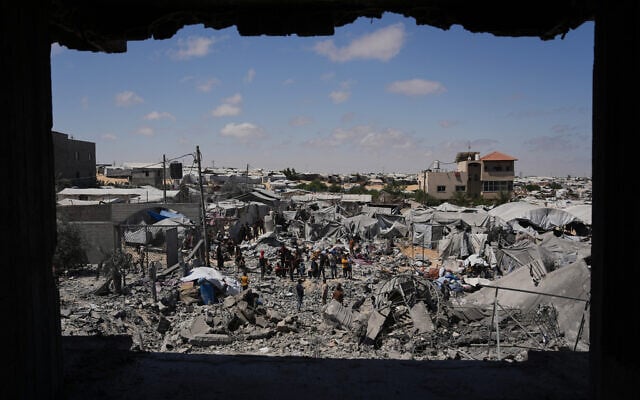
The US official and the source familiar with the matter said that if Hamas is unable to get on board with the disarmament proposal, the Board of Peace is preparing to implement point No. 17 of the 20-point plan, which envisions reconstruction moving ahead strictly in areas controlled by the IDF.
The source said the Board of Peace is finalizing plans to rebuild what is currently referred to as the “green zone,” hoping that doing so will pressure Hamas.
The question will then become whether Palestinians will move into those IDF-held areas, whether the Board of Peace will be able to secure funding for projects there, and whether Israel will allow the NCAG or other alternative bodies to enter and operate in those areas.
During cabinet meetings over the past year, Netanyahu has faced pushback from some ministers who expressed concern about allowing reconstruction to begin on the side of Gaza that is closer to Israeli border towns, the Israeli official said.
If the focus shifts to the green zone, the US-led Board of Peace is planning to begin rebuilding on the ruins of the southern Gaza city of Rafah, but one of the Middle East mediators noted that Egypt is likely to push back on this choice, amid continued fears in Cairo that Israel will try to push Palestinians across the border into the Sinai.