World
Fresh Satellite Images Reveal Devastating Damage Beyond Trump’s Claims: 228 US Military Assets Reduced to Rubble in Iranian Strikes

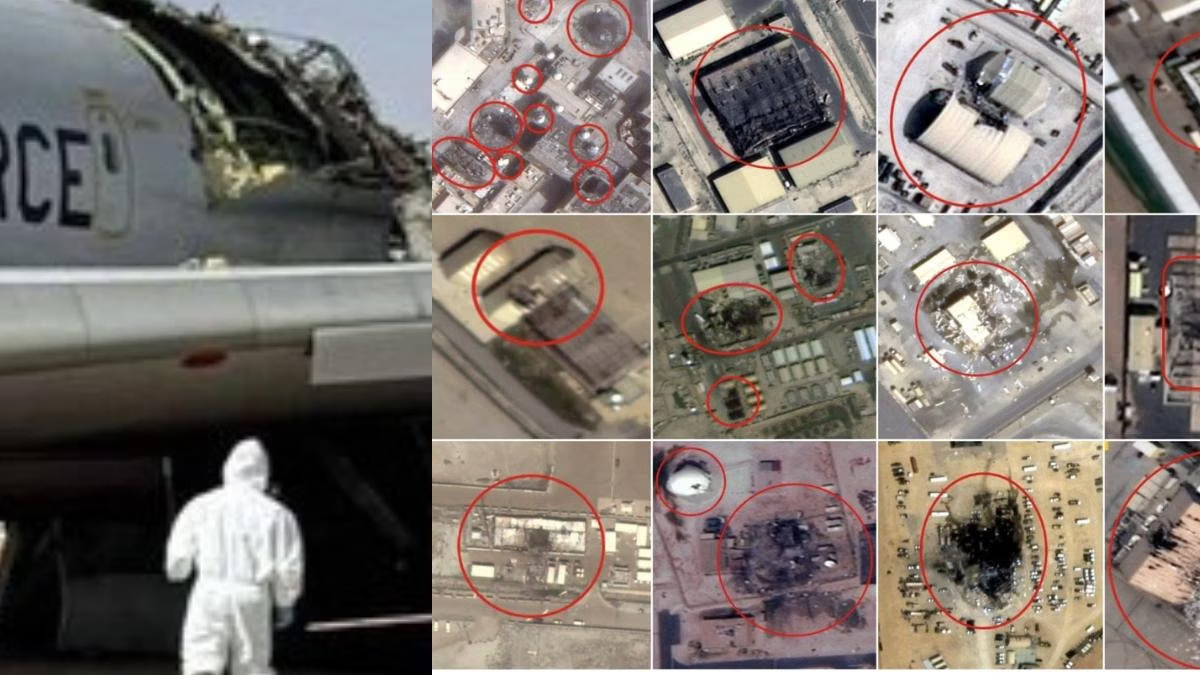
The US-Iran war has finally come to a halt after a month of conflict in which both sides received heavy damage. In a new revelation, it has come to light that Iran caused more damage than the US initially disclosed through strikes on US bases across Middle Eastern countries. According to a report by The Washington Post, more than 228 pieces of equipment and US assets were destroyed across 15 military sites in the Gulf region. The report states that Iran released more than 100 satellite images demonstrating the impact on these bases.
Unprecedented Damage to US Infrastructure
Such extensive damage to a technologically superior country like the US was unexpected by the administration and President Trump. The assets hit by Iran include hangars, barracks, fuel depots, aircraft, radar, communications systems, and multiple air defense systems. These strikes left several major military sites unusable for a significant period. Furthermore, according to US officials, the cost of these damaged assets is close to $50 billion so far.
This analysis details some of the most expensive damages suffered by the United States during this month-long war. Until now, it was difficult to assess the damage to US assets because two commercial providers of satellite imagery in the Middle East (Maxar and Planet) reportedly asked the Trump administration to delay their release, according to the TWP report.
Satellite Evidence and Strategic Losses
This damage analysis is based on 128 high-resolution satellite images released by Iran; none of the images were found to be altered. The US suffered the most significant damage at the 5th Fleet headquarters in Bahrain and three bases in Kuwait: Ali Al-Salem, Camp Arifjan (the US Army’s regional headquarters), and Camp Buehring. Destroyed assets include costly Patriot missile defense systems, a power plant, and five fuel storage sites.
A satellite communications site at Al-Udeid Air Base in Qatar, a THAAD radar system in Jordan, and systems in the UAE were also completely destroyed in the Iranian air strikes. The satellite images further showed a damaged E-3 Sentry command and control aircraft at the Prince Sultan Air Base in Saudi Arabia. A refueling tanker was also lost.

Aircraft Attrition and “Friendly Fire”
Apart from this, almost 40 drones and multiple fighter jets were damaged or destroyed during search operations or in “friendly fire” incidents, as reported by the US. This includes 24 MQ-9 Reaper drones, sophisticated aircraft that can cost $30 million apiece, and the prized MQ-4C Triton, which costs between $200 million and $400 million.
The US lost four F-15E Strike Eagles, three of which were downed in Kuwait in incidents described as “friendly fire.” Additionally, one A-10 Warthog was lost. Iran also claimed to have shot down an F-35, which would mark the first known combat damage to a US fifth-generation fighter aircraft.
Precision Strikes and Tactical Theories
The precision of these airstrikes was a primary factor in the high level of destruction. Satellite imagery showed that Iran struck over 200 structures with high accuracy, suggesting the use of precision-guided munitions. A retired Marine Corps Colonel shared his view with the Post, stating, “The Iranian attacks were precise. There are no random craters indicating misses.”
Iran targeted barracks, hangars, and warehouses to inflict massive casualties, though some targets were hit after US troops had evacuated. Iran also struck non-military targets, including food halls, gyms, and accommodations.
Mark Cancian proposed an alternative theory regarding the US defense strategy, suggesting the United States might have intentionally permitted certain impacts to deceive Iranian forces or to conserve high-value interceptors rather than depleting them against low-cost Shahed drones. “US forces may have chosen to allow an incoming missile to strike if it seems likely to hit an unimportant target,” he noted.
Conflict Toll and Casualty Statistics
Since the outbreak of hostilities on February 28, the human cost for US forces has risen steadily:
- Fatalities: At least seven US service members have lost their lives, with six deaths occurring in Kuwait and one in Saudi Arabia.
- Injuries: Approximately 400 troops are estimated to have sustained injuries during the conflict.
Economic Impact and Budgetary Discrepancies
The current situation highlights significant tactical vulnerabilities that enabled Iran to inflict more damage than anticipated. Iranian strikes were highly calculated, focusing on advanced radar and communications systems, assets that are notoriously expensive and difficult to replace.
Infrastructure and Repair Costs
The financial requirements for restoring US military installations and hardware are immense. According to CNN, the total cost for reconstruction and asset replacement is expected to range between $40 billion and $50 billion. Specific high-value targets have added to this burden; for instance, a member of Congress told The New York Times that repairs to the 5th Fleet headquarters alone will likely reach $200 million.
The Budgetary Debate
These rising costs have sparked a heated debate regarding the accuracy of official figures:
- The Pentagon’s War Estimate: The Department of Defense initially submitted a $25 billion estimate for the cost of the war, a figure that now appears vastly insufficient.
- The 2027 Budget Request: Reflecting the strain of the conflict, the Pentagon has requested a $1.5 trillion budget for 2027, a massive 42% increase over the previous year.
- Congressional Projections: Democratic lawmakers remain skeptical of the official numbers, estimating the actual economic impact on the United States will be far higher, potentially falling between $630 billion and $1 trillion.
Also Read: US-Iran Near Breakthrough Deal? Strait of Hormuz Reopening Plan Signals Major De-Escalation