Topnews
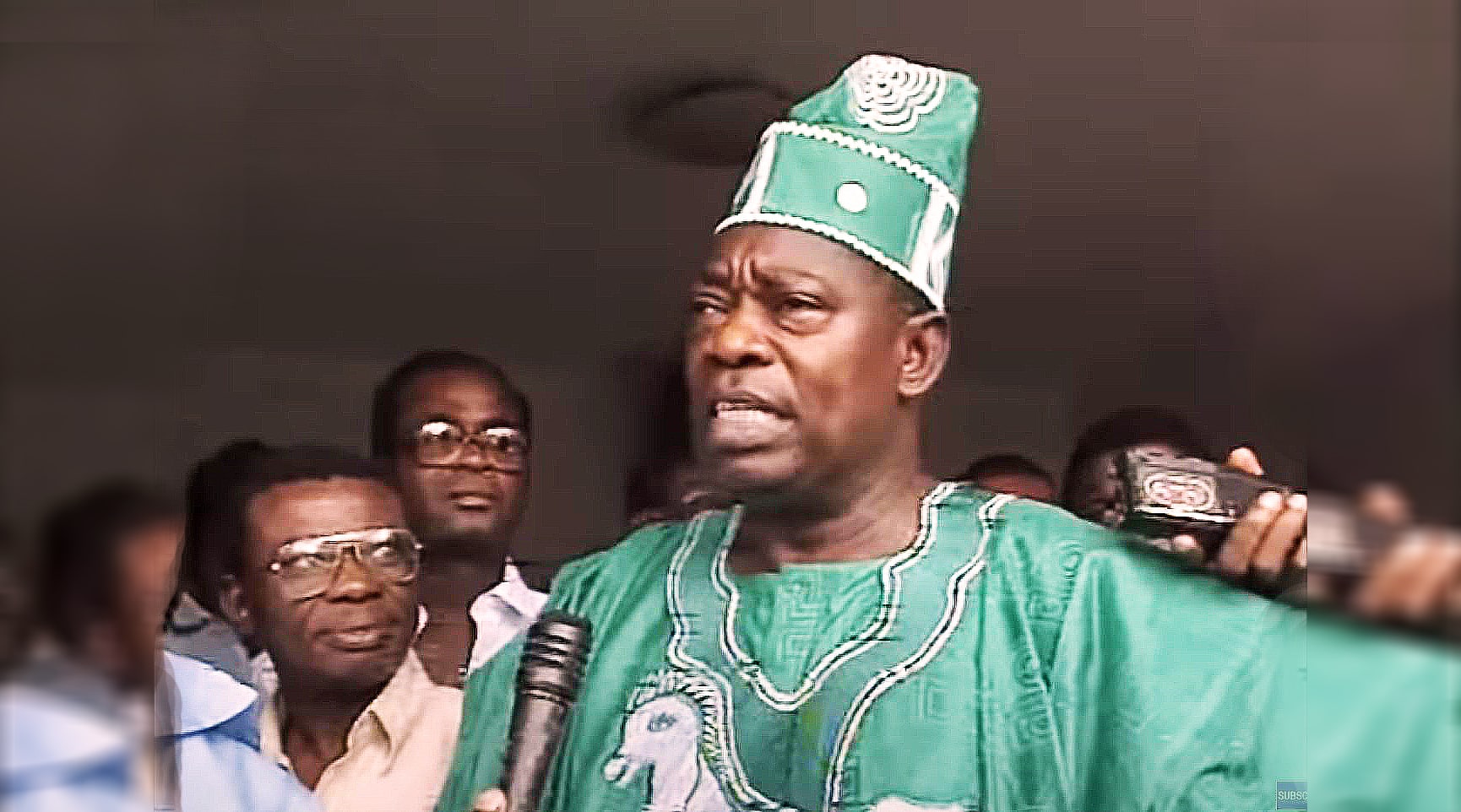
Former Head Of State Reveals Fresh Details On MKO Abiola’s Death

Former Head of State, General Abdulsalami Abubakar (retd.), has revealed that American officials who were present with Chief Moshood Kashimawo Olawale Abiola, popularly called MKO Abiola, when he died were initially denied access to him after the incident.
Naija News understands that Abdulsalami made the disclosure in his autobiography, which is scheduled for public presentation in Abuja on Saturday.
The book offers fresh insights into the circumstances surrounding the death of Abiola, the presumed winner of the annulled June 12, 1993 presidential election.
According to accounts referenced in the autobiography, Abiola was meeting with a United States delegation in Abuja on July 7, 1998, when he suddenly developed a cough.
His death triggered widespread unrest, particularly in Lagos State, as speculation mounted over the circumstances surrounding the incident.
At the time, rumours circulated that Abiola may have been poisoned after allegedly taking tea offered to him by members of the American delegation to relieve the cough.
The allegations were never conclusively established, but they fuelled public suspicion and heightened tensions across the country.
Abiola’s death occurred barely one month after the sudden death of former military ruler, General Sani Abacha.
Abacha had detained Abiola in 1994 after the businessman and politician declared himself president on the first anniversary of the annulled June 12 election.
In the autobiography, Abdulsalami provides his own account of the events surrounding Abiola’s death, offering details that were not previously publicly known.
One of the revelations contained in the book is that the American officials who were with Abiola at the time of the incident were initially denied access to him after his death.
Published by Cable Books, the book is being distributed nationwide by Rovingheights Bookstores and is also available on Amazon.
Read excerpts below from the highly anticipated autobiography.
‘US DELEGATION ALMOST DIDN’T SEE ABIOLA’
“A U.S. delegation had visited Nigeria in July 1998 to assess the political situation after the death of General Abacha. It was led by Mr Tom Pickering, former U.S. Ambassador to Nigeria who was Undersecretary of State for Political Affairs. Ms Susan Rice, who was Assistant Secretary of State for African Affairs, was also in the delegation. They met with the political and human rights communities in the country.
“On their itinerary, I was the last person they planned to see before leaving Nigeria. When they visited me, they complained that they requested to see Abiola but were denied access to him. Meeting with Abiola was a major reason for their visit to Nigeria in the first place and, according to what Rice would reveal decades later, they wanted to encourage him to participate in a new transition programme. I was surprised they were denied access. I was not in the picture. I immediately called my CSO, Abdulrasheed Aliyu, and instructed him to arrange for them to see Abiola.”
Abiola died during the meeting, leading to fears of further political crisis.
‘MY HEAD WENT BLANK WHEN I WAS TOLD ABIOLA DIED’
“Aliyu, my CSO, called me. As soon as I picked, he said, in a shaky voice, that there was a problem. I asked: ‘What
problem again?’ He said Abiola was dead. My head went blank. Aliyu was the one who led the American delegation to the meeting (venue) and was also the one who arranged for Abiola to be brought to the venue. He said Abiola suddenly became restless and started coughing and sweating during the meeting and later died at the State House Clinic.
“I started thinking of many things at the same time. This was the most unexpected turn of events. The peace we were building was still so fragile and now this happened. We did not bargain for this. We were making progress trying to resolve the political crisis and this was going to be a spanner in the works. I wished it was a dream. I was devastated. I did not even know what to think, even though I had to be strong.
“I gathered myself together and called Vice Admiral Mike Akhigbe, my Second-in-Command, to inform him that we had a problem. He was the first person I told. He was dumbfounded. I also told Alhaji Gidado Idris, the Secretary to the Government of the Federation. Since I was living in the barracks as I had not moved to the Presidential Villa, I instructed Aliyu to take the American delegation to my residence. I informed Babagana Kingibe, Abiola’s running mate in the 1993 presidential election, of the tragedy and asked him to come with the Abiola family to my residence.
“It was tough breaking the news to the family. When I did, one of his daughters started crying profusely and was shaking
uncontrollably. I held her and placed her head over my shoulders. She was inconsolable. Rice said to me that she wanted to help. She took over, held the lady and consoled her. It was a sad sight I would prefer not to remember. If we had not allowed the American delegation to see him and he had died in custody, it would have been a different story. It would have been insinuated that he had long died and we were trying to cover it up.”
‘I DON’T BELIEVE ABIOLA WAS POISONED’
“It did not stop the conspiracy theories in any case. There was a theory that since Nigeria had come to a standstill with the political impasse, some vested interests in government decided to take out General Abacha in June 1998 because he was
seen as the biggest problem. It was also alleged that after they had taken Abacha out and NADECO insisted on Abiola being released and inaugurated as President, the supposed interests decided to take out Abiola a month later to ‘balance the equation’. Whoever came up with this theory was being uncharitable to both Abiola and the Federal Government.
“I do not believe Abiola was poisoned. The family requested an autopsy and we assembled American, British, Nigerian and Canadian pathologists to conduct it. The autopsy report attributed his death to natural causes. As far back as 1994 when he was arrested by the Abacha Administration for declaring himself President, it was public knowledge that Abiola was managing certain medical conditions which could seriously affect the quality of life of any human being.