World
Finally naming their war dead, Gazan terror groups admit slain journalists were fighters

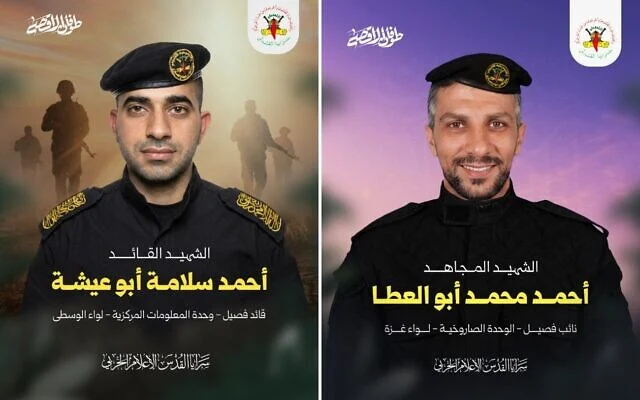
On July 10, 2025, an Israeli drone fired a missile at a home in central Gaza’s Nuseirat refugee camp, killing a man identified as Ahmed Abu Eisha. According to reports, Abu Eisha had been a journalist for Palestine Today, a television channel affiliated with the Palestinian Islamic Jihad terror group.
According to the Committee to Protect Journalists, citing a colleague, Abu Eisha was killed shortly after returning home from “covering events” at a hospital in Deir al-Balah.
Abu Eisha was “polite, calm, and kind; someone who avoided conflict,” wrote CPJ, quoting the colleague. It noted his hard work pursuing stories and his recent completion of a PhD in Arabic, including him in its tally of hundreds of journalists it alleges Israel has killed since October 7, 2023.
But there was more to the Gazan as well.
On June 1, the PIJ’s military wing announced that Abu Eisha had been a unit commander and operative in the organization’s “Central Information Unit” within its Central Brigade when he was killed. While no official description of the unit’s role was provided, it appears to have been involved in intelligence gathering and analysis.
The disclosure was one of dozens made by PIJ and Hamas in recent weeks announcing the deaths of its fighters during the war, after years in which the groups declined to identify nearly any of its combatants killed in the fighting.
A partial review by The Times of Israel of many of the hundreds of names of operatives published on official Hamas and PIJ military-wing Telegram channels and affiliated accounts found several people who had previously been identified as journalists, or other civilians.
The releases, which continue to be published at a rate of seven or eight a day, seemingly cast new light on persistent accusations that the Israel Defense Forces targeted journalists during the war, lending credence, in at least some cases, to Israeli assertions that they were actually legitimate military targets contributing to the fighting.
Israel says it takes steps to minimize civilian casualties and does not target journalists or others uninvolved in terror operations, but critics have questioned those claims, noting the high numbers of non-combatants reportedly killed.
Despite the publication of his position within Islamic Jihad, Abu Eisha remained featured in an online database by CPJ, a media advocacy group that records reported journalist deaths around the world.
However, the group in recent weeks has quietly removed eight other Palestinians from a list of media workers it alleges were killed by Israel after determining they had “participated in combat.”
The list, which once included 276 names killed in the conflict, including Israelis and journalists from Yemen, Lebanon and Iran, now sits at 259, with others removed for various reasons unrelated to combat roles.
“We review all individuals once new information comes to light and will continue to remove any from our database deemed to have been engaging in combat,” CPJ said following a request for comment on the matter.
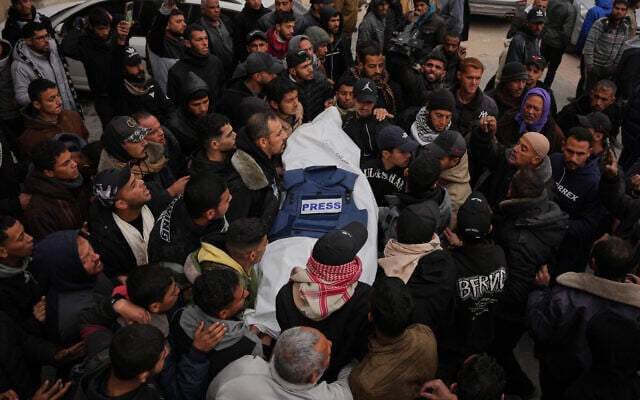
A number of the names removed include figures identified by Hamas or PIJ as having taken part in the fight.
One such figure is Mohammed Nasser Abu Huwaidi, who was killed in the Shuja’iyya neighborhood of northern Gaza on December 23, 2023. At the time, Huwaidi was described as a journalist for Al-Istiqlal, an Arabic- and English-language news outlet that covers the Arab world, including Gaza.
The killing sparked a UNESCO condemnation in January 2024, with then-director general Audrey Azoulay calling for respect for Security Council resolutions regarding the protection of journalists and media workers in conflict zones.
However, on March 19, Islamic Jihad included Abu Huwaidi on a list of operatives killed during the war. In a statement issued by the group’s military wing, he was described as having served in the organization’s “military media unit.” The statement did not specify when or how he was killed.
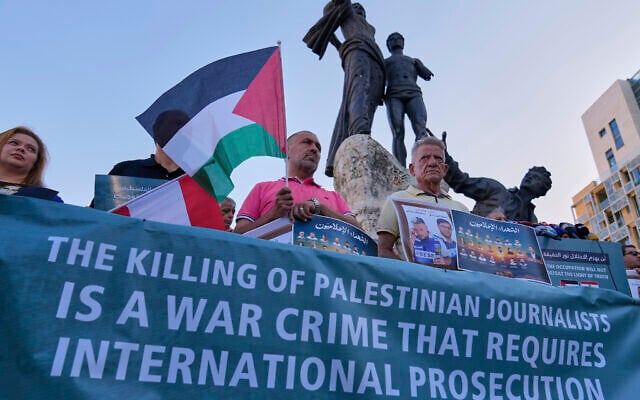
In May, CPJ removed his name from its list, initially saying “he was not a civilian journalist or media worker” before later clarifying that he and others had been redacted after “CPJ’s subsequent research and investigations indicated that he participated in combat.”
UNESCO’s statement remains on the organization’s website.
Another name removed by CPJ is that of Yaqoub Anan al-Bursh, who was identified on May 10 by Hamas’s military wing as a member of the Abdul Raouf Nabhan Battalion of its Northern Brigade. The statement called him “one of the military media commentators.”
According to CPJ, which spoke to al-Bursh’s brother after he died of wounds sustained in an Israeli strike on his home in November 2023, al-Bursh was a Palestinian journalist and the executive director of Namaa Radio. A page dedicated to al-Bursh has since been taken offline by CPJ, but others, such as the International Federation of Journalists, continue to list him in their databases.
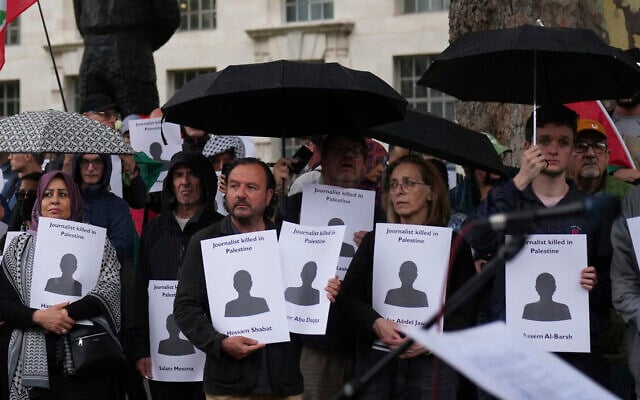
CPJ also removed the name of Maysara Salah, who had been listed as a journalist with the Hamas-affiliated Quds News Network. In a since-removed account published by CPJ, Salah’s brother reported that he was injured in a strike on a shelter and alleged that Israel held up an ambulance that he was in for eight hours “after learning that [he] had been working in the media,” leading to his death.
On May 22, Hamas-affiliated media identified Salah as a member of the group’s “military media” apparatus who fought in the Fawzi Abu al-Qara Battalion of the Northern Brigade. The announcement did not specify when or how he was killed.
While the redactions can be found in the “clarifications and corrections” section of its website, CPJ has not issued any public statements announcing the changes.
“Each case in the database is independently confirmed through information from at least two credible sources — such as family members, colleagues, eyewitnesses, legal representatives, media reports, local and regional press freedom groups and official or third-party investigations,” CPJ told The Times of Israel.
Regarding cases in which terror operatives are found to use journalistic markings as cover for their activities, CPJ said that “any misuse of press identification undermines trust in the press and may put journalists at greater risk,” while also noting the importance of press credentials and press vests “in helping journalists carry out their work and in distinguishing them as civilians protected under international law.”
Keeping fighters listed as press
While CPJ has moved to remove names from its tally, other databases, including one maintained by the International Federation of Journalists, and another project called Stop Murdering Journalists, have continued to list them, with no mention of their participation in combat operations.
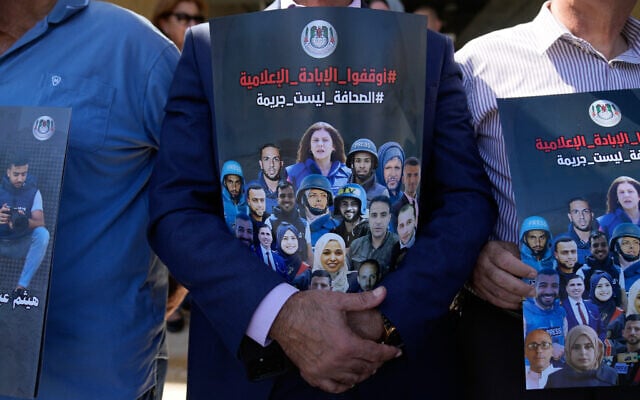
Stop Murdering Journalists, a grassroots initiative within Databases for Palestine, which documents alleged Israeli human rights violations and war crimes against Palestinians, lists 366 journalists killed by Israel, over 100 more than CPJ. Both numbers are higher than Reporters Without Borders’ count of 220 journalists killed, underlining the difficulty involved in tallying media deaths during the war.
Some who have since been revealed to have been Hamas or PIJ operatives were never listed by CPJ, but remain on tallies by other groups, such as Hussam al-Adlouni, who was described as a journalist when he was killed on July 13, 2025.
In recent weeks, an announcement on a Hamas-affiliated Telegram channel identified al-Adlouni as an operative in the Khan Younis Brigade’s “Military Media Department.”
Both Stop Murdering Journalists and the International Federation of Journalists continue to list him as a journalist, with no mention of his affiliation to groups involved in combat.
Neither Databases for Palestine nor the International Federation of Journalists responded to a request for comment.
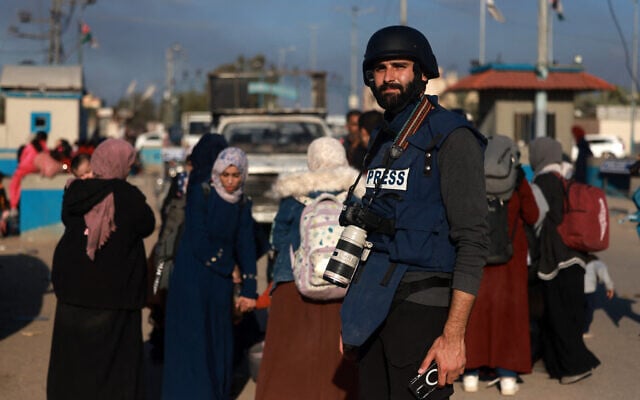
Explaining its methodology for identifying slain media workers, Stop Killing Journalists says on its website that it “isn’t our job to gate-keep who is and isn’t journalists. We verify that people are active journalists and stop there.”
“In cases where we can’t verify employment, if a Palestinian journalist organization claims them, they are journalists,” the group adds. “We do not claim to know the ‘motive’ of each journalist who is killed.”
The obituary for al-Adlouni appeared to confirm a December study by the Meir Amit Intelligence and Terrorism Information Center that had identified al-Adlouni as a commander in the Khan Younis Brigade of Hamas’s military wing.
The study — which drew on public records, Palestinian media reports, and Hamas documents seized by the IDF during ground operations in Gaza — found that roughly 60 percent of the 266 individuals it examined who had been identified as journalists or media workers and were killed in Gaza between October 7, 2023, and November 30, 2025, were members of terror groups or clearly affiliated with them.
Throughout the war, the IDF claimed on multiple occasions that journalists it killed were also terror operatives, including a Saturday strike on Ahmed Samir Muhammad Washah, whom the army said served in Hamas’s military wing while working for Qatari network Al Jazeera.
“Alongside his work as an Al Jazeera photojournalist in recent years, Washah was an operative in Hamas’s military wing. In recent months, he advanced sniper attack plans and additional terrorist activities against IDF troops operating in the Gaza Strip,” the IDF said following the strike.
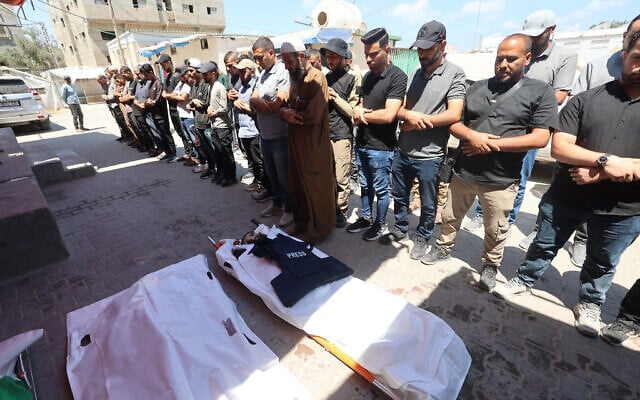
The killing renewed criticism of Israel for the deaths of journalists in Gaza and elsewhere; the broadcaster noted that Washah was its cameraman and said it “strongly condemns the heinous crime.”
The IDF said in October 2024 that it had uncovered documents in the Gaza Strip that showed six active Al Jazeera reporters were operatives in the Hamas and Palestinian Islamic Jihad terror groups.
Press advocacy groups have condemned Israel for its attacks on journalists since the war began, including the Foreign Press Association, which represents international media in Israel, the West Bank and Gaza.
“We have spoken out about the high number of Palestinian journalists killed in Gaza over the course of the war,” FPA chairman Tania Kraemer said. “This is based on the Geneva Conventions, which stipulate that journalists in war zones should be treated as civilians and protected as such, provided they take no part in hostilities.”
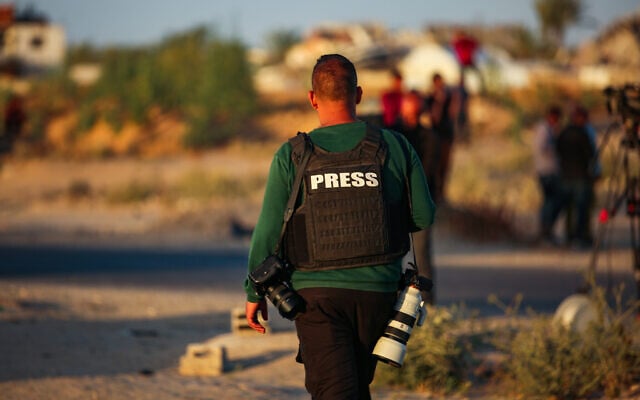
The FPA has also been highly critical of Jerusalem over its refusal to allow independent journalists into Gaza for nearly three years, leaving only locally based Gazans to report from inside the Strip.
The FPA has petitioned the High Court of Justice to force the government to allow unfettered, independent press access to the enclave.
After months of the government delaying its response to the petition and multiple extensions by the High Court, the government responded in January that the ban should remain in place due to security risks in the enclave, noting worries that journalists could be caught in the crossfire of ongoing hostilities.
Own goal
Alongside journalists, other slain operatives recently identified by Hamas and PIJ have contradicted earlier reports that described them as civilians.
In June 2024, Reuters cited a statement by the Palestine Football Association saying that Ahmed Abu al-Atta, who was killed in a strike on his home in central Gaza, was a Palestinian soccer player for Al-Ahli Gaza.
Israel was widely condemned after the strike for killing an athlete. However, a recent announcement by Hamas’s military wing identified Abu al-Atta as deputy commander of the Gaza City Brigade’s rocket unit.
An Israeli airstrike near the Latin Church in Gaza today slaughtered Palestinian football player Ahmed Abu al-Atta and his family. pic.twitter.com/EaZpjvP9cJ
— Quds News Network (@QudsNen) June 21, 2024
Hamas also announced the death of 66-year-old Ahmed Khamis Abu Younis, whose age would have likely led to him being identified as a civilian.
According to the announcement, Abu Younis, who was killed on October 29, 2023, belonged to the Martyr Muhammad Abu Safl Battalion in the Rafah Brigade.
According to Hamas’s Shehab News Agency, Abu Younis participated in military training and guard duties prior to his death, and his family said he also worked as an engineer alongside his military affiliation.