Breaking
FG declares war on oil thieves, drug barons, arraigns oil boss, 7 others

The Federal Government has stepped up its war against economic and drug-related crimes, arraigning an oil entrepreneur and seven others over alleged illegal dealings in petroleum products while unveiling measures to fast-track drug trafficking trials and confiscate proceeds of illicit activities.
The two developments in Abuja yesterday signalled the government’s renewed push to dismantle criminal networks through speedy prosecution, asset recovery and stronger collaboration among law enforcement agencies, prosecutors, the judiciary and international partners.
Chairman of Ebenco Group Limited, Ebenezer Oluwagbemiga, was arraigned alongside seven other defendants before Justice Binta Nyako of the Federal High Court, Abuja, on a five-count charge bordering on alleged dealings in petroleum products without lawful authority or the requisite licence.
The other defendants are Elliot Boukoru, Peter Nzekwo, MV Ebenco Grace IMO-7239759, Ebenco Global Link Limited, MT ROSE IMO-8106795, Florence Marine and Shipping Limited, and Ganiyu Basit Olatunbosun.
All the defendants pleaded not guilty to the charges.
Director of Public Prosecutions of the Federation, Rotimi Oyedepo, who led the prosecution, told the court that the five-count charge was filed on November 3 and urged it to take the defendants’ pleas.
“There is a charge of five counts filed on Nov. 3. We prayed that my lord accept the charge and cause the plea of the defendants to be taken,” he said.
Following their pleas, Oyedepo urged the court to grant an accelerated hearing, citing the economic implications of the alleged offences.
“Considering the sensitivity of the matter and the implications on the economy, we urge the honourable court to grant an accelerated hearing,” he said.
The prosecution also sought an order remanding the defendants in custody pending the determination of the case or as the court might deem appropriate.
However, counsel to the first, second, third, fourth, fifth and eighth defendants, Femi Falana, informed the court that bail applications had been filed for the first, second, third and eighth defendants.
He added that the defence had responded to the prosecution’s counter-affidavits through replies on points of law.
Olalekan Ojo appeared for the sixth and seventh defendants.
Justice Nyako adjourned the matter until November 24 at 1 p.m. for hearing of the bail applications and ordered that the defendants remain in the custody of the arresting agency pending the hearing.
The prosecution said the alleged offences contravened provisions of the Miscellaneous Offences Act, Cap. M17, Laws of the Federation of Nigeria, 2004, including Section 3(6), and are punishable under Section 1(17) of the Act.
Meanwhile, Attorney-General of the Federation and Minister of Justice, Lateef Fagbemi, has announced plans to strengthen the prosecution of drug-related offences through speedy trials, confiscation of criminal assets and increased international cooperation.
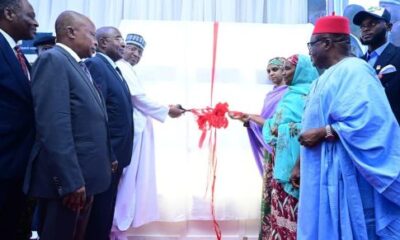
Speaking at the inauguration of the National Drug Control Master Plan (NDCMP) 2026–2030 in Abuja, Fagbemi said the Federal Ministry of Justice would work with the judiciary to ensure the speedy disposal of drug-related cases in line with the Administration of Criminal Justice Act.
He said the government would also intensify efforts to strip convicted traffickers of the proceeds of their crimes, warning that criminal networks must not be allowed to enjoy the financial benefits of their illegal activities.
“The government will intensify mutual legal assistance, extradition processes and cross-border asset recovery to disrupt the financial networks sustaining organised drug trafficking.
“These measures are necessary to strengthen Nigeria’s criminal justice response and ensure that drug traffickers did not continue to benefit from the proceeds of their illegal activities,” he said.
The minister said prosecution and asset recovery remained critical to dismantling organised criminal enterprises, particularly those operating across international borders.
He commended the National Drug Law Enforcement Agency (NDLEA) for strengthening cooperation between investigators and prosecutors from the early stages of criminal investigations, noting that the approach had improved evidence gathering, reduced procedural errors and enhanced the prosecution of drug cases.
Fagbemi described the agency as central to Nigeria’s drug control efforts, commending its Chairman, Buba Marwa, for his contributions to the fight against drug trafficking and substance abuse.
“The agency remains the bedrock of our national drug control architecture, delivering vital results across intelligence operations, interdiction, investigation, prosecution and public sensitisation.
“I specifically commend Buba Marwa, who has been a silent achiever and has consistently made this administration and country proud,” he said.
The Attorney-General, however, stressed that the government’s tougher prosecution strategy would distinguish between major drug traffickers and persons suffering from substance use disorders.
He said drug kingpins should face the full weight of the law, while persons struggling with drug dependence should receive medical treatment, psychological support and rehabilitation.
According to him, an effective national drug control policy must combine law enforcement with prevention, treatment, rehabilitation and social reintegration.
Fagbemi said the NDCMP 2026–2030 was designed to strengthen cooperation among law enforcement agencies, public health institutions, educational authorities, social development agencies, financial investigators and community organisations.
He also praised the NDLEA’s alternative development initiatives aimed at encouraging communities involved in illicit drug cultivation to embrace legitimate agricultural activities.
He said the initiative, which promotes the cultivation of lawful cash crops in place of illicit drugs, was consistent with President Bola Tinubu’s agenda of turning challenges into opportunities for progress.
The minister urged relevant institutions to translate the provisions of the master plan into measurable programmes, insisting that it must guide their daily operations rather than remain a policy document without practical impact.
The Economic Community of West African States (ECOWAS) Commission has pledged support for Nigeria’s new drug control strategy, describing it as a significant contribution to regional efforts against drug trafficking and substance abuse.
ECOWAS Commissioner for Human Development and Social Affairs, Nassirou Bako-Arifari, said the success of the master plan would depend on sustained political commitment, adequate funding and cooperation among governments, civil society organisations, communities and international partners.
He noted that the cross-border nature of drug trafficking made coordinated action among West African countries imperative.
“Nigeria’s progress in implementing the master plan will contribute significantly to strengthening regional cooperation against illicit drug trafficking and its associated consequences.
“The ECOWAS Commission will stand with Nigeria at every step, sharing experience, mobilising support and linking this national effort to the work of other member states.
“Nigeria’s progress will guide the region because no country can win this fight alone,” he said.