World
Extradited US-Israeli indicted in Florida for 2016-2017 threats to Jewish institutions

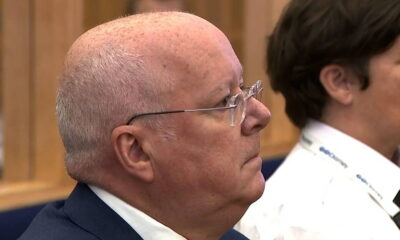
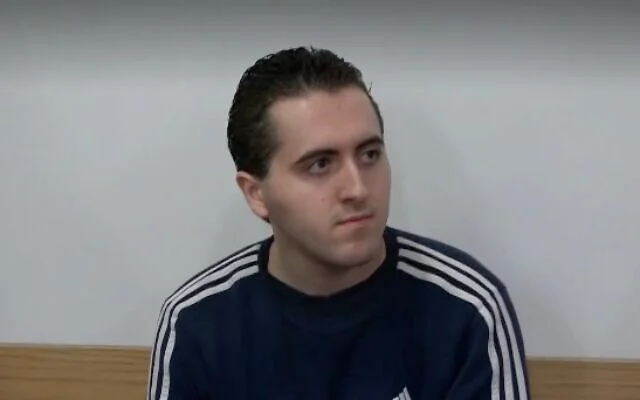
A dual citizen of the US and Israel was indicted in a federal court in Florida on Monday for allegedly perpetrating a wave of bomb threats against Jewish institutions in 2016 and 2017.
Michael Ron David Kadar, 27, previously served seven years in an Israeli prison for the calls to Jewish organizations in multiple countries.
At the time of his conviction, Kadar’s lawyer said he had autism and was suffering from a brain tumor.
Kadar traveled to Norway to seek asylum after completing his sentence in Israel. He was extradited to the US on Thursday, the Department of Justice said in a statement.
Kadar faces charges in Florida, Georgia and Washington, DC, for threats to Jewish institutions and other crimes targeting those areas.
He was indicted for hate crimes and obstruction of the free exercise of religion. The hate crime charges carry a maximum sentence of 20 years in prison and the bomb threats a maximum of 10 years in prison.
Kadar had been detained in Norway and was fighting extradition to the US.
He was a minor at the time of some of the offenses, and his name had been under gag order in Israel until last year.
The so-called “hacker from Ashkelon” admitted in court to making some 2,000 fake bomb threat calls to hospitals, airlines, schools and various Jewish institutions in the US and beyond out of boredom.
He was found guilty in June 2018 of hundreds of counts of extortion, spreading false information that caused panic, computer offenses and money laundering, among other charges.
That November, he was sentenced to 10 years in prison and fined NIS 60,000 ($16,068), which ended up being commuted.
Upon arriving in Norway in 2024, Kadar submitted a request for asylum. Norwegian authorities rejected the claim and detained him on an existing US extradition charge. A ruling from a Norwegian appeals court stated it “assumes Kadar is mentally incompetent today, and most likely was at the time of the crimes in 2017.”
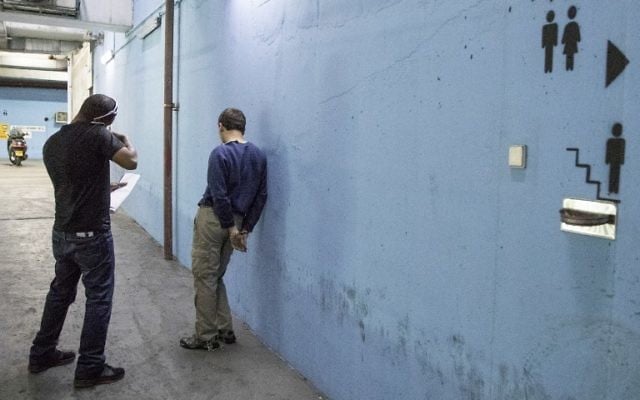
In a 2017 interview with The Times of Israel, Kadar’s parents said their son, while highly precocious intellectually, had suffered from the tumor from a very young age, possibly since he was born, and that it blocked his development, causing cognitive and psychiatric disorders throughout his life.
Kadar told interrogators after his March 2017 arrest that he thought the bomb threats were part of a “game” and that he was “causing fun” for others.
According to authorities, Kadar made thousands of threatening calls, mostly to community centers and schools in the US, from December 2016 to March 2017, using an online calling service that disguised his voice and allowed him to hide his identity.
He also targeted hundreds of airlines and airports, malls and police stations, in the US, Canada, the UK, New Zealand, Australia and Britain, and tried to extort Republican State Senator Ernesto Lopez from Delaware.
In addition to the bomb threats, he offered his extortion services through an online black market. Court documents linked him to a post on the now-shuttered illicit marketplace AlphaBay, advertising a “School Email Bomb Threat Service.” The ad offered to send customized threats to schools for $30, plus a surcharge if the buyer sought to have someone framed.
His threats caused fighter jets to scramble, planes to dump fuel and make emergency landings, schools to evacuate, and numerous other chaotic episodes. In some cases, he allegedly threatened to execute children he claimed to be holding hostage. Police also found hundreds of photos and videos of child pornography on his computer.