World
Empowered after Oct. 7, IDF settler units are terrorizing Palestinians, critics say

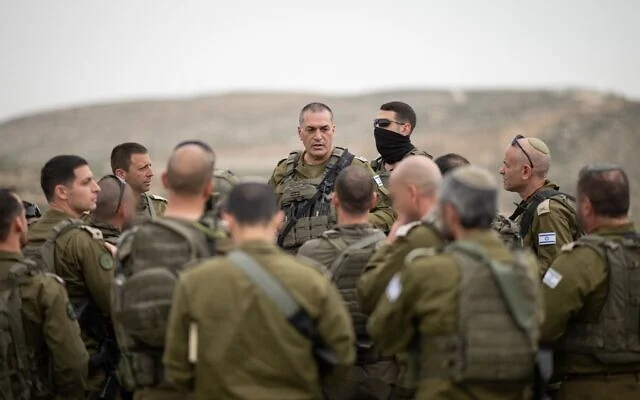
Since Hamas’s October 7, 2023, onslaught, violence by Israeli settlers against Palestinians in the West Bank has surged to record levels. Now, concerns are growing that IDF units tasked with protecting civilians and thwarting attacks on Palestinians are manned by some of those allegedly behind the violence.
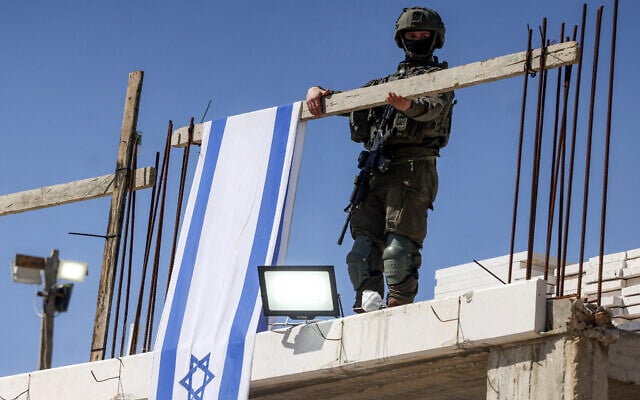
Rights groups and legal experts charge that the IDF’s regional defense reserve units, known by the Hebrew acronym “Hagmar,” are blurring the line between civilian settlers and military personnel, using the army’s authority to compound already rampant violence while escaping accountability thanks to the gray zone they inhabit.
The units are tasked with responding to security incidents in and around the communities where they are based and are heavily staffed by local residents serving in reserve duty.
According to Yesh Din, which tracks settler violence, seven Palestinians were shot dead by soldiers serving in Hagmar units during the 40-day war with Iran alone.
The issue has recently drawn the attention of Israeli authorities. Last month, the military said it was investigating the conduct of soldiers in several incidents involving settler violence, while police announced parallel investigations into suspected crimes committed by settlers.
In one of the most serious recent cases, the IDF said it was probing soldiers who allegedly stood by as masked Israeli settlers torched vehicles in the Palestinian village of Shuqba, near Ramallah, last month. Border Police later arrested four Israeli civilians and a reservist serving in a Hagmar unit on suspicion of participating in the attack. The reservist’s weapon was confiscated and he was suspended from reserve duty pending the investigation.
In March, a settler serving in a Hagmar unit opened fire on an Israeli paraglider in the West Bank after mistakenly suspecting a terrorist infiltration. On the same day, another Hagmar reservist allegedly fired at Palestinian homes in the al-Arroub refugee camp north of Hebron before being detained by the IDF.
The incidents are part of what critics describe as a broader pattern. Dozens of Hagmar soldiers have reportedly been dismissed in recent years for violations, including attacks on Palestinians. The IDF has recently reduced the number of active Hagmar personnel in the West Bank, an unspoken admission of the issues that surround their expanded roles.
IDF Chief of Staff Lt. Gen. Eyal Zamir has condemned settler violence. In March, he called attacks against Palestinian civilians and soldiers in the West Bank “morally and ethically unacceptable” and a major strategic impediment.
But critics say he must do more to clamp down on units armed by the IDF and operating under his command structure that have not only failed to rein in settler extremist violence, but in many cases participated in it as well.
‘They simply see an Arab and stop him’
The rise of the Hagmar units has dovetailed with a period in which settler violence has reached new heights, with numerous claims of soldiers either participating in violent actions or declining to act against settlers even as attacks are taking place.
For Palestinians living near settlements, incidents of misconduct by Hagmar soldiers are not merely statistics — they are their daily reality.
Saeed Awad, a resident of the Palestinian village of Abu Shaban in the South Hebron Hills, told The Times of Israel that violence by settlers increased dramatically after October 7. Before the war, he said, Palestinians could at least expect security forces to conduct a preliminary investigation after attacks by settlers.
“It wasn’t great, but it was something,” he said.
Today, however, the first responders are often Hagmar soldiers themselves.
According to Awad, those soldiers frequently protect — and sometimes actively assist — settler perpetrators, allegations echoed in testimonies collected by the NGO Breaking the Silence from soldiers who served in the West Bank.
“They’re wearing military clothing. They carry M16 rifles, and they show up to these incidents,” one anonymous soldier told the organization. “It’s obvious which side they’re on, and it’s obvious they wouldn’t hesitate to use their weapons and intimidate people.”
The soldier recounted one incident involving an individual described as a well-known violent settler. The unnamed figure, he said, had “gone wild,” apparently harassing Palestinians, while dressed in IDF fatigues and carrying a rifle issued through the regional defense unit. According to the testimony, the settler “did whatever he wanted” while other Hagmar personnel were present at the scene.
Meanwhile, Awad said he has been detained by troops, often from Hagmar units, six separate times this year alone.
“You don’t have to do something wrong for them to target you; they simply see an Arab and stop him,” he said. “When you ask them why they’re doing this, they don’t have an answer.”
Awad is now one of five Palestinians petitioning Israel’s High Court of Justice over the detentions, alleging that they are held for longer than permitted, transported to bases against regulations and often subject to physical abuse.
The petition, filed on May 14, seeks to halt the practice and includes support from several rights organizations, including HaMoked, Association for Civil Rights in Israel, Human Rights Defenders Fund and Haqel – In Defense of Human Rights.
The army has been ordered to respond by later this month.
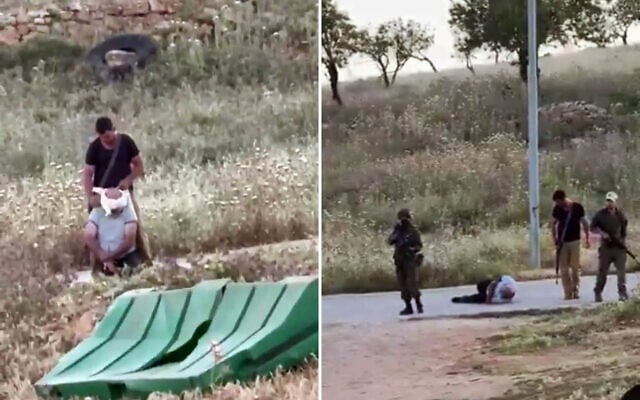
Footage shows soldiers from the IDF’s Hagmar regional defense reservist unit firing rounds over the head of Saeed Awad, a resident of the Palestinian village of Abu Shaban in the South Hebron Hills, unknown date. (Courtesy)
“I’ve been taken six times, and every time I see something else,” he said. “They blindfold you, beat you, curse you.”
The Palestinian described repeated run-ins with Hagmar soldiers, who sometimes operate in concert with regular troops. In one incident caught on camera, he is seen yelling at two armed soldiers — one of whom he recognized from previous incidents as a regular-service officer — as settlers appear to attack herders in a field behind them.
After he goes up to the soldiers, one of them raises his rifle and fires two rounds over Awad’s head from a short distance away. Hagmar soldiers were also present at the scene, Awad said, though no other soldiers appear to intervene or attempt to de-escalate the situation in the footage.
“This is a closed military zone,” one of the soldiers can be heard saying in the footage. When Awad asks to see documentation proving the designation, the soldier appears to ignore him.
Awad said encounters can include explicit statements from settlers in uniform about their intentions.
“They tell us, ‘We want to expel you,’” he said.
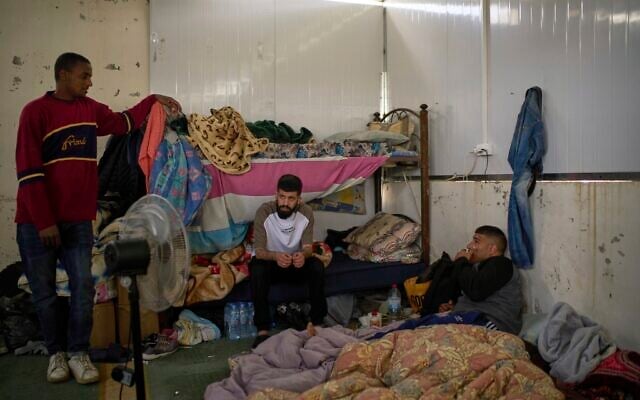
According to Israeli rights groups, settler extremists are carrying out a concerted campaign of harassment and violence to push Bedouin herders off land in the West Bank’s Area C, where Israel has civil control.
The United Nations Office for the Coordination of Humanitarian Affairs (OCHA) reported in March that roughly 1,700 Palestinians had been displaced since the start of the year, and that 38 Palestinian communities had been entirely depopulated since 2023.
Despite the threats, Awad insists leaving is not an option.
“We could never consider leaving. These are our homes… we don’t have anywhere else to go.”
Broader responsibility
The controversy surrounding Hagmar units stems in part from the unique role they occupy.
Israel has long relied on locally recruited defense forces. Volunteer security frameworks existed in Jewish communities even before the establishment of the state. By 1936, nearly every kibbutz, moshav or Jewish town in Mandatory Palestine maintained a local guard unit supplied with weapons and equipment by British authorities and the Jewish Agency.
That tradition continues today through volunteer civilian security squads, known as kitot konenut, which operate in communities near Gaza, along the northern border and in settlements throughout the West Bank.
Those civilian squads are designed to act as a first line of defense during terror attacks until military reinforcements arrive. Many received widespread praise for helping protect their communities during Hamas’s October 7 assault, when IDF forces were slow to respond to numerous simultaneous attacks.
Hagmar units operate in a different capacity. While they are also tasked with responding to security incidents in and around the settlements where they are based, their members are reservists operating under formal military command rather than civilian volunteers. Often, the same individual will serve in both squads, blurring the distinction.
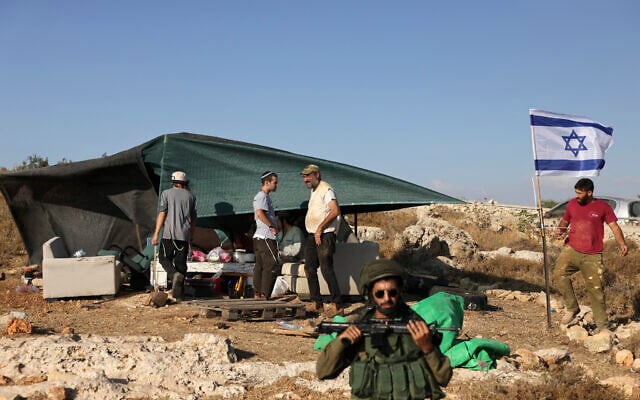
“You have a soldier who is also a settler operating… in his own backyard,” said Yonatan Kanonich head of research for Yesh Din, which monitors rights violations against Palestinians.
Although Hagmar units have existed for decades, their role expanded significantly after Hamas’s October 7 attacks, as the military increasingly relied on locals for home front defense while shifting standard infantry units that would normally be deployed in the West Bank to the war effort in Gaza.
Thousands of settlers who were subsequently called up for reserve duty were not deployed to Gaza or Lebanon but rather placed in regional defense frameworks. According to the IDF, approximately 7,500 weapons had been issued to Hagmar personnel across the West Bank by the end of 2024, though the military has not disclosed the total size of such units.
The shift brought with it broader responsibilities for Hagmar troops, including patrols outside settlements, checkpoint duty and, at times, offensive operations inside Palestinian villages, Kanonich said.
According to Kanonich, the expansion of those responsibilities was not matched by the training and oversight provided to regular military units.
Imagine you have a disagreement with your neighbor… but your neighbor is also the one who enforces the law.
The army, however, rejected that claim. A military source said that Hagmar personnel undergo the same training as other reserve soldiers, including weapons qualification and shooting-range exercises, as well as instruction tailored to the unique challenges of operating in the West Bank, including how to respond to reports of settler violence.
For Kanonich, the concerns go beyond training protocols and rules of engagement. The fundamental problem, he asserted, is the inherent conflict created when settlers are tasked with policing disputes involving their Palestinian neighbors.
“Imagine you have a disagreement with your neighbor… but your neighbor is also the one who enforces the law,” he posited.
The gray zone
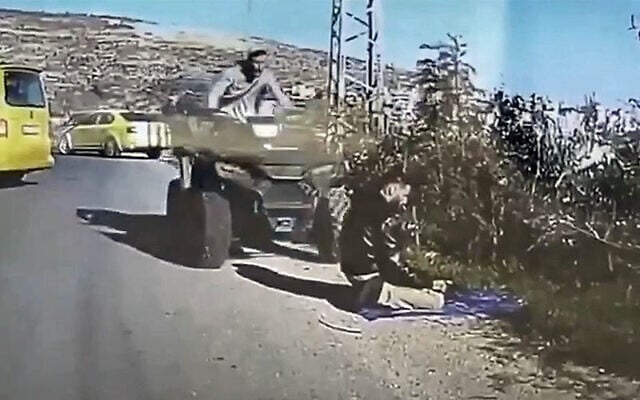
In December 2025, a Hagmar reservist entered the village of Deir Jarir in civilian clothing and opened fire, wounding two Palestinians. Shortly afterward, he was filmed driving an ATV into a Palestinian man who was praying by the roadside.
The IDF said the soldier had acted in “serious breach of his authority,” confiscated his weapon and removed him from duty. But military and civilian authorities disputed who bore responsibility for investigating the crime. The soldier was eventually detained for questioning by police, and then released to house arrest the next morning for five days.
He has yet to be formally prosecuted.
According to critics, the widespread use of Hagmar units has essentially created a situation in which extremist settlers are acting against Palestinians while armed by the military and carrying the authority of the army, yet largely free from facing the consequences of their actions
“By wearing uniforms, the settlers receive an invaluable gift — broad governmental powers including detention, arrest, confiscation and the use of force — which they use as tools to advance an agenda of expulsion and ethnic cleansing of the West Bank and its residents, through the dismantling of the economic, social and property-based infrastructure upon which residents’ lives depend,” said attorney Quamar Mishirqi Assad of Haqel, which provides assistance to Palestinian landowners.
Assad told The Times of Israel that since the war began, the organization has filed “hundreds of complaints regarding incidents of harassment, confiscation, false arrests, the expulsion of farmers from their lands, and the prevention of agricultural cultivation.”
The suits cover actions by both regular soldiers and those from Hagmar units.
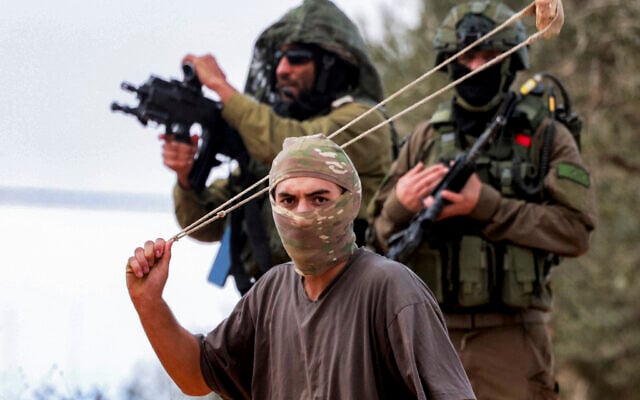
While Israel rarely prosecutes settlers accused of terrorizing Palestinians, soldiers are even less likely to face prosecution, with Hagmar units protected by a legal gray zone surrounding their operations, according to Kanonich.
“There is no difficulty [in taking legal action against settler soldiers]; the difficulty is that Israel doesn’t want to take legal action,” he said.
According to Kanonich, when Yesh Din has approached the military regarding incidents involving Hagmar soldiers, the IDF has argued that the soldiers cannot be prosecuted in military court because their alleged offenses were not committed within a military framework, despite the fact that they were serving in active reserve duty at the time.
When asked why settler soldiers suspected of violent crimes against Palestinians are not prosecuted through the military justice system, a military source told The Times of Israel that the decision to open a criminal investigation rests with the soldier’s chain of command.
Hagmar units operate under regional brigades, which are commanded by regular officers. But if the commander determines that an incident does not warrant referral to the Military Police, no military criminal probe is launched.
Meanwhile, police largely decline to investigate such cases, claiming that the suspects are soldiers and therefore fall under the jurisdiction of military law enforcement.
The result, Kanonich said, is that many cases fall between the cracks, with the lack of accountability emboldening the attackers to continue their activities.
“The criminals get a tailwind from Israel to do it again,” Kanonich said.
Assad argued that the military has effectively enabled repeat offenders by failing to pursue indictments or disciplinary measures and allowing soldiers accused of misconduct to remain in their positions.
“Throughout this entire period, the army has blatantly turned a blind eye to this phenomenon,” she said.
Rights groups see the mounting violence and refusal to act against it as an outgrowth of the government’s support for the settlement movement. Under the authority of far-right lawmaker Bezalel Smotrich, whose junior Defense Ministry position gives him wide influence over West Bank policy, the government has authorized settlement construction and legalized wildcat outposts at an unprecedented pace. From late 2022 to April 2026, the government approved or legalized 103 settlements, a major increase over previous years.
When the law is lawless
Hagmar units are not the first to be accused of harboring extremists liable to abuse their authority in furtherance of their ideology; soldiers from both the West Bank and Israel proper have long been accused of mistreating Palestinians and operational malfeasance.
In March, Zamir ordered the removal of the Menashe Regional Brigade’s 941st Netzah Israel Battalion from operational activity in the West Bank after soldiers were accused of detaining and assaulting a CNN crew. Soldiers were recorded saying that the entire West Bank belonged to Jews and that they were avenging the killing of a settler days earlier.
Similarly, in December 2023, the IDF suspended the operational activities of the Sfar Hamidbar unit following multiple allegations of abuse against Palestinian civilians.
That unit, which focused on combating weapons and drug smuggling, was known for recruiting so-called hilltop youth — extremist settler activists associated with illegal outposts and frequently accused of violence against Palestinians. The recruits were reportedly brought into the unit as part of an effort by the IDF and settlement leaders to direct their energies in a more disciplined and lawful manner.
But with Hagmar units operating at the behest of settlers across a West Bank where extremism seems to be reaching new heights of brazen violence and destruction, the threat is altogether more pernicious for many Palestinians.
“There needs to be equality; there needs to be law and order,” said Awad. “These Hagmar soldiers don’t operate according to the law. They do whatever they want.”